Every Keurig does the same thing: it pushes hot water through a sealed pod. You cannot change the grind, the dose or the coffee-to-water ratio, because the pod has already decided all three. That is not a flaw in the machines — it is the trade the whole system is built on, and it is why a Keurig is fast and consistent in a way no ground-coffee brewer is.
Which means comparing them on coffee quality misses the point. What actually differs between these machines is the water: how hot it is when it hits the pod, how evenly it wets the grounds, and how much of it you get. Brew temperature is the one that matters most, and exactly one machine in the range lets you set it.
Picks are grouped by how much control you get, from the one machine with a temperature dial down to the one whose feature is that it fits on a dorm desk.
Quick picks
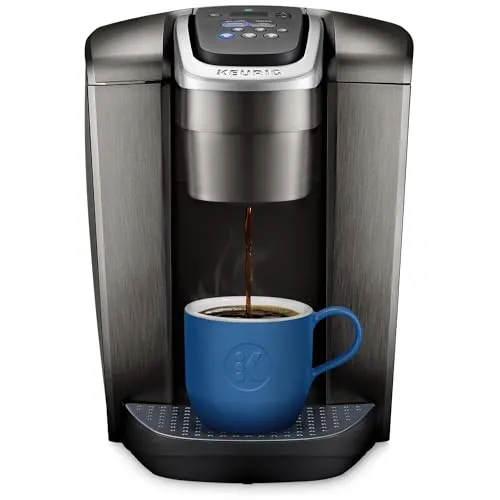
Keurig K-Elite
$150
Pod machine with strength and temperature control, five cup sizes, a dedicated iced setting, hot water on demand, and a large removable reservoir.
The only Keurig that lets you set brew temperature, which is the single biggest reason pod coffee tastes flat. It also brews properly over ice rather than pouring hot coffee onto cubes.
The one pod machine that gives you the controls the rest leave out. Brew temperature is adjustable rather than fixed, which is the single biggest reason cheap pod coffee tastes flat, and the iced setting brews hot and stronger over ice instead of just brewing weak coffee onto cubes. The 75 oz reservoir means a household isn't refilling it every other cup, and hot water on demand covers tea and oatmeal without a kettle.
Pros
Adjustable brew temperature, rare on a pod machine
Iced setting brews stronger to survive the melt
Five cup sizes from 4 to 12 oz
Large 75 oz removable reservoir
Hot water on demand for tea and instant food
Takes a reusable filter if you want to use your own grounds
Cons
Cost per cup is far higher than any ground-coffee machine here
Pods are a recurring purchase and mostly not recyclable kerbside
You can't control grind, dose or ratio — the pod decides
Largest footprint of the pod machines
The sensible middle
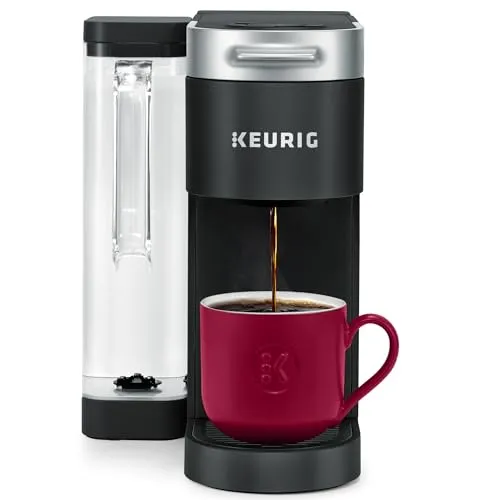
MultiStream uses several jets instead of one needle, so the pod wets more evenly — the one real brewing change Keurig has made in years. You give up temperature control.
MultiStream is the one genuine brewing change Keurig has made in years — several jets instead of a single needle, so the pod saturates more evenly. The reservoir mounts on either side or behind, which sounds trivial until you have a machine wedged next to a wall. This is the sensible middle of the range: the extraction improvement without the K-Elite's temperature control.
Pros
MultiStream extraction wets the pod more evenly than a single jet
Dual-position reservoir fits awkward counters
Four brew sizes
Removable reservoir refills at the sink
Takes a reusable filter for your own grounds
Cons
No brew temperature control
No iced setting
Cost per cup is far higher than ground coffee
Keurig publishes no brew temperature for it
If you just want a pod machine
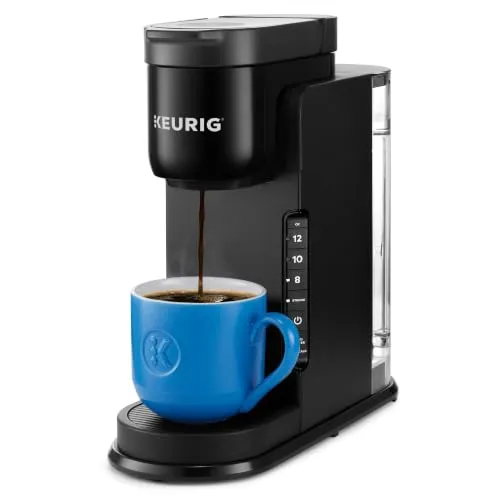
No extraction cleverness, no temperature control. A strong button, a reservoir and a footprint. Both of these do the job the system is actually bought for.
The version to buy if you want a pod machine and nothing else. Three cup sizes, a strong button that slows the brew for a more concentrated cup, and a reservoir that holds enough for a few mugs rather than making you refill every time. It skips MultiStream and temperature control, which is exactly why it costs less than the machines above it.
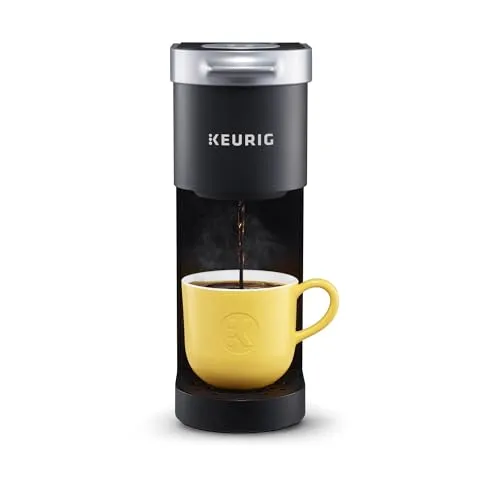
The answer when the constraint is space rather than coffee. Under five inches wide fits a dorm desk, an office drawer unit or a rental kitchen with no counter left, and the cord stores in the back so it travels. You fill it per cup, which is the trade for the size — there's no reservoir to run dry and none to take up room either.
Pros
Under five inches wide — fits where nothing else will
Cord storage makes it genuinely portable
Brews 6 to 12 oz
Cheapest way into the pod system
Takes a reusable filter for your own grounds
Cons
One cup of water at a time — you fill it every single brew
No temperature control, strength control or iced setting
Cost per cup is far higher than ground coffee
Slower in practice than a machine with a reservoir
The pod decides the coffee, not the machine
Every machine here pushes hot water through a sealed pod. You cannot change the grind, the dose or the ratio, which means the difference between a good cup and a bad one is mostly which pods you buy — and after that, whether the water is hot enough. That is a real limit, not a criticism: it is the trade the whole system is built on. If it is the part that bothers you, single-serve machines that use ground coffee make one cup at a time without it.
How we chose these
Compared on the variables the machine controls rather than the ones the pod does. Brew temperature ranked highest, because under-hot water is the usual cause of thin, flat pod coffee. Then extraction design — multiple jets against a single needle — then reservoir size, which decides how often you stand at the sink, and cup size range. Running cost is stated on every pick because it dominates the lifetime price of any pod machine, and is the one number most comparisons leave out.
What to know before you buy
What’s the best Keurig coffee maker?
The K-Elite at $150. It is the only Keurig with adjustable brew temperature, and water temperature is the single biggest reason pod coffee tastes flat — a pod brewed at the bottom of the range gives you a thin, sour cup no pod choice can rescue. It also has a real iced setting that brews stronger to survive the melt, hot water on demand, and the largest reservoir in the range. If you are going to buy one Keurig and keep it, buy this one.
Is a Keurig worth it?
It depends entirely on what you are optimising for. On speed, convenience and never cleaning anything, nothing else comes close — that is why they are in every office. On coffee quality and cost per cup, a pod machine loses to a drip brewer badly, and the gap compounds: pods typically cost several times what the equivalent ground coffee does, so the running cost passes the price of the machine within the first year for a daily drinker. Buy one because you want the convenience, with the running cost understood, not because you expect the coffee to be good.
What’s the difference between the K-Elite, K-Supreme and K-Express?
Control, in that order. The K-Elite lets you set brew temperature and has an iced setting and hot water on demand. The K-Supreme adds MultiStream extraction — several jets instead of one needle, so the pod wets more evenly — but has no temperature control. The K-Express has neither, offering a strong-brew button that slows the brew instead. All three brew the same pods and take the same reusable filter; you are buying how much of the water you get to decide.
Which Keurig is best for iced coffee?
The K-Elite at $150, and the reason is that its iced setting brews a stronger, smaller cup designed to be diluted by melting ice. Machines without one give you ordinary coffee poured over ice, which is watery by the time you drink it. If you make iced coffee more than occasionally, this is the difference between the two that will actually show up in the cup.
Can you use your own coffee in a Keurig?
Yes — every machine here takes Keurig’s reusable filter, which you fill with your own grounds. It cuts the running cost dramatically and lets you use coffee you actually chose. Two honest caveats: it is fiddly enough that most people stop after a few weeks, and the filter holds less coffee than a pod, so the cup comes out weaker unless you use a smaller brew size. It is a real option, not a free one.
Which Keurig is best for a small space?
The K-Mini at $71. Under five inches wide fits a dorm desk, an office drawer unit or a rental kitchen with no counter left, and the cord stores in the back so it travels. The trade is the reservoir: you fill it per cup, every cup. That is genuinely tedious as a daily machine and completely fine as a second one.
Are Keurig pods recyclable?
Officially yes, practically mostly not. K-Cups are polypropylene and technically recyclable, but only after you peel the lid, empty the grounds and rinse the cup — and plenty of kerbside programmes will not take something that small regardless. Assume the pods go in the bin unless you are prepared to do all three steps. The reusable filter is the only version of this that solves the problem rather than relocating it.
Bottom line
Buy the K-Elite at $150: adjustable brew temperature is the one control that changes how the coffee tastes, and nothing else in the range has it. Drop to the K-Supreme at $100 for better extraction without the temperature dial, or the K-Mini at $71 if the constraint is space rather than coffee. And go in knowing the running cost — for a daily drinker the pods will cost more than the machine inside a year, which is the number that should decide this, not the sticker price.