GuidesComparisons
Roundup

Best Coffee Grinders (Burr Grinders Ranked)

A good grinder matters more than the machine. Here's where to put your money.

By Dana WhitfieldUpdated June 2026
12 products compared13 min read
Best Coffee Grinders (Burr Grinders Ranked)

Here's something most coffee sites won't tell you upfront: the grinder matters more than the machine. You can pair a $500 espresso machine with a cheap blade grinder and get mediocre shots. Or you can pair a $100 machine with a good burr grinder and get genuinely great coffee. The grinder is where flavor starts.

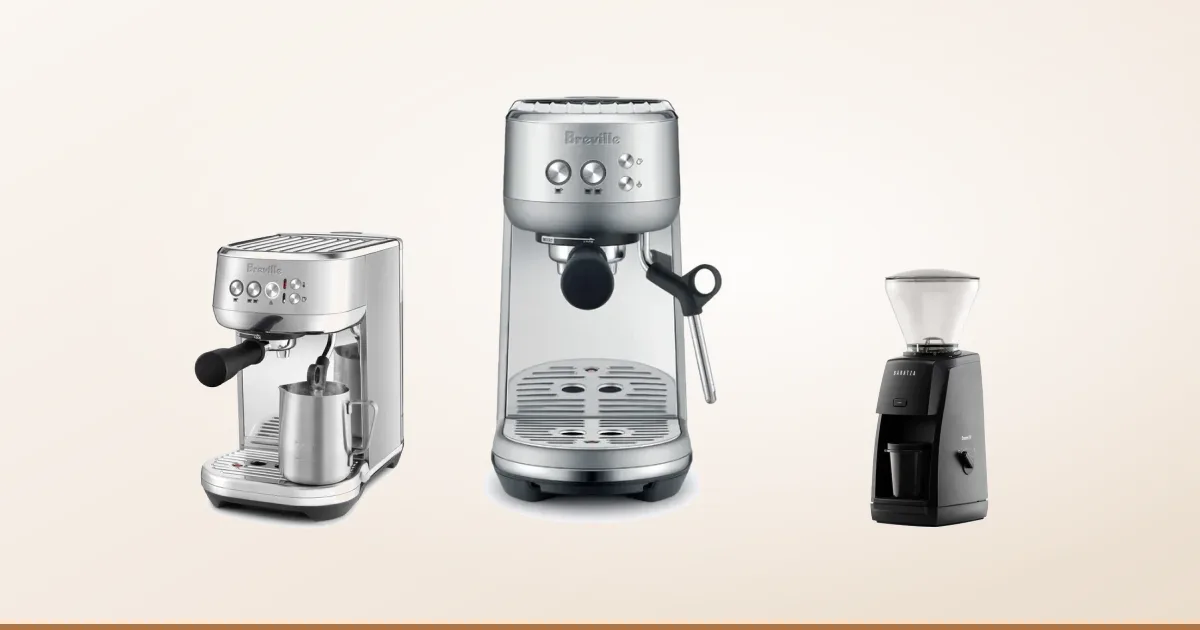
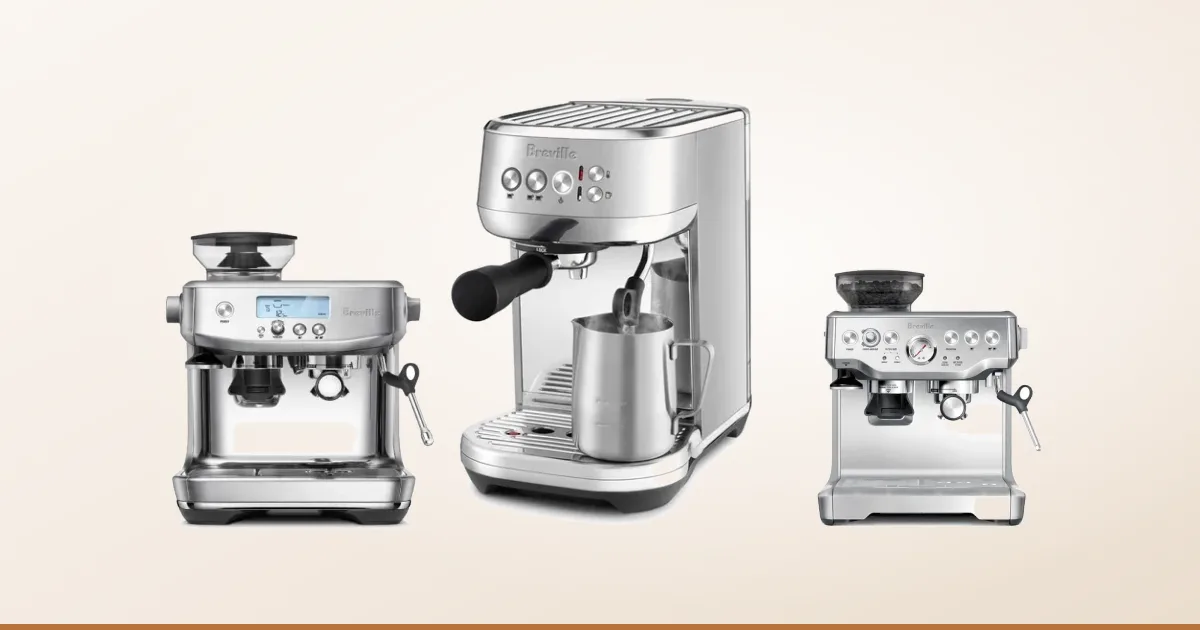
We put together this guide to help you find the right grinder — whether you're looking to pair one with your first espresso machine, upgrade from pre-ground for your pour over, or just figure out why everyone keeps saying "buy a better grinder." Pairing a grinder with your first machine? Start with our best espresso machines for beginners guide.

Quick picks

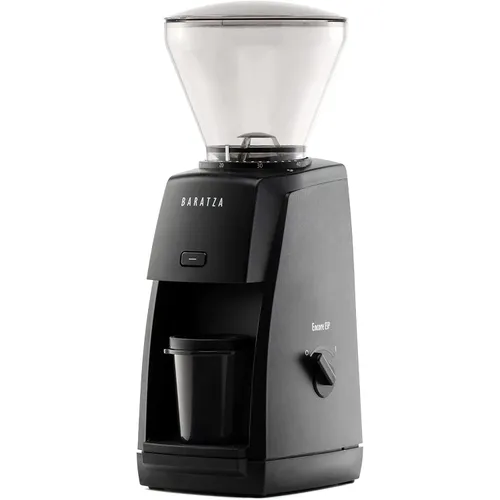
Baratza Encore ESPOur Top Pick

Baratza Encore ESP

$200

The most trusted name in entry-level grinders, now tuned specifically for espresso. 20 fine-tuned settings where it matters most.

Jump to review
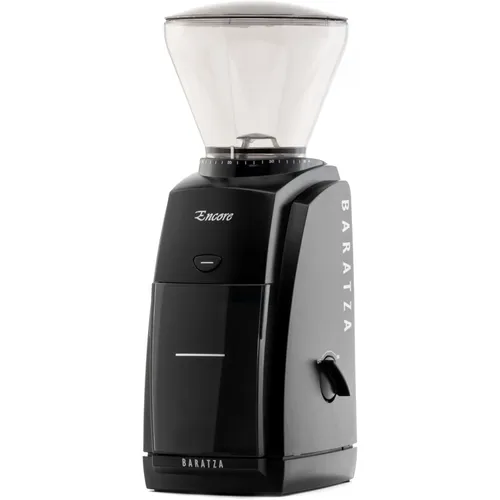
Baratza EncoreBest for Pour Over & Drip

Baratza Encore

$150

The original beginner grinder. 40 settings covering every brew method — perfect if you're not focused on espresso.

Jump to review
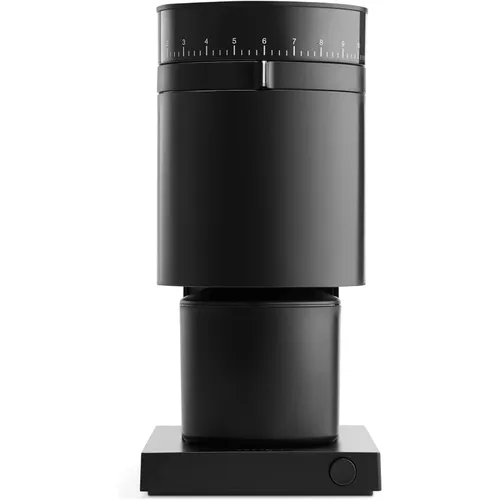
Fellow OpusBest All-Rounder

Fellow Opus

$200

The best-looking grinder that also handles everything — espresso, pour over, French press, cold brew. 41+ settings with a gorgeous design.

Jump to review

The picks, ranked

Our Top Pick
Baratza Encore ESP

Baratza

Baratza Encore ESP

$199.95
9.2/ 10

Why we love it

Baratza has been the go-to brand for beginner grinders for over a decade, and the Encore ESP is their answer to espresso specifically. It takes the same reliable 40mm conical burr platform from the original Encore and refocuses the grind range — instead of spreading settings across drip, pour over, and French press, the ESP concentrates its 20 settings in the fine range that espresso needs. That means smaller steps between settings, which makes it easier to dial in your shot. It's simple to use (one button, one dial), built to last (Baratza will sell you replacement parts for years), and quiet enough that you won't wake anyone up at 6 AM. If you're pairing a grinder with any of the machines from our espresso roundup, this is the one we'd pick first.

Pros

  • Espresso-optimized grind range — 20 settings focused where it matters
  • Baratza's legendary serviceability — replacement parts available for years
  • Simple one-button, one-dial operation
  • Quiet motor won't wake the household
  • Compact footprint fits next to any espresso machine

Cons

  • Espresso-only focus — not great for pour over or French press
  • Stepped adjustments mean less precision than stepless grinders
  • Plastic body feels less premium than pricier options
  • No built-in timer — you grind by time/feel
Best for Pour Over & Drip
Baratza Encore

Baratza

Baratza Encore

$149.95
8.8/ 10

Why we love it

The Baratza Encore has been the default recommendation for beginner coffee grinders for years, and it's earned that spot. It has 40 grind settings that cover everything from fine (Aeropress, Moka pot) to coarse (French press, cold brew), with a sweet spot in the drip and pour over range. It won't win espresso competitions — the steps are too wide in the fine range for serious dialing in — but if you're making pour over, drip, or French press, it's the best grinder under $200, period. Baratza's customer service is legendary: they sell individual replacement parts and publish repair guides, so this grinder can last you a decade if you take care of it. If you want the espresso-focused version, look at the Encore ESP above.

Pros

  • 40 settings covering every non-espresso brew method
  • Proven reliability — this design has been around for years
  • Baratza's repair program means it lasts for years
  • Simple, intuitive operation — one button, one dial
  • Great price for the quality you get

Cons

  • Not ideal for espresso — grind steps are too wide in the fine range
  • Plastic body feels less premium than some competitors
  • No timer — you grind by weight or time manually
  • Can be a bit loud at coarser settings
Best All-Rounder
Fellow Opus

Fellow

Fellow Opus

$199.95
8.8/ 10

Why we love it

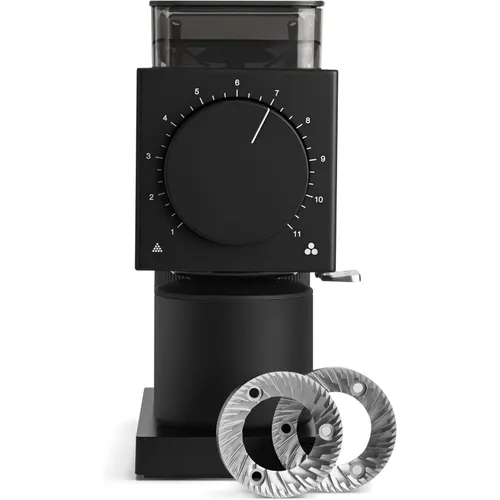
The Fellow Opus is the grinder for people who don't want to be limited to one brew method. It handles everything from fine espresso grinds to coarse French press with 41+ settings, and it does it all while looking like a piece of modern furniture on your counter. The anti-static technology actually works — you won't have grounds flying everywhere. The built-in recipe guide on the hopper lid is a thoughtful touch for beginners who don't know what grind size to start with. It's slightly less precise for espresso than the Encore ESP (wider steps between settings in the fine range), but if you drink pour over on weekdays and espresso on weekends, it's the only grinder you need.

Pros

  • Handles every brew method — espresso through cold brew
  • Beautiful design that looks great on any counter
  • Anti-static technology keeps your workspace clean
  • Built-in recipe guide helps beginners pick the right setting
  • Timed auto-stop for consistent dosing

Cons

  • Espresso grind steps are wider than dedicated espresso grinders
  • Conical burrs produce slightly less clarity than flat burrs
  • Hopper is small — holds about 4oz of beans
  • Premium price for what's essentially a good all-rounder
Best for Pour Over
Fellow Ode Gen 2

Fellow

Fellow Ode Gen 2

$399.95
9/ 10

Why we love it

The Fellow Ode Gen 2 is what happens when a design company decides to make the best possible grinder for pour over and drip — and ignores espresso entirely. That laser focus pays off. The 64mm flat burrs (the same style found in commercial cafe grinders) produce remarkably uniform grounds with minimal fines, which translates directly to cleaner, sweeter, more complex cups. The single-dose design means you weigh your beans, drop them in the top, and grind — no stale beans sitting in a hopper all week. Anti-static technology and a magnetic catch cup keep your counter spotless. It's genuinely quiet enough to use at 6 AM without waking anyone. The tradeoff is clear: this grinder cannot do espresso. If you only brew pour over, drip, French press, or cold brew, the Ode Gen 2 is the best grinder on this list for those methods. If you need espresso capability, look at the Opus or Encore ESP instead.

Pros

  • 64mm flat burrs deliver cafe-level grind consistency
  • Single-dose design keeps beans fresh — no stale hopper
  • Whisper-quiet motor for early morning grinding
  • Anti-static tech and magnetic catch cup eliminate mess
  • Stunning design that earns its counter space

Cons

  • Cannot grind for espresso — brewed coffee only
  • Premium price for a single-purpose grinder
  • 31 settings is fewer than some competitors
  • Small capacity — single dose means weighing beans each time
Easiest to Use
Breville Smart Grinder Pro

Breville

Breville Smart Grinder Pro

Sold out on Amazon
8.6/ 10
Breville Smart Grinder Pro is sold out on AmazonCheck Baratza Encore ESP on Amazon · $200

Why we love it

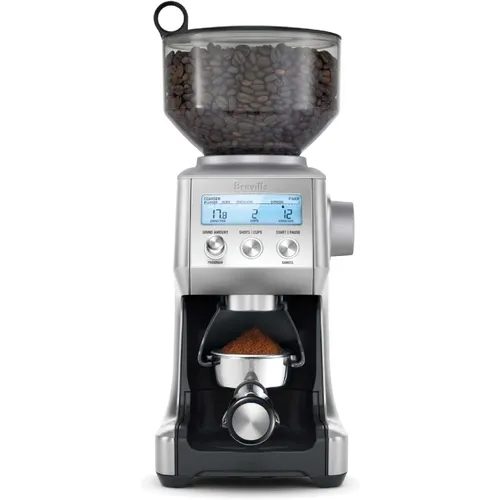
If you liked the Breville espresso machines from our Best Espresso Machines for Beginners guide, the Smart Grinder Pro feels like a natural companion. It has 60 grind settings (the most on this list), a digital display that shows grind size and dose time, and a cradle that holds your portafilter directly under the grinder for mess-free dosing. It's the grinder equivalent of the Bambino Plus — Breville has thought about every friction point and smoothed it out. The stainless steel conical burrs do a good job across brew methods, and the precision timer means you get the same dose every morning without thinking about it. It pairs especially well with any Breville machine since the aesthetics match.

Pros

  • 60 grind settings — most on this list
  • Digital LCD display shows grind size and time
  • Portafilter cradle for direct, mess-free dosing
  • Programmable timed dosing for consistency
  • Matches Breville espresso machine aesthetics

Cons

  • Stepped grind adjustment — some espresso users want stepless
  • Retention is higher than single-dose grinders
  • Hopper-fed design means beans sit exposed to air
  • Same price as the Fellow Opus — a harder sell for espresso-only users
Fastest Grinder
Baratza Sette 30

Baratza

Baratza Sette 30

$299.95
8.5/ 10

Why we love it

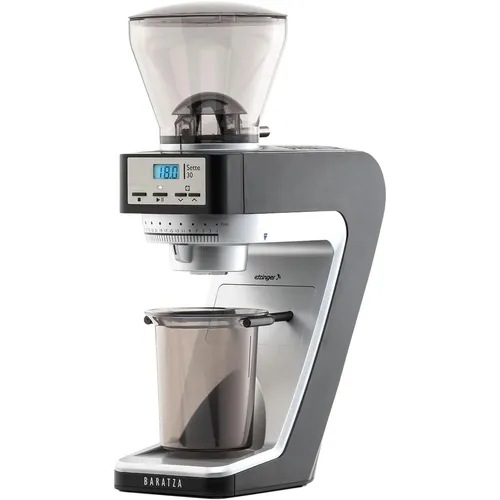
The Sette 30 is for the person who's gotten serious about espresso and wants a grinder that keeps up. Its revolutionary design flips the script — the outer burr spins while the inner stays fixed, creating a straight-through grind path that's blazingly fast (up to 5g per second) with almost zero retention. That means virtually every gram of coffee you put in comes out as grounds, with no stale leftovers hiding inside. The 40mm Etzinger-made conical burrs are manufactured in Liechtenstein and deliver excellent espresso grind quality. The digital timer is precise to 0.1 seconds, giving you repeatable doses every morning. The convertible device holder lets you grind directly into a portafilter or the included grounds bin. It's louder than the Encore ESP and the 30 macro settings (no micro-adjustment) mean you'll need to play with dose and tamping to dial in — but for speed, retention, and espresso grind quality at $300, it's hard to beat.

Pros

  • Near-zero retention — straight-through grind path
  • Blazing fast grinding at up to 5g per second
  • Etzinger-made burrs from Liechtenstein
  • Digital timer precise to 0.1 seconds
  • Convertible holder for portafilter or grounds bin

Cons

  • No micro-adjustment — 30 macro steps only, harder to dial in
  • Noticeably loud due to open straight-through design
  • Espresso-focused — limited range for coarse brew methods
  • Known gearbox durability concerns in early units (improved in recent production)
Best Set-and-Forget
OXO Brew Conical Burr Grinder

OXO

OXO Brew Conical Burr Grinder

$99.99
8.4/ 10

Why we love it

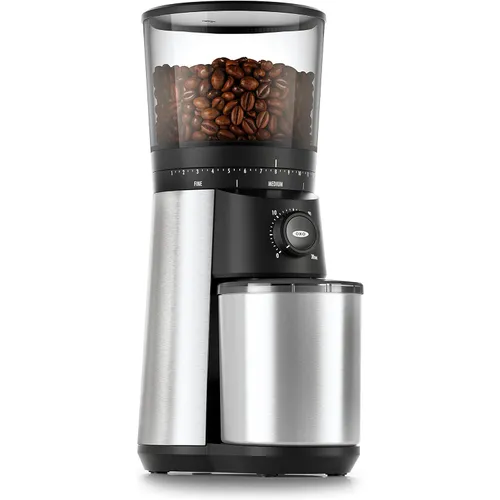
If you want a set-it-and-forget-it grinder that just works, the OXO Brew is hard to beat. It earned Wirecutter's top pick designation and has over 22,000 Amazon reviews for a reason: the one-touch timer remembers your last setting, so every morning you just press the button and walk away. The 15 grind settings plus micro-adjustments cover everything from medium-fine for drip to coarse for French press (it technically has an espresso setting, but dedicated espresso grinders will outperform it there). The UV-blocking hopper is a nice touch — it protects beans from light degradation in sunny kitchens. The stainless steel grounds container fights static, so you won't have grounds clinging to everything. At around $100, it's the best grinder for someone who wants consistent, hassle-free grinding without thinking about it too much.

Pros

  • One-touch timer remembers your last setting — just press and go
  • 22,000+ Amazon reviews and Wirecutter's top pick
  • UV-blocking hopper protects beans from light
  • Static-fighting stainless steel grounds container
  • 12oz hopper capacity for the whole week's beans

Cons

  • Not precise enough for serious espresso dialing-in
  • 15 settings is limited compared to 40+ setting grinders
  • Some users report jamming with oily dark roasts
  • Hopper-fed design means beans sit exposed between uses
Best Manual Grinder
1Zpresso JX-Pro

1Zpresso

1Zpresso JX-Pro

Sold out on Amazon
9/ 10
1Zpresso JX-Pro is sold out on AmazonCheck 1Zpresso K-Ultra on Amazon · $259

Why we love it

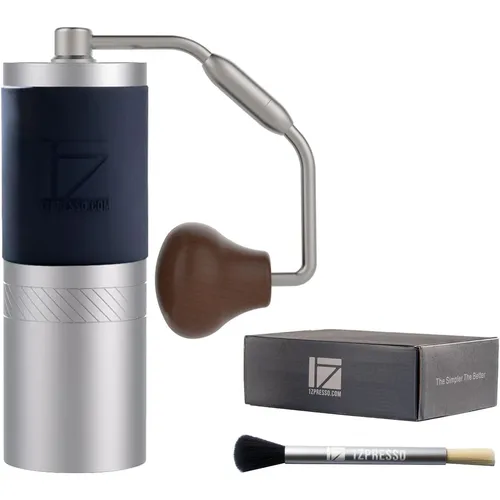
If you're willing to grind by hand, the JX-Pro delivers grind quality that punches way above its price tag — we're talking consistency that rivals $300+ electric grinders. The 48mm stainless steel burrs produce remarkably even particles, and the stepless adjustment lets you micro-tune for espresso in a way that stepped grinders can't. Grinding 18g for a double shot takes about 30-40 seconds, which is faster than you'd expect. It's dead silent (no motor), incredibly portable, and built like a tank — all metal construction, no plastic. The tradeoff is obvious: you're using your arm muscles every morning. Some people love the ritual. If that sounds tedious to you, grab one of the electrics instead.

Pros

  • Grind quality rivals electric grinders costing twice as much
  • Stepless adjustment — infinite precision for espresso dialing
  • Silent operation — perfect for early mornings or shared spaces
  • All-metal construction — extremely durable
  • Portable — great for travel or office use

Cons

  • Manual grinding requires physical effort every time
  • 30-40 seconds of hand grinding per double shot
  • Not practical if you're making multiple drinks
  • No dosing timer — you weigh beans separately
Best Value Pick
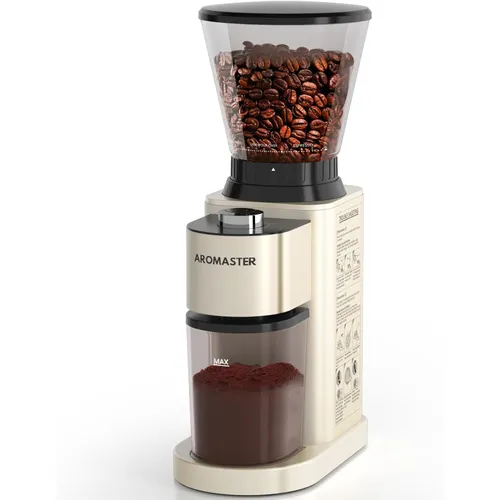
Aromaster 48-Setting Burr Grinder

Aromaster

Aromaster 48-Setting Burr Grinder

Sold out on Amazon
8/ 10
Aromaster 48-Setting Burr Grinder is sold out on AmazonCheck Capresso Infinity Plus on Amazon · $98

Why we love it

The Aromaster is the dark horse on this list. With a 4.6-star average across nearly 800 reviews, it offers features you'd expect from grinders twice its price: 48 grind settings (more than the Fellow Opus), anti-static technology that actually works, a 40-second adjustable timer, and stainless steel conical burrs that produce a reasonably consistent grind. The UV-blocking bin is a thoughtful detail — it protects ground coffee from light degradation. The removable ring burr makes cleaning straightforward, and there's even a built-in brush to prevent blockages. It won't win awards for brand prestige, but if you want the most grind settings per dollar and don't care about name recognition, the Aromaster delivers surprising value. It handles everything from fine espresso-range grinds to coarse French press without issue.

Pros

  • 48 grind settings — more than most grinders at 3x the price
  • 4.6-star rating with strong review consensus
  • Anti-static technology keeps workspace clean
  • Adjustable timer up to 40 seconds
  • UV-blocking bin protects ground coffee

Cons

  • Lesser-known brand with shorter track record
  • Grind consistency doesn't match premium burr sets
  • 12-month warranty is shorter than established brands
  • Build quality is adequate but not premium
Capresso Infinity Plus

Capresso

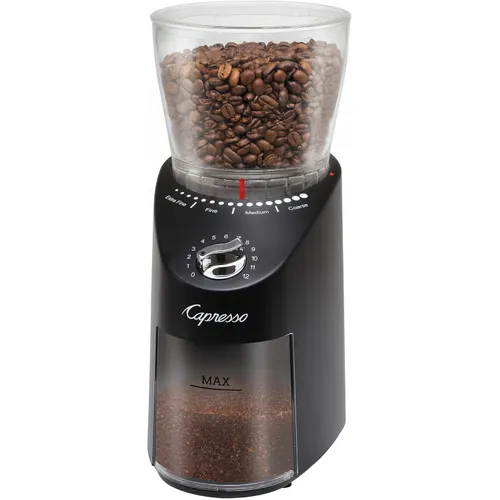
Capresso Infinity Plus

$98.00
8.2/ 10

Why we love it

The Capresso Infinity Plus punches well above its price. The secret is the Swiss-made conical steel burrs — produced as matched pairs and hand-assembled to within 0.1mm precision. That's the kind of manufacturing you'd expect from a $300 grinder, not a $98 one. The gear reduction motor runs at the slowest speed in its class, which means less friction, less heat, and more preserved flavor and aroma. It's noticeably quieter than most grinders at this price too. The 16 settings are organized into four clear categories (extra fine, fine, regular, coarse), which makes it approachable for beginners who don't want to guess. It can grind fine enough for Turkish coffee — a rare feature at any price. The build quality isn't going to rival a Baratza, but for $98, the grind quality is remarkable.

Pros

  • Swiss-made conical burrs with 0.1mm precision fit
  • Slowest grinding speed in class — preserves flavor and aroma
  • Noticeably quiet operation
  • Can grind fine enough for Turkish coffee
  • Clear 4-category setting organization for beginners

Cons

  • 16 settings is fewer steps than competitors with 30-60
  • Plastic body feels budget at the price
  • 4oz grounds container is small for batch grinding
  • Timer dial is less precise than digital controls
Best Budget Pick
SHARDOR Conical Burr Grinder

SHARDOR

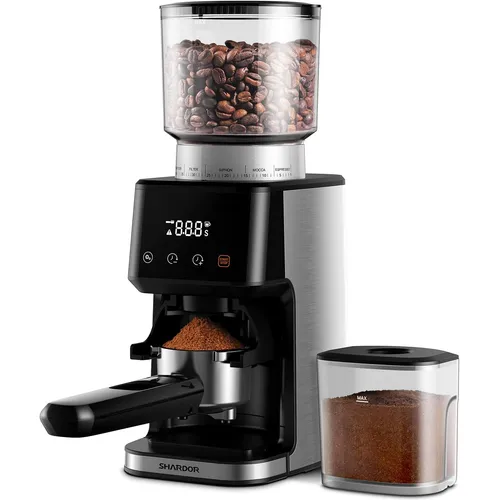
SHARDOR Conical Burr Grinder

$79.99
7.2/ 10

Why we love it

At around $80, the SHARDOR sits in interesting territory: it's still the most affordable grinder on this list by a wide margin, but it's not cheap. It earns that price with 51 grind settings (more than any other grinder here), a touchscreen precision timer so you get the same dose every morning without a scale, and anti-static technology that keeps your counter clean. The grind consistency isn't Baratza-level — the burrs are smaller and the tolerances are tighter at the budget end — but it's genuinely good enough that you'll taste the difference vs. pre-ground or blade-ground coffee from day one. If you want to find out whether freshly ground coffee is worth caring about before spending $170+, this is the grinder to start with.

Pros

  • 51 grind settings — more than any other grinder on this list
  • Precision timer touchscreen for consistent dosing without a scale
  • Anti-static design reduces mess
  • Real burr grinding under $100
  • Compact and lightweight

Cons

  • Grind consistency is noticeably behind pricier grinders
  • Espresso results are inconsistent — better for drip and pour over
  • Plastic construction won't last as long as metal alternatives
  • Fewer fine-tuning options in the espresso range
  • Louder motor than premium options
Best Ultra-Budget
Cuisinart Supreme Grind Automatic Burr Mill

Cuisinart

Cuisinart Supreme Grind Automatic Burr Mill

$72.99
7.6/ 10

Why we love it

Let's be honest: if you're coming from a blade grinder (or pre-ground coffee), the Cuisinart DBM-8 is the cheapest meaningful upgrade you can make. It's the best-selling burr grinder on Amazon for a reason — 18 grind positions from ultra-fine to extra-coarse, a slide-dial selector that couldn't be simpler, and a cup-size selector from 4 to 18 cups so you grind exactly what you need. The flat burr design produces reasonably uniform grounds for drip, pour over, and French press. Will it match a $200 grinder? No. The grind consistency isn't as tight, and it's louder and messier than pricier options. But at under $55, it's a legitimate burr grinder that makes a real difference in your coffee compared to blade grinding or buying pre-ground. If you're testing whether fresh-ground coffee is worth it before investing more, start here.

Pros

  • under $75 — cheapest real burr grinder worth buying
  • 48,000+ Amazon reviews — massively proven track record
  • Dead-simple slide-dial and cup-size selector
  • 18 grind positions cover most brew methods
  • Large hopper holds 8oz of beans

Cons

  • Flat burrs produce more inconsistency than conical at this price
  • Noticeably loud during grinding
  • Static causes grounds to cling — expect some mess
  • Not suitable for espresso despite having fine settings

How we chose these

We evaluated each grinder based on grind consistency across settings, ease of use for beginners, noise level, build quality, versatility across brew methods, and value for money. We prioritized grinders that a beginner can use confidently on day one while still delivering results good enough that you won't outgrow them in six months.

What to know before you buy

Why does the grinder matter so much?

Coffee extraction depends on grind consistency. If your grounds are a mix of fine powder and coarse chunks, water extracts unevenly — you get bitter flavors from the fine particles and sour flavors from the coarse ones, all in the same cup. A quality burr grinder produces uniform particles so water extracts evenly, which means a cleaner, more balanced cup. This is especially critical for espresso, where water is forced through the grounds under high pressure — any inconsistency gets amplified.

Burr grinder vs. blade grinder — what's the difference?

A blade grinder works like a blender — spinning blades chop beans randomly, producing a mix of dust and boulders. You have no control over grind size, and every batch is inconsistent. A burr grinder crushes beans between two abrasive surfaces (burrs) set at a precise distance apart. The gap between the burrs determines your grind size, and every particle comes out roughly the same. The difference in your cup is night and day. If you're currently using a blade grinder or buying pre-ground, switching to even a budget burr grinder is the single biggest upgrade you can make.

Conical burrs vs. flat burrs — does it matter for beginners?

Not really. Conical burrs (cone-shaped) are more common in home grinders — they run quieter, generate less heat, and are easier to clean. Flat burrs (two flat discs) produce slightly more uniform particles and are preferred by competitive baristas for their flavor clarity. At the beginner price point, virtually every grinder uses conical burrs, and they're excellent. Don't stress about this until you're spending $400+.

Stepped vs. stepless adjustment?

Stepped grinders click between fixed settings (like a dial with notches). Stepless grinders let you adjust infinitely between settings (like turning a volume knob). For espresso, stepless is technically better because you can make tiny adjustments to dial in your shot perfectly. For pour over and drip, stepped is totally fine since those brew methods are more forgiving. Most beginner grinders are stepped, and that's perfectly okay.

How much should I spend on a grinder?

If you're buying your first burr grinder, $50 gets you in the door with a noticeable upgrade over blade grinders and pre-ground coffee. The sweet spot for most beginners is $170–250 — that range gets you proven reliability, good consistency, and a grinder you'll use for years. If you're buying an espresso machine and a grinder at the same time, a common rule of thumb is to spend at least as much on the grinder as you do on the machine. We know that's hard to swallow, but the grinder is genuinely where the flavor comes from.

Bottom line

For most people, the Baratza Encore ESP remains our top pick for espresso grinding, and the Fellow Opus is the best all-rounder if you brew multiple methods. If pour over is your thing, the Fellow Ode Gen 2 is in a class of its own. On a tighter budget, the OXO Brew and Aromaster both deliver strong performance under $100 — and if you just want to dip your toes into fresh grinding for under $55, the Cuisinart DBM-8 is where to start.

Related guides

Stay in the loop

New gear reviews, brew tips, and the occasional deal — straight to your inbox. No spam, ever.