There are two pod systems worth considering and they make different drinks. Nespresso pushes water through a capsule at high pressure and gives you a small, strong coffee with crema. Keurig pushes water through a K-Cup at low pressure and gives you a mug of filter coffee, quickly. Neither is a worse version of the other — they are answering different questions, and most comparisons of pod machines skip straight past that.
Which matters because the machine is the small decision here. A pod machine is a one-off purchase attached to a capsule subscription you have not signed, and for a daily drinker the capsules will cost more than the machine inside about a year. You are choosing a supply chain, not an appliance.
So the picks are grouped by what comes out of the machine. Decide the system first, then buy the cheapest machine in it that has the features you actually want — that order will save you more money than any comparison of the machines themselves.
Quick picks
Nespresso Vertuo Plus with Aeroccino
$167
Vertuo-system pod machine with four cup sizes from a double espresso to an 8 oz coffee, a 25-second heat-up, and an Aeroccino milk frother in the box.
Four cup sizes from a double espresso to a full mug, real crema, and a milk frother in the box. The capsule carries a barcode that tells the machine how to brew that specific coffee, which is the closest any pod system gets to actually brewing rather than dispensing.
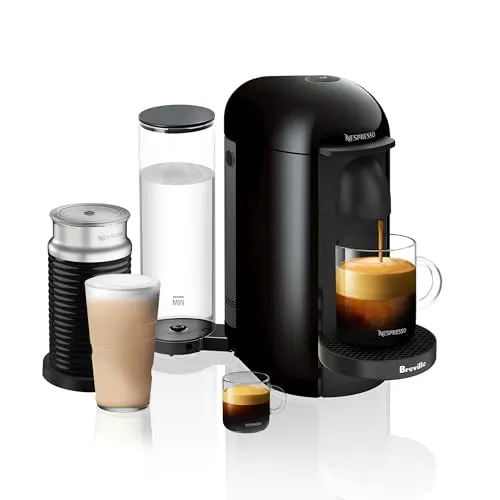
The pod machine to buy if you drink milk drinks. Vertuo capsules carry a barcode that tells the machine the volume, grind and spin speed for that specific coffee, so a double espresso and an 8 oz mug both come out right from one machine — something no Keurig attempts. The included Aeroccino froths hot or cold in one touch, which is what turns a pod machine into something that makes a passable latte rather than just coffee.
Pros
Four cup sizes, from a double espresso to an 8 oz coffee
Capsule barcode sets volume and extraction per coffee, not per button
Aeroccino milk frother included — hot or cold, one touch
Heats in about 25 seconds
Genuine crema, which Keurig does not produce
Cons
Vertuo capsules are Nespresso-only — no third-party or supermarket refills
Capsules cost more per cup than K-Cups
Vertuo pods are aluminium and need Nespresso’s own recycling scheme
Larger footprint than a basic pod machine, and the frother is another object
If what you want is espresso
Original-line Nespresso runs at high pressure and produces a genuine crema. It is also the open half of the system — capsules are made by dozens of companies, so you are not buying from one seller forever.
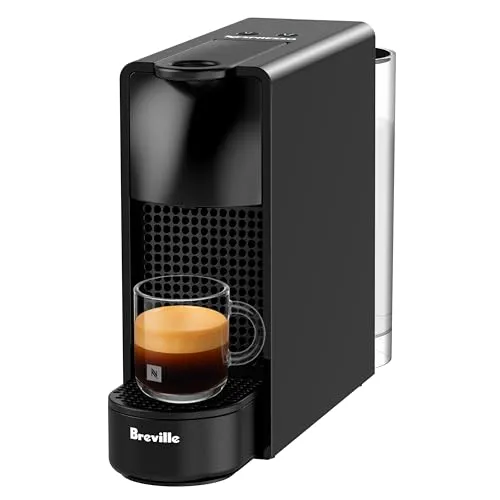
The one to buy if what you actually want is espresso. Original-line Nespresso runs at high pressure and produces a real crema, which is the thing no Keurig can do at any price — a K-Cup is filter coffee brewed quickly. The Essenza Mini strips the system to two buttons and the smallest body it comes in, and Original capsules are made by dozens of companies, so you are not locked to one seller.
Pros
Real espresso with crema, not fast filter coffee
Original-line capsules are made by many brands — no single supplier
Smallest machine in the Nespresso range
Heats in about 25 seconds
Cheaper per capsule than Vertuo
Cons
Two cup sizes only, both small — this is not a mug of coffee
No milk frother in the box
Costs more than most Keurigs while making less coffee
Capsules still cost far more per cup than ground coffee
If what you want is a mug of coffee
This is where Keurig wins and Nespresso does not compete. A K-Cup is filter coffee brewed quickly, which is the right thing when you want a full mug rather than a small strong cup — and the pods are cheaper and sold everywhere.
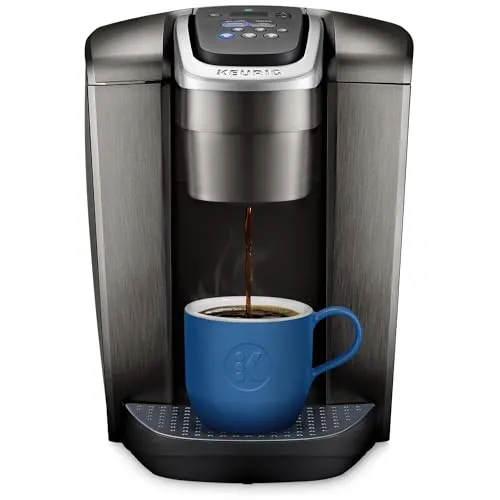
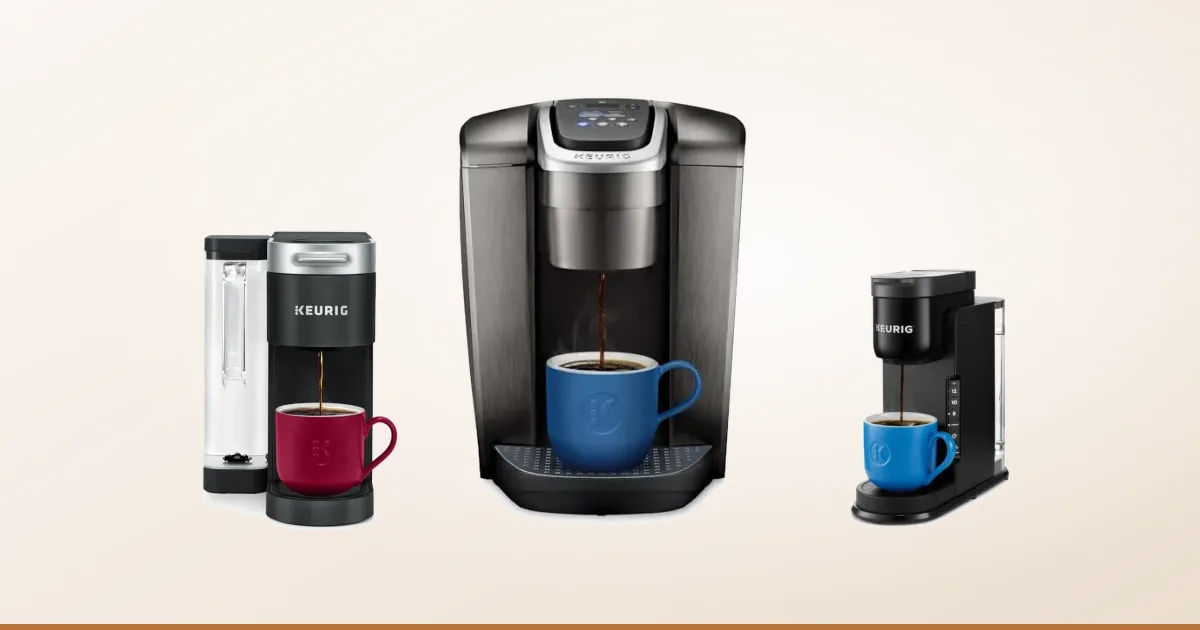
The one pod machine that gives you the controls the rest leave out. Brew temperature is adjustable rather than fixed, which is the single biggest reason cheap pod coffee tastes flat, and the iced setting brews hot and stronger over ice instead of just brewing weak coffee onto cubes. The 75 oz reservoir means a household isn't refilling it every other cup, and hot water on demand covers tea and oatmeal without a kettle.
Pros
Adjustable brew temperature, rare on a pod machine
Iced setting brews stronger to survive the melt
Five cup sizes from 4 to 12 oz
Large 75 oz removable reservoir
Hot water on demand for tea and instant food
Takes a reusable filter if you want to use your own grounds
Cons
Cost per cup is far higher than any ground-coffee machine here
Pods are a recurring purchase and mostly not recyclable kerbside
You can't control grind, dose or ratio — the pod decides
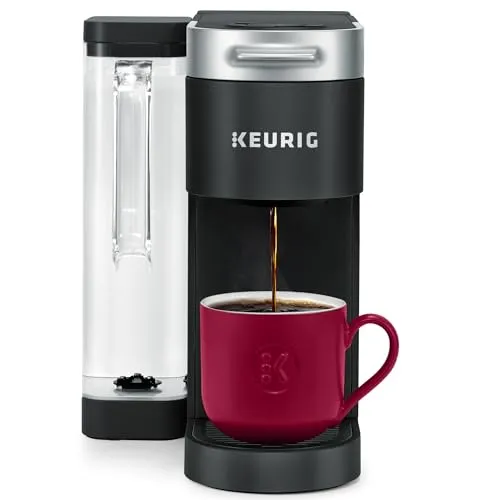
MultiStream is the one genuine brewing change Keurig has made in years — several jets instead of a single needle, so the pod saturates more evenly. The reservoir mounts on either side or behind, which sounds trivial until you have a machine wedged next to a wall. This is the sensible middle of the range: the extraction improvement without the K-Elite's temperature control.
Pros
MultiStream extraction wets the pod more evenly than a single jet
Dual-position reservoir fits awkward counters
Four brew sizes
Removable reservoir refills at the sink
Takes a reusable filter for your own grounds
Cons
No brew temperature control
No iced setting
Cost per cup is far higher than ground coffee
Keurig publishes no brew temperature for it
Cheapest way in
No extraction cleverness and no temperature control. If the pod system is the point and the machine is just the thing that heats water, these do that for the least money.
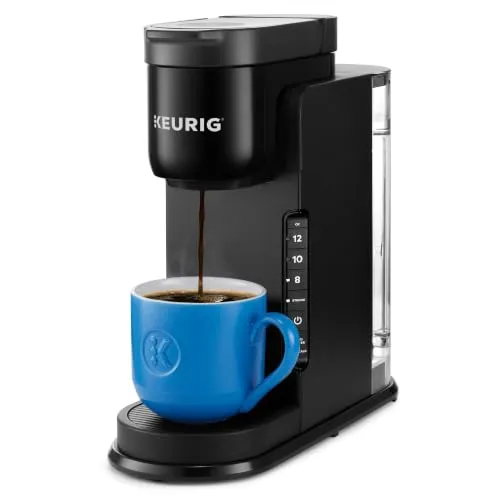
The version to buy if you want a pod machine and nothing else. Three cup sizes, a strong button that slows the brew for a more concentrated cup, and a reservoir that holds enough for a few mugs rather than making you refill every time. It skips MultiStream and temperature control, which is exactly why it costs less than the machines above it.
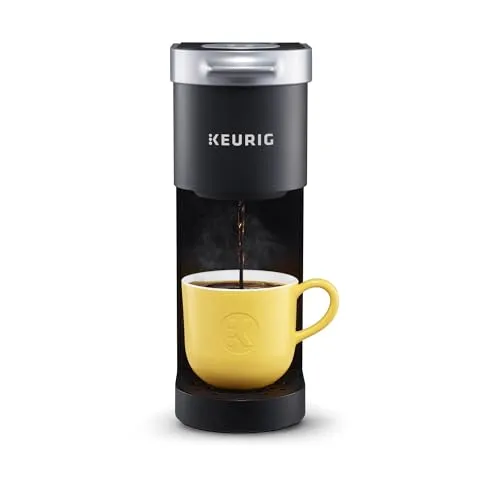
The answer when the constraint is space rather than coffee. Under five inches wide fits a dorm desk, an office drawer unit or a rental kitchen with no counter left, and the cord stores in the back so it travels. You fill it per cup, which is the trade for the size — there's no reservoir to run dry and none to take up room either.
Pros
Under five inches wide — fits where nothing else will
Cord storage makes it genuinely portable
Brews 6 to 12 oz
Cheapest way into the pod system
Takes a reusable filter for your own grounds
Cons
One cup of water at a time — you fill it every single brew
No temperature control, strength control or iced setting
Cost per cup is far higher than ground coffee
Slower in practice than a machine with a reservoir
You are choosing a capsule system, not a machine
The machine is a one-off; the capsules are forever, and they will cost more than the machine within about a year of daily drinking. So decide the system first — Nespresso for small strong coffee with crema, Keurig for a mug — and then pick the cheapest machine in that system that has the features you want. If that running cost is what gives you pause, single-serve machines that use ground coffee do the same job for a fraction per cup.
How we chose these
Judged on what the system produces before what the machine costs, since the capsules dominate lifetime spend. Capsule availability counted heavily: a system where only one company can sell you coffee is a different proposition from one where dozens can. Then the machine features that actually change the cup — brew temperature, extraction design, cup size range — and milk frothing where it is included rather than sold separately. Running cost and recyclability are stated on every pick because they are the two facts most likely to change someone’s mind and the two most often left out.
What to know before you buy
What’s the best pod coffee maker?
The Nespresso Vertuo Plus at $167. It brews four sizes from a double espresso to an 8 oz mug, produces real crema, and comes with an Aeroccino milk frother, so it covers espresso, coffee and milk drinks from one machine. Vertuo capsules carry a barcode that tells the machine the volume and spin speed for that specific coffee, which is the closest any pod system gets to brewing rather than dispensing. If you mainly want a big mug of ordinary coffee, buy a Keurig instead — that is what it is for.
Nespresso or Keurig — which is better?
They make different drinks, so the honest answer depends on what you drink. Nespresso wins on coffee quality: high-pressure extraction, real crema, and a small strong cup that a Keurig cannot produce at any price. Keurig wins on cost, size and availability: K-Cups are cheaper per cup, sold in every supermarket, and give you a full mug rather than a small one. If you want espresso or a latte, Nespresso. If you want a mug of coffee on the way out of the door, Keurig.
Which pod system is cheaper to run?
Keurig, clearly, and the gap widens if you buy K-Cups in bulk or use a reusable filter. Nespresso Original capsules sit in the middle and have the advantage that dozens of companies make compatible ones, which keeps prices honest. Vertuo is the most expensive and the most locked down — only Nespresso makes Vertuo capsules, because the barcode on the rim is proprietary. That single fact is the most important thing to understand before buying into Vertuo.
What’s the best pod coffee maker with a milk frother?
The Nespresso Vertuo Plus at $167, because the Aeroccino is in the box rather than sold alongside. It froths hot or cold in one touch, which is what makes the difference between a pod machine that makes coffee and one that makes a drinkable latte. No Keurig includes a frother, and Keurig coffee is filter-strength anyway, so it disappears into milk rather than standing up to it.
Can you use your own coffee in a pod machine?
With Keurig, yes — every machine here takes a reusable filter you fill with your own grounds, which cuts the running cost sharply. With Nespresso it depends on the line: Original-line machines accept refillable stainless capsules that work reasonably well, while Vertuo effectively does not, because the machine reads a barcode the refillable capsules cannot properly reproduce. If using your own coffee matters to you, that rules Vertuo out.
Are coffee pods recyclable?
Technically yes, practically it depends how much effort you will actually put in. K-Cups are polypropylene and need the lid peeled, the grounds emptied and the cup rinsed before anything will take them — and many kerbside programmes reject something that small regardless. Nespresso capsules are aluminium, which recycles well, but go back through Nespresso’s own collection scheme rather than your bin. Assume both end up in the rubbish unless you commit to the process.
Is a pod machine worth it?
On speed and consistency, nothing beats one, which is why they are in every office and hotel room. On cost per cup and coffee quality they lose to a drip machine badly. The fair way to decide is to price the capsules for how much coffee you actually drink over a year and compare that with a brewer and a bag of beans. If the number does not put you off, buy one without guilt. If it does, a single-serve machine that takes ground coffee does the same job for a fraction per cup.
Bottom line
Buy the Nespresso Vertuo Plus at $167 if you want the best coffee a pod can make, with a frother included and four cup sizes — accepting that only Nespresso will ever sell you capsules for it. Buy the Essenza Mini at $180 for espresso with an open capsule supply. Buy the Keurig K-Elite at $150 if what you actually drink is a mug of coffee, where Keurig is cheaper to run and better suited. And price a year of capsules before any of it — that number, not the machine, is the real decision.