Start from 18 g in, 36 g out, 25–30 seconds, and change one thing per shot.
A dialed-in shot tastes sweet and thick, and it tastes that way again tomorrow. Sour, bitter and watery are the shot telling you which way it missed, and each has one fix. Weigh the coffee, weigh the shot, time it, and move the grind until the time and the taste land.
Why your espresso tastes sour
Sour espresso is under-extracted: the water ran through before it dissolved the sugars, so you taste mostly the acids, which come out first. It usually pours fast, well under 25–30 seconds. Grind one step finer and pull again. If the time is already in range and it's still sour, let the shot run longer, to about 1:2.5 (45 g out from 18 g in).
—Grind finer, one step at a time. A finer grind slows the water down and gives it time to pull out the sweetness.
—Still sour at 25–30 seconds? Pull a longer shot, toward 1:2.5, before touching the grind again.
—Light roasts are the usual suspects. If your machine lets you set the brew temperature, a few degrees hotter helps them.
Why your espresso tastes bitter
Bitter espresso is over-extracted: the water stayed in the coffee long enough to pull out the harsh compounds that come out last. It usually pours slowly, well over 25–30 seconds, and drips rather than streams. Grind one step coarser and pull again. If the time is in range and it's still bitter, stop the shot sooner, at about 1:1.5 (27 g out from 18 g in).
—Grind coarser, one step at a time, so the water gets through faster.
—Bitter at 25–30 seconds? Stop the shot sooner, toward 1:1.5.
—Dark roasts turn bitter fastest. If your machine lets you set the brew temperature, a few degrees cooler tames them.
—Old coffee oil tastes bitter too: backflush and clean the group head and basket if it's been a while.
Why your espresso is watery
Watery espresso has too little coffee or too little resistance: the water gushes through the puck in a few seconds. Weigh the dose first: 18 g in a standard double basket, not a scoop by eye. Then grind finer until the shot takes 25–30 seconds to reach 36 g. Stale beans and pre-ground coffee pour watery too, because they can't build resistance at any setting.
—Weigh 18 g into the basket. An under-filled basket is the most common watery shot.
—Grind finer until the shot slows down to the right time.
—Use beans roasted within the last month, ground right before the shot.
—On a pressurized (dual-wall) basket, grinding finer barely helps; see the FAQ below.
How to dial in espresso, step by step
Dialing in means holding the dose and the yield still and moving the grind until the shot runs on time, then tuning the taste with the yield. The starting recipe: 18 g in, 36 g out (1:2), 25–30 seconds.
1Fix the dose. Weigh 18 g of coffee into a double basket and keep it there while you dial in. A dose by eye changes every shot, so nothing you learn carries over.
2Pick the yield. Aim for 36 g of espresso in the cup, a 1:2 ratio. Put a scale under the cup and stop the shot when it reads 36 g.
3Time it. Start the timer when you start the pump. The target is 25–30 seconds to reach 36 g.
4Change the grind, one step. Too fast and sour: one step finer. Too slow and bitter: one step coarser. Pull again and change nothing else.
5Taste, then tune the yield. Once the time is in range, fix what's left with the yield: sour, run it longer toward 1:2.5; bitter, stop it sooner toward 1:1.5.
6Write it down. Note the grind setting, dose and yield. A new bag, or the same bag a few weeks on, usually needs a step or two.
One change per shot. Move the grind and the dose together and a better shot can't tell you which one worked. Grind first, because it moves the time the most; the yield is for the last step of taste.
What each grind setting looks and feels like, and where common grinders start, is in our espresso grind size guide. Espresso counts coffee in against drink out; for filter coffee's water-first ratios, see coffee to water ratio.
The two tools that make it work
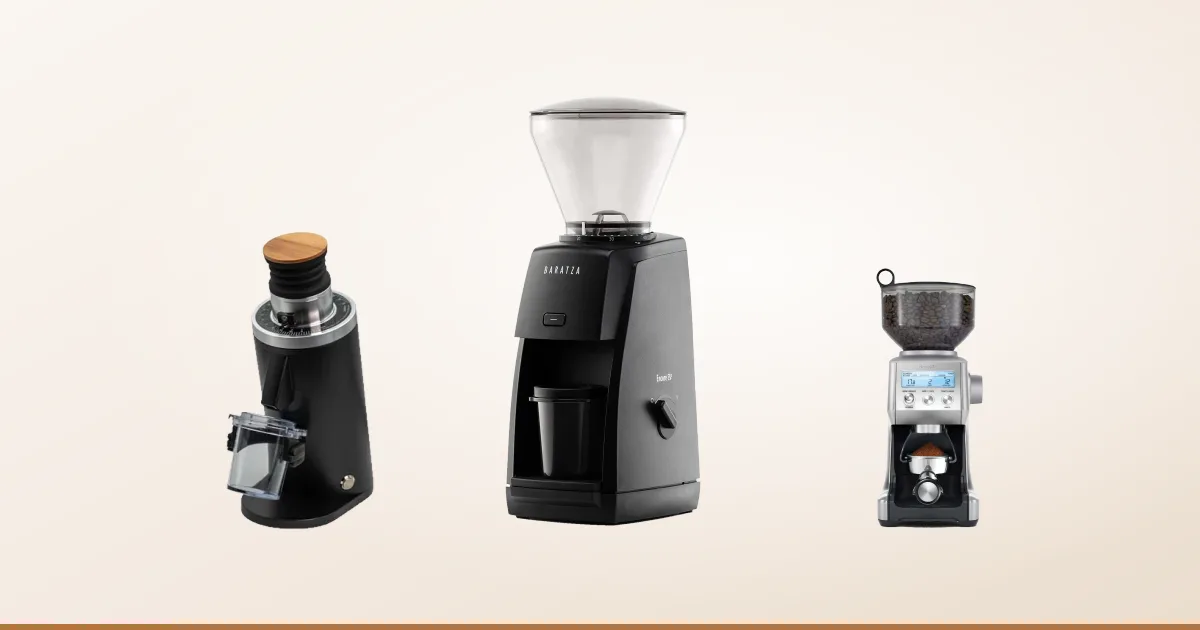
Every fix above is “one step finer” or “a few grams longer”, and both need the right tool. A grinder with small steps in the espresso range lets you move the time a few seconds at a time; a filter grinder jumps straight past the shot you want. Our best grinders for espresso covers the rest of the range.
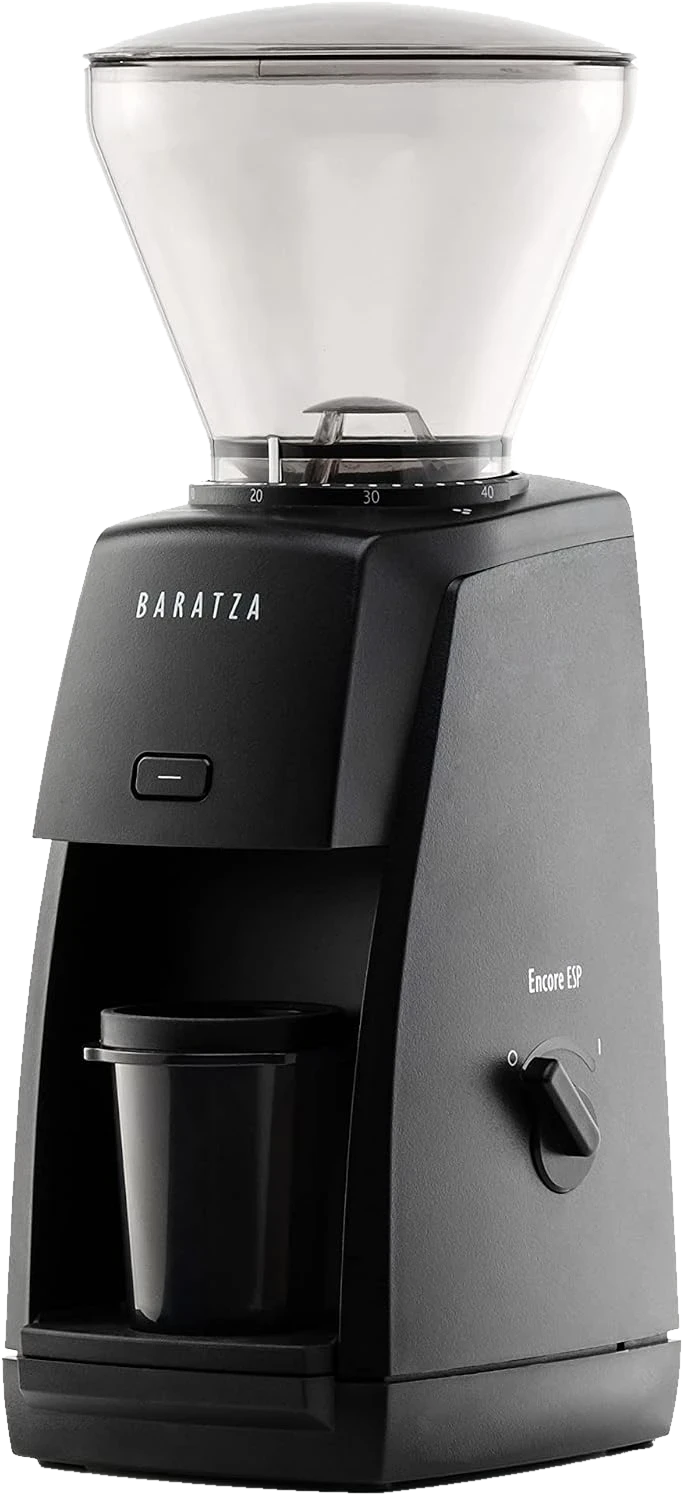
Baratza has been the go-to brand for beginner grinders for over a decade, and the Encore ESP is their answer to espresso specifically. It keeps the original Encore's compact body and 40mm conical size, with a different burr (Baratza's M2) on a quick-release mount, and it splits its 40 settings in two: 20 small steps in the fine range for espresso, then 20 larger ones for filter brewing. The small steps are what make a shot easy to dial in. It's simple to use (one button, one dial), and built to last (Baratza will sell you replacement parts for years). It's the grinder to start a first espresso setup with.
Pros
20 small espresso steps, plus 20 filter settings
Baratza's legendary serviceability — replacement parts available for years
Simple one-button, one-dial operation
Compact footprint fits next to any espresso machine
Cons
Only 20 settings for filter coffee, so pour over and French press get coarser steps than on the original Encore
Stepped adjustments mean less precision than stepless grinders
Plastic body feels less premium than pricier options
No built-in timer — you grind by time/feel
Dose and yield are weights, so a scale under the cup is what turns a good shot into a recipe you can pull again tomorrow.
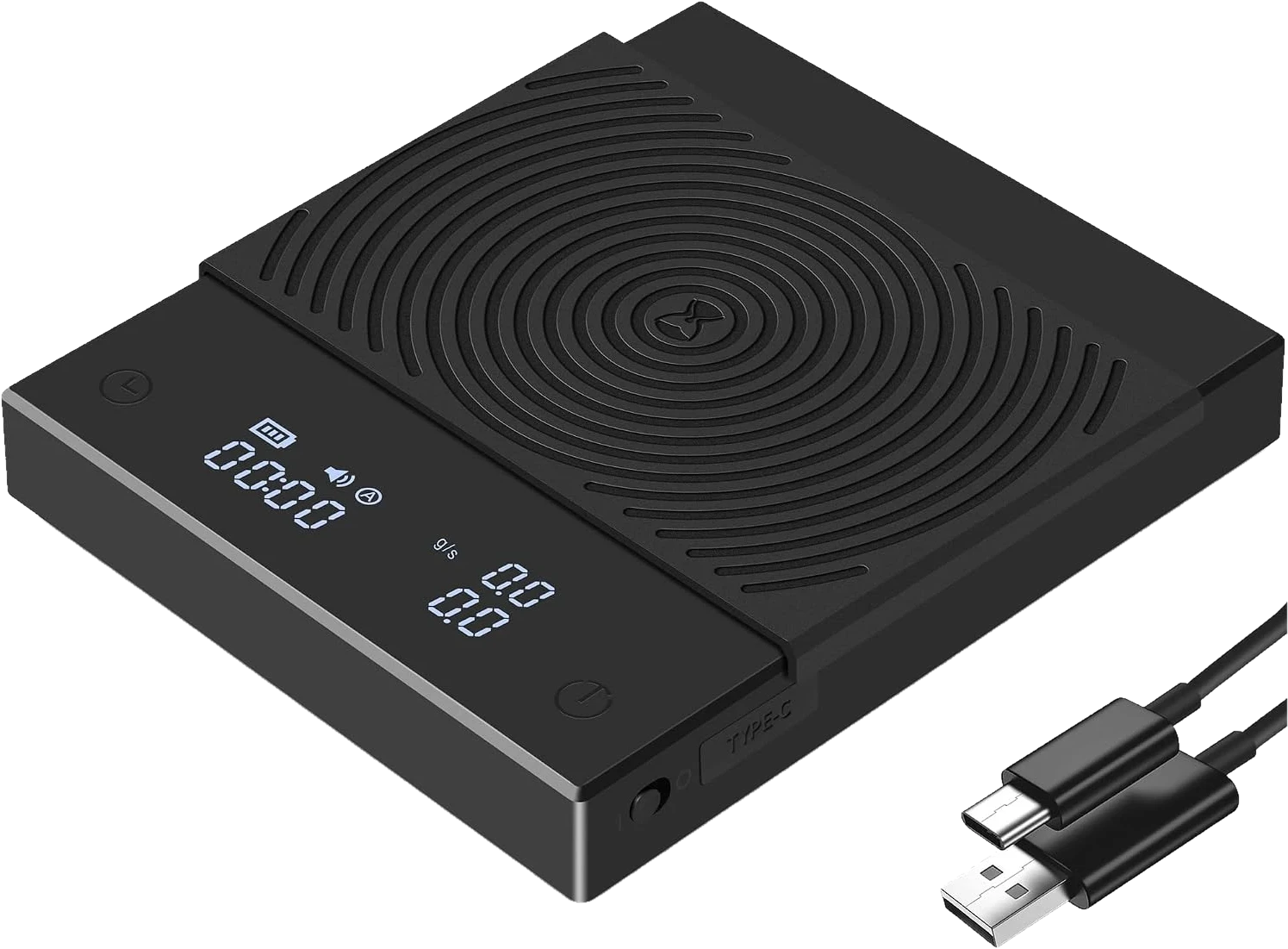
The Timemore Black Mirror does everything most coffee brewers need at a price that doesn't sting. It weighs to 0.1g precision, has a built-in timer with auto-start, shows real-time flow rate, and charges via USB-C. The hidden LED display looks slick — it only appears when the scale is on — and the included silicone heat pad protects it from hot vessels. It's responsive enough for espresso and spacious enough for pour over. For 90% of home brewers, there's zero reason to spend more.
Pros
0.1g precision with 2kg max capacity
Built-in timer with auto-start on weight detection
Real-time flow rate display
USB-C rechargeable, up to 10 hours a charge per Timemore
LED display hidden in the top, invisible when the scale is off
Cons
No Bluetooth or app connectivity
Auto-off after 3 minutes can be annoying
Silicone pad is essential (scale is sensitive to heat)
Display can be hard to read at certain angles
Common questions
Why is my espresso sour?
Sour espresso is under-extracted: the water ran through before it dissolved the sugars, so you taste mostly the acids, which come out first. It usually pours fast, well under 25–30 seconds. Grind one step finer and pull again. If the time is already in range and it's still sour, let the shot run longer, to about 1:2.5 (45 g out from 18 g in).
Why is my espresso bitter?
Bitter espresso is over-extracted: the water stayed in the coffee long enough to pull out the harsh compounds that come out last. It usually pours slowly, well over 25–30 seconds, and drips rather than streams. Grind one step coarser and pull again. If the time is in range and it's still bitter, stop the shot sooner, at about 1:1.5 (27 g out from 18 g in).
Why is my espresso watery?
Watery espresso has too little coffee or too little resistance: the water gushes through the puck in a few seconds. Weigh the dose first: 18 g in a standard double basket, not a scoop by eye. Then grind finer until the shot takes 25–30 seconds to reach 36 g. Stale beans and pre-ground coffee pour watery too, because they can't build resistance at any setting.
How do you dial in an espresso machine?
Hold the dose and the yield fixed and change only the grind. Weigh 18 g of coffee, pull 36 g of espresso (1:2) and time it: the target is 25–30 seconds. Too fast and sour, grind one step finer; too slow and bitter, one step coarser. When the time lands, fine-tune by taste with the yield, longer for a sour shot and shorter for a bitter one. One change per shot, so you know which one worked. Our espresso grind size guide shows what each setting looks like.
Why is my espresso pulling too fast?
A shot that reaches 36 g in well under 25–30 seconds has too little resistance in the puck. In order of likelihood: the grind is too coarse, the basket holds too little coffee, or the beans are stale. Weigh 18 g, then grind finer one step at a time until the time lands. On a pressurized basket, grind barely changes the speed.
Why does my espresso taste sour and bitter at the same time?
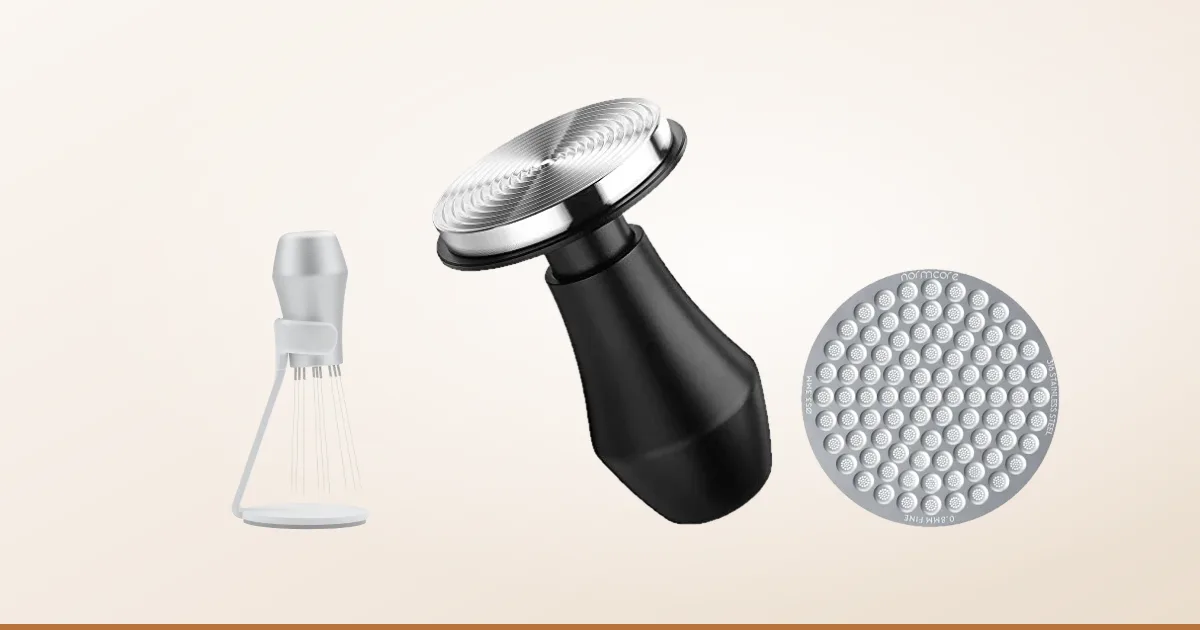
Sour and bitter in one sip usually means channeling: the water found a crack or a loose patch in the puck and rushed through it, over-extracting that path while the rest of the coffee stayed under-extracted. Spurts from the spout or a pale streak in the stream are the sign. Fix the puck before the grind: break up clumps with a WDT tool, level the coffee and tamp flat. Our espresso accessories guide has the tools.
Why can't I dial in espresso with a pressurized basket?
A pressurized (dual-wall) basket builds pressure at one small hole under the coffee, not in the puck, so it pours a similar shot whatever the grind. That forgives pre-ground coffee, and it also hides what the grind is doing, so dialing in barely changes the taste. To dial in, switch to the single-wall basket (the Breville Bambino ships with both) and grind fresh with a grinder fine enough for espresso, like any of our espresso grinder picks.
Why is my espresso puck wet?
A wet puck on its own doesn't mean a bad shot. Many home machines leave the water above the puck sitting on it when the pump stops; machines with a three-way solenoid valve release that pressure, so their pucks come out drier. Judge the shot by its time and taste. A soupy puck from a fast, watery shot is different: the basket was under-filled or the grind too coarse.
Why does my espresso taste burnt?
A burnt, ashy shot is over-extracted, a very dark roast, or both. Grind one step coarser or stop the shot sooner, toward 1:1.5. If every shot tastes burnt whatever you change, clean the machine: old coffee oil in the group head and basket turns rancid and bitter.
How do you dial in espresso on a Breville Barista Express?
The same way as any machine, with its built-in grinder as the dial. Use the single-wall basket, start at grind setting 5 (Breville's suggested start), weigh the dose and pull 36 g in 25–30 seconds. Move the grind dial one number at a time: lower is finer. The pressure gauge helps spot a shot that's far off, but the time and the taste decide.
How do you dial in espresso without wasting beans?
Make every shot count. Weigh the dose and the yield so each shot tells you something, change one thing at a time, and take bigger grind steps at first, then smaller ones as you close in. A near-miss is still good in a latte. Dial in at the start of a bag rather than the end, so the setting you find lasts the rest of it.