GuidesBrowseComparisons
Roundup

Best Coffee Grinders for Espresso

The grinder decides whether your shot pours in 28 seconds or 12. Six that can hold an espresso setting, and who each one is for.

By Dana WhitfieldUpdated November 2026
6 products compared9 min read
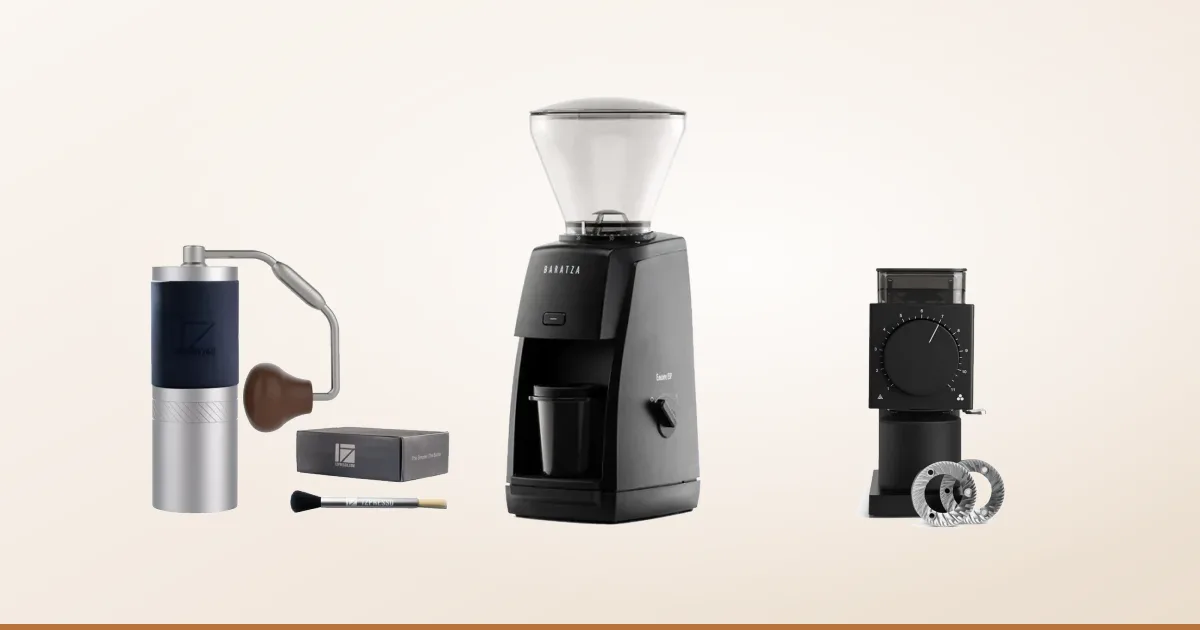
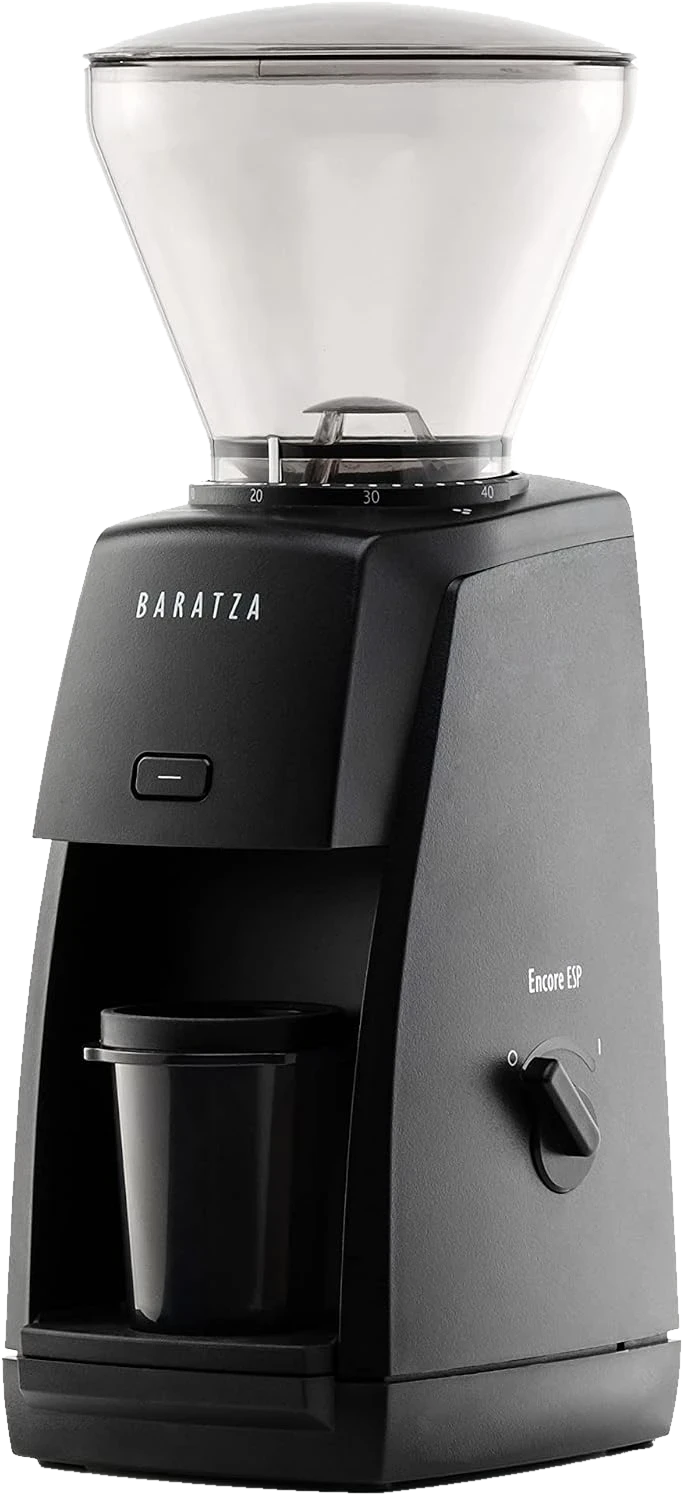
Baratza Encore ESP

★ Our top pick

Baratza Encore ESP

Best Espresso Grinder · Around $200

The most trusted name in entry-level grinders, now tuned for espresso: 20 small steps in the fine range, plus 20 more for filter coffee.

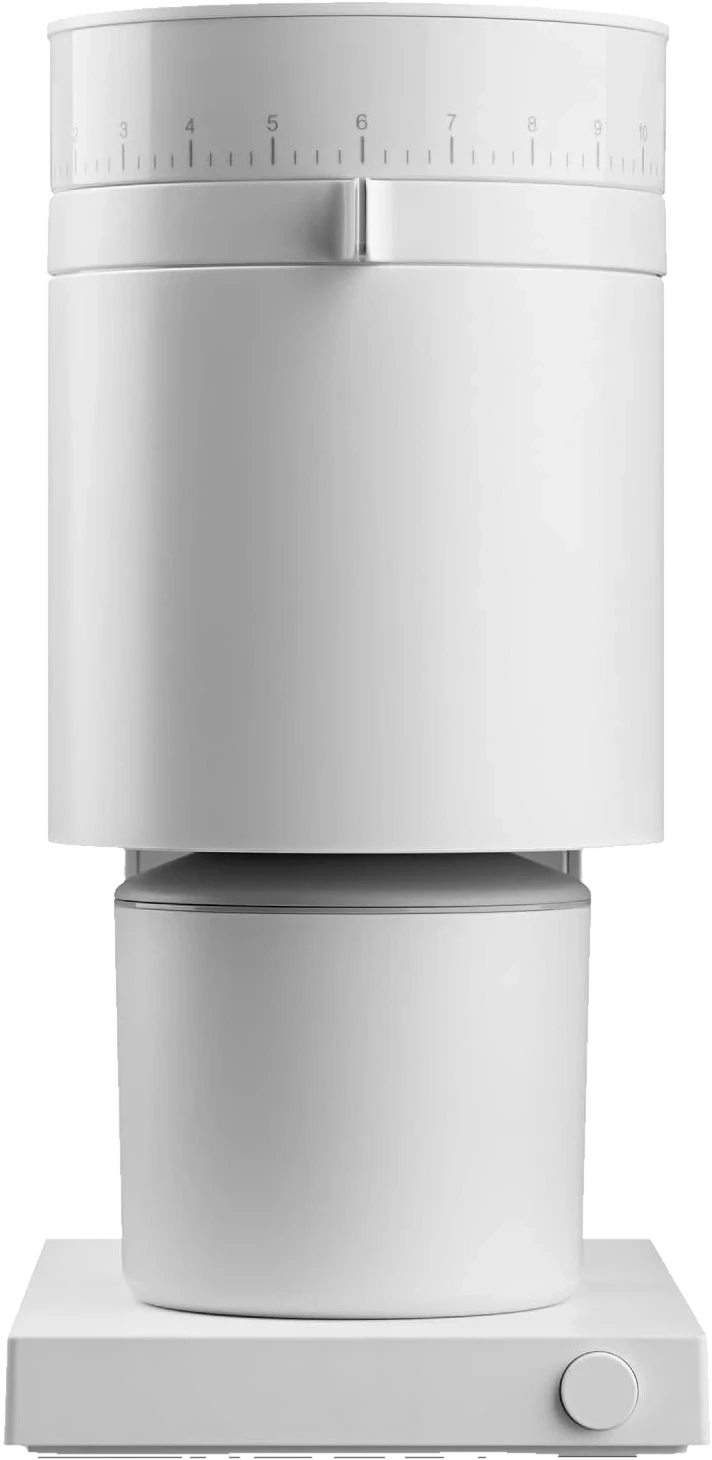
Turin DF54

Flat Burrs, Stepless

Turin DF54

Around $230

54mm flat burrs and a stepless dial, built to grind one weighed dose at a time and leave almost nothing behind.

Breville Smart Grinder Pro

Easiest to Use

Breville Smart Grinder Pro

Around $200

The easiest grinder to use — a digital display tells you exactly what's happening. 60 settings, timed dosing, and Breville's polished UX.

A good espresso shot pours for about 28 seconds and tastes sweet. A bad one rushes out in 12 and tastes sour. The difference is the grinder: the machine pushes water at the same pressure every time, and the grind decides how fast it gets through.

So an espresso grinder has two jobs a filter grinder doesn’t: grind fine enough, and move in steps small enough to land between “too fast” and “too slow”. Every grinder here does both. They differ in how much of the work they leave to you, from a hopper and a timer you set once to a single-dose grinder where you weigh every shot.

Every pick is under $500, because that is where the home espresso grinder market sits, and they are grouped by the kind of morning each one makes rather than by price. Choosing a machine to go with it? The espresso machine and grinder combos pair each grinder here with a machine.

Best for most people

Burrs
40 mm conical
Settings
40
Espresso
Yes

Why we love it

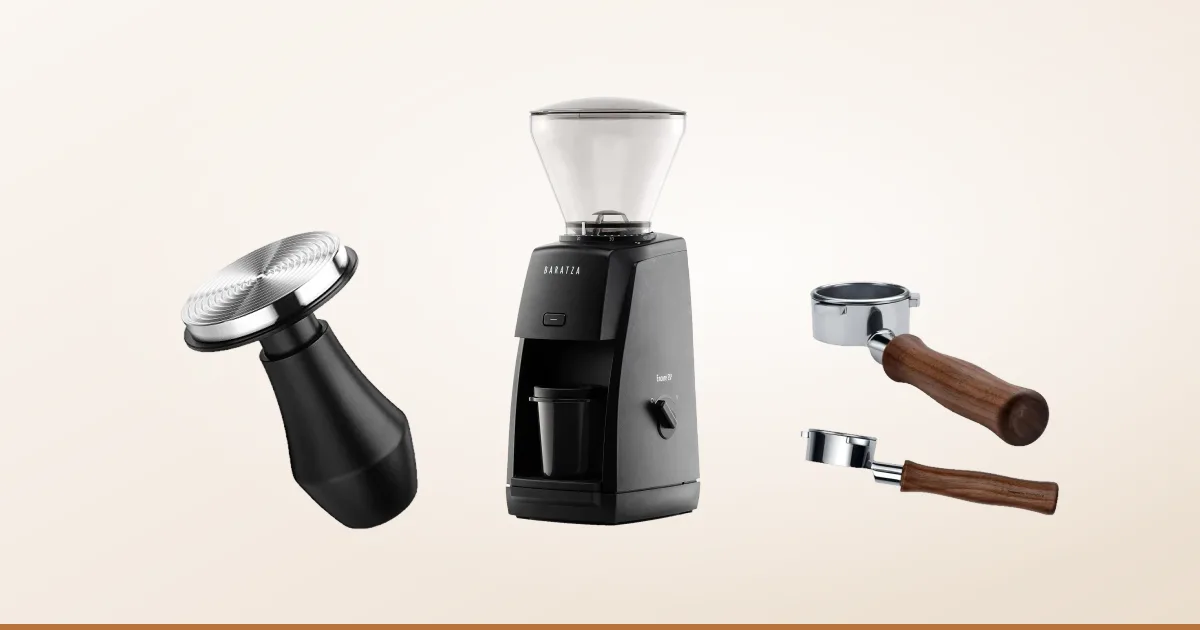
Baratza has been the go-to brand for beginner grinders for over a decade, and the Encore ESP is their answer to espresso specifically. It keeps the original Encore's compact body and 40mm conical size, with a different burr (Baratza's M2) on a quick-release mount, and it splits its 40 settings in two: 20 small steps in the fine range for espresso, then 20 larger ones for filter brewing. The small steps are what make a shot easy to dial in. It's simple to use (one button, one dial), and built to last (Baratza will sell you replacement parts for years). If you're pairing a grinder with any of the machines from our espresso roundup, this is the one we'd pick first.

Pros

  • 20 small espresso steps, plus 20 filter settings
  • Baratza's legendary serviceability — replacement parts available for years
  • Simple one-button, one-dial operation
  • Compact footprint fits next to any espresso machine

Cons

  • Only 20 settings for filter coffee, so pour over and French press get coarser steps than on the original Encore
  • Stepped adjustments mean less precision than stepless grinders
  • Plastic body feels less premium than pricier options
  • No built-in timer — you grind by time/feel
Single-dose grinders

You weigh each dose, and almost none of it stays behind in the grinder.

Flat Burrs, Stepless
Turin DF54

Turin

Turin DF54

8.6/ 10
Burrs
54 mm flat
Settings
Stepless
Espresso
Yes
Holds
20 g

Why we love it

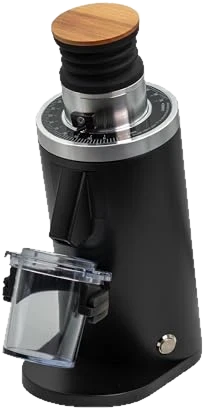
The DF54 is the grinder for someone who weighs their beans and wants every gram of them in the basket. You drop in one dose, grind, and the 54mm stainless flat burrs (the style café grinders use, where most grinders at this price use conical burrs) send it out through a chute with an ionizer that kills the static, so grounds don't cling and the listing's retention figure is under 0.1 g. A disc above the burrs stops beans popping back up mid-grind, and a bellows on top blows out what's left. The dial is stepless, so you can land exactly between two settings when a shot runs a second fast. It grinds into a 58mm dosing cup that sits on the portafilter rest, which makes it a natural match for a 58mm machine like the Gaggia Classic Pro, and the cup works with any basket size. On Amazon it's sold as the MiiCoffee DF54.

Pros

  • 54mm flat burrs, uncommon at this price
  • Stepless dial, so you can set it between any two points when dialing in
  • Retention under 0.1 g, with an ionizer and a bellows to clear the chute
  • Grinds into an included 58mm dosing cup, so any portafilter size works

Cons

  • No hopper: it holds about 20 g at a time, so you weigh every dose
  • The stepless dial has no numbered settings to return to; switching between espresso and filter means finding the spot again
  • The dosing cup is plastic
Fastest Grinder
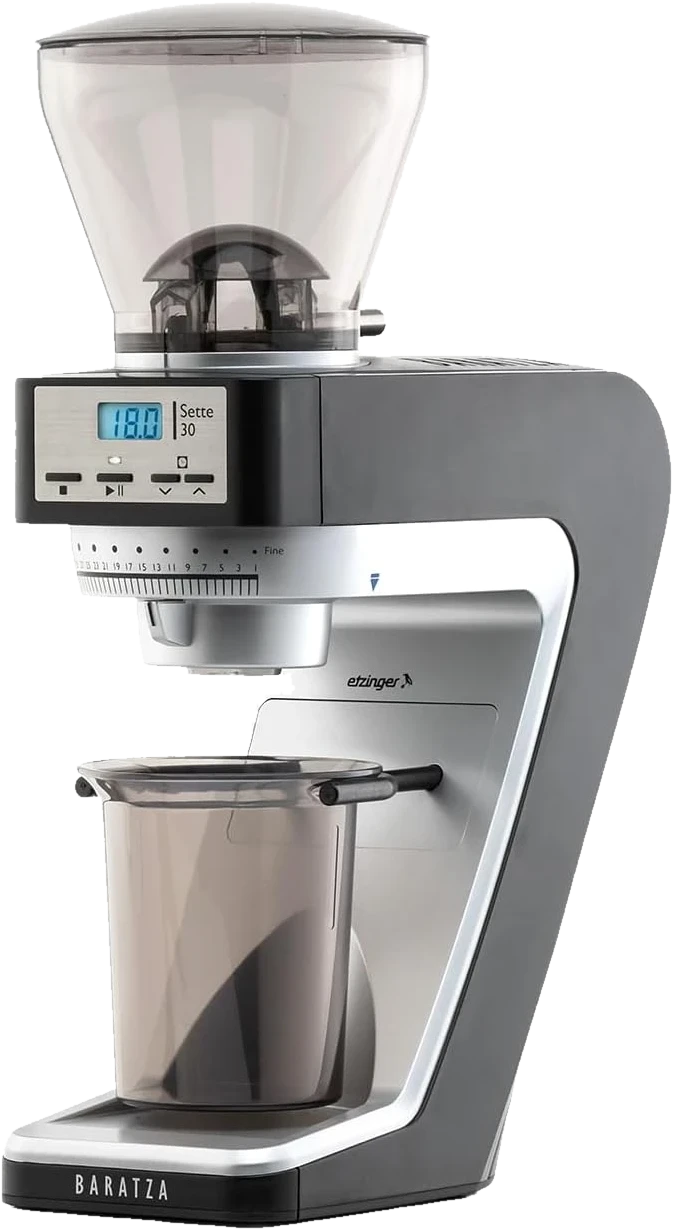
Baratza Sette 30

Baratza

Baratza Sette 30

8.5/ 10
Burrs
Conical
Settings
30
Espresso
Yes

Why we love it

The Sette 30 is for the person who's gotten serious about espresso and wants a grinder that keeps up. Its revolutionary design flips the script — the outer burr spins while the inner stays fixed, creating a straight-through grind path that's blazingly fast (up to 5g per second) with almost zero retention. That means virtually every gram of coffee you put in comes out as grounds, with no stale leftovers hiding inside. The 40mm Etzinger-made conical burrs are manufactured in Liechtenstein and deliver excellent espresso grind quality. The digital timer is precise to 0.1 seconds, giving you repeatable doses every morning. The convertible device holder lets you grind directly into a portafilter or the included grounds bin. It's louder than the Encore ESP and the 30 macro settings (no micro-adjustment) mean you'll need to play with dose and tamping to dial in — but for speed, retention, and espresso grind quality at $300, it's hard to beat.

Pros

  • Near-zero retention — straight-through grind path
  • Blazing fast grinding at up to 5g per second
  • Etzinger-made burrs from Liechtenstein
  • Digital timer precise to 0.1 seconds
  • Convertible holder for portafilter or grounds bin

Cons

  • No micro-adjustment — 30 macro steps only, harder to dial in
  • Noticeably loud due to open straight-through design
  • Espresso-focused — limited range for coarse brew methods
  • Known gearbox durability concerns in early units (improved in recent production)

Same beans every day

A hopper and a timer: fill it once and press one button each morning.

Burrs
Conical
Settings
60
Espresso
Yes
Holds
18 oz

Why we love it

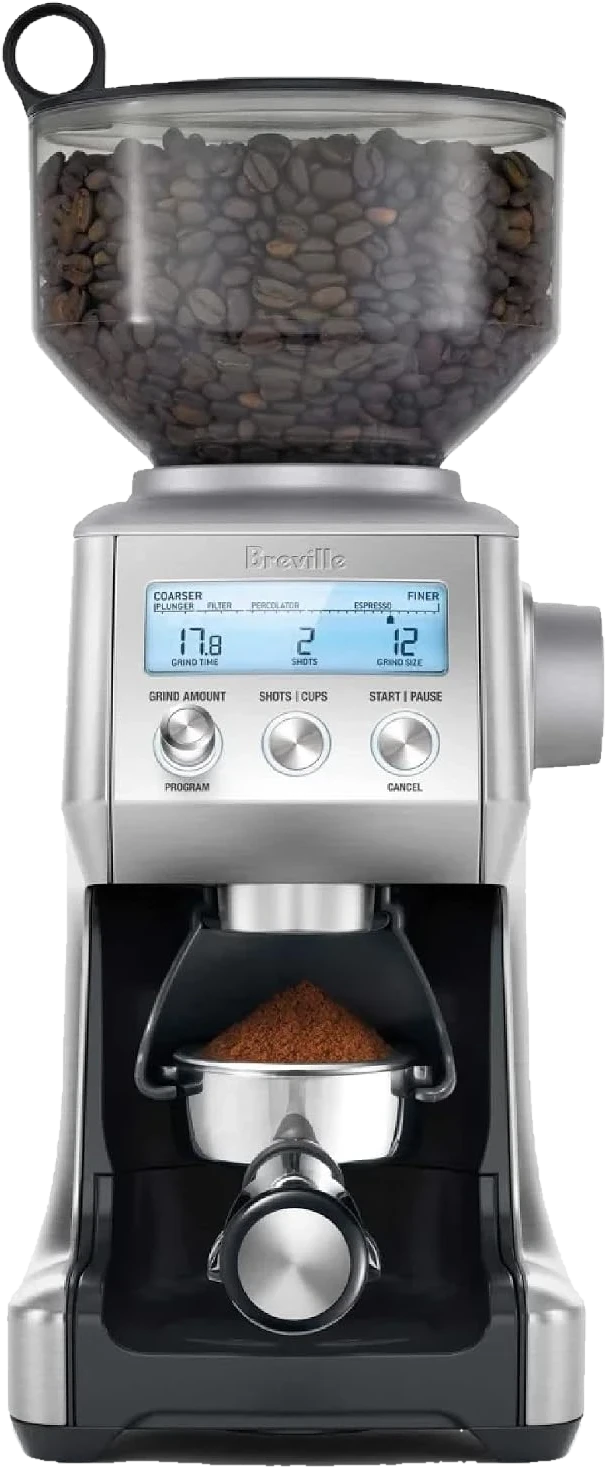
If you own a Breville espresso machine, the Smart Grinder Pro is its natural companion. It has 60 grind settings, a digital display that shows grind size and dose time, and a cradle that holds your portafilter directly under the grinder for mess-free dosing. It's the grinder equivalent of the Bambino Plus — Breville has thought about every friction point and smoothed it out. The stainless steel conical burrs do a good job across brew methods, and the precision timer means you get the same dose every morning without thinking about it. It pairs especially well with any Breville machine since the aesthetics match.

Pros

  • 60 grind settings — most of any electric here
  • Digital LCD display shows grind size and time
  • Portafilter cradle for direct, mess-free dosing
  • Programmable timed dosing for consistency
  • Matches Breville espresso machine aesthetics

Cons

  • Stepped grind adjustment — some espresso users want stepless
  • Retention is higher than single-dose grinders
  • Hopper-fed design means beans sit exposed to air
  • A harder sell if you only make espresso: a dedicated espresso grinder does that one job better

If you brew filter too

Fewer espresso steps than the Encore ESP, more range for pour over.

Fellow Opus

Fellow

Fellow Opus

8.8/ 10
Burrs
40 mm conical
Settings
41
Espresso
Yes
Holds
110 g

Why we love it

The Fellow Opus is the grinder for people who don't want to be limited to one brew method. It handles everything from fine espresso grinds to coarse French press with 41+ settings, and it does it all while looking like a piece of modern furniture on your counter. The anti-static technology actually works — you won't have grounds flying everywhere. The grind guide under the load bin lid is a thoughtful touch for beginners who don't know what grind size to start with. It has fewer steps in the espresso range than the Encore ESP, which gives espresso half its dial, but if you drink pour over on weekdays and espresso on weekends, it's the only grinder you need.

Pros

  • Handles every brew method — espresso through cold brew
  • Beautiful design that looks great on any counter
  • Anti-static technology keeps your workspace clean
  • Built-in grind guide helps beginners pick the right setting
  • Timed auto-stop for consistent dosing

Cons

  • Fewer espresso steps than the Encore ESP
  • Conical burrs produce slightly less clarity than flat burrs
  • Hopper is small — holds about 4oz of beans
  • Premium price for what's essentially a good all-rounder

No power required

Silent, and every double shot takes arm work.

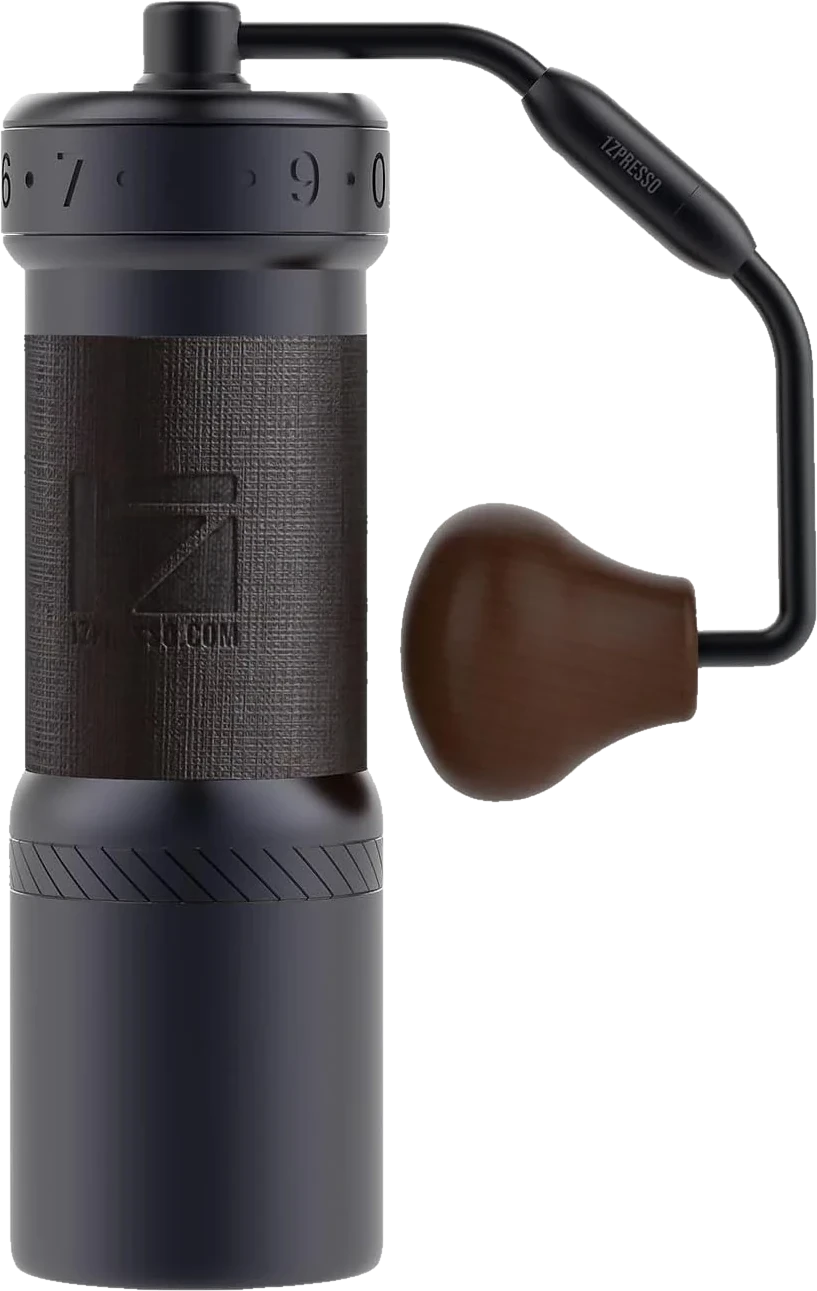
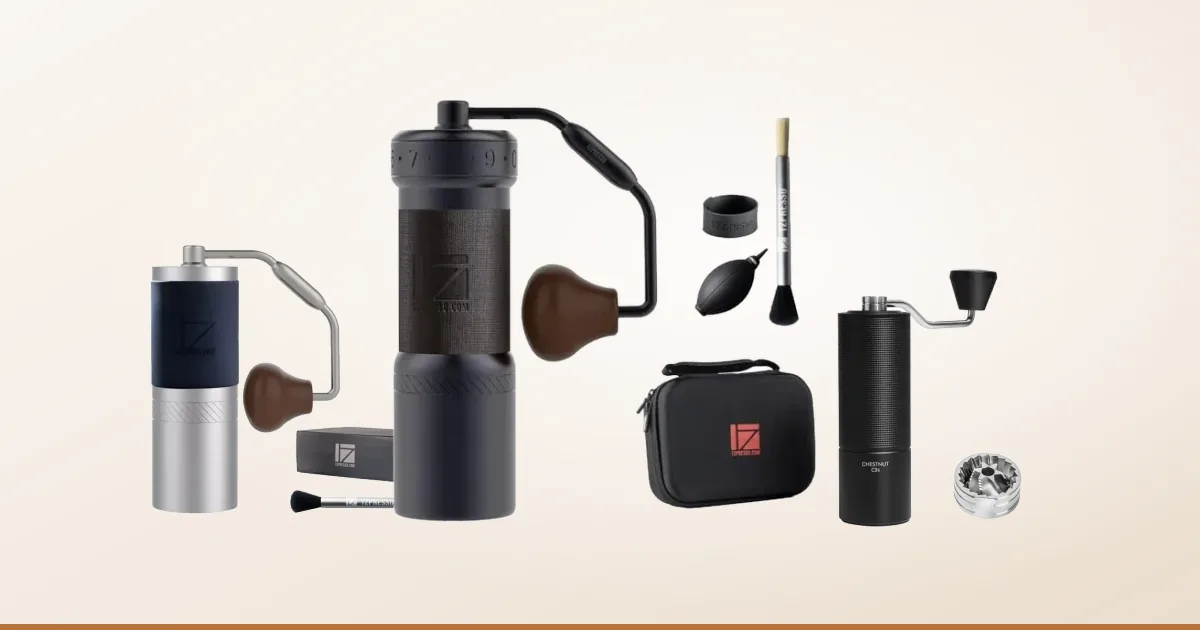
1Zpresso K-Ultra

1Zpresso

1Zpresso K-Ultra

9.2/ 10
Burrs
Conical
Settings
100+ clicks
Espresso
Yes

Why we love it

The hand grinder that stops being a compromise. External adjustment means you dial grind size without dismantling anything, and at 20 microns a click you can actually chase an espresso shot rather than approximate it. The K burr is fast for a hand grinder, and the magnetic catch cup means grounds go where you point them. It out-grinds most electric grinders costing the same.

Pros

  • External dial, over 100 clicks at 20 microns — espresso-capable precision
  • K burr grinds fast for a hand grinder
  • Magnetic catch cup holds 35 to 40 g, enough for a full brew
  • Folding handle plus a travel case
  • Tool-free dismantling for cleaning

Cons

  • Costs more than several capable electric grinders
  • It is still a hand grinder — espresso doses take arm work daily
  • More adjustment range than a filter-only brewer will ever use
  • Heavier than the travel grinders it shares a shelf with

How we chose these

Adjustment first: a grinder made the list only if the listing shows it can step finely in the espresso range, by small steps, micro-steps, a stepless dial or a hand grinder’s clicks. Then retention, how much ground coffee stays inside to end up in tomorrow’s shot, which single-dose designs nearly eliminate. Then the daily routine: timer, hopper, dosing cup, noise, and what grinding by hand actually costs. Specs come from each maker’s listing and spec page; where a maker doesn’t state a figure, we leave it out.

What to know before you buy

What’s the best coffee grinder for espresso?

The Baratza Encore ESP at $200. It gives 20 of its 40 settings to the espresso range, so the steps there are small and a fast shot is one click from fixed. Baratza sells replacement parts for years, and the other 20 settings still cover pour over and French press. Step up to the Turin DF54 if you want flat burrs and a stepless dial.

Is the Baratza Encore ESP good for espresso?

Yes; espresso is what it was built for. The original Encore was a filter grinder, and the ESP keeps its 40mm conical body but adds a different burr on a quick-release mount and splits the dial in two: 20 fine steps for espresso, 20 coarser ones for filter. It is stepped rather than stepless, and it is not a single-dose grinder, so a little coffee stays in the chute between shots.

What’s the best espresso grinder under $500?

Every grinder on this page is under $500. For most people it’s the Encore ESP. If you want the most control, the Turin DF54 has 54mm flat burrs, a stepless dial and retention under 0.1 g, and the Baratza Sette 30 is the fastest here, with a timer to the tenth of a second.

What’s the best single-dose espresso grinder?

The Turin DF54 at $229. You weigh a dose, drop it in, and the listing puts what stays behind at under 0.1 g, with an ionizer against static and a bellows to blow the chute clear. The stepless dial means you can set it between any two points. The Sette 30 is the other option: faster, with a timer, but 30 fixed steps and noticeably loud.

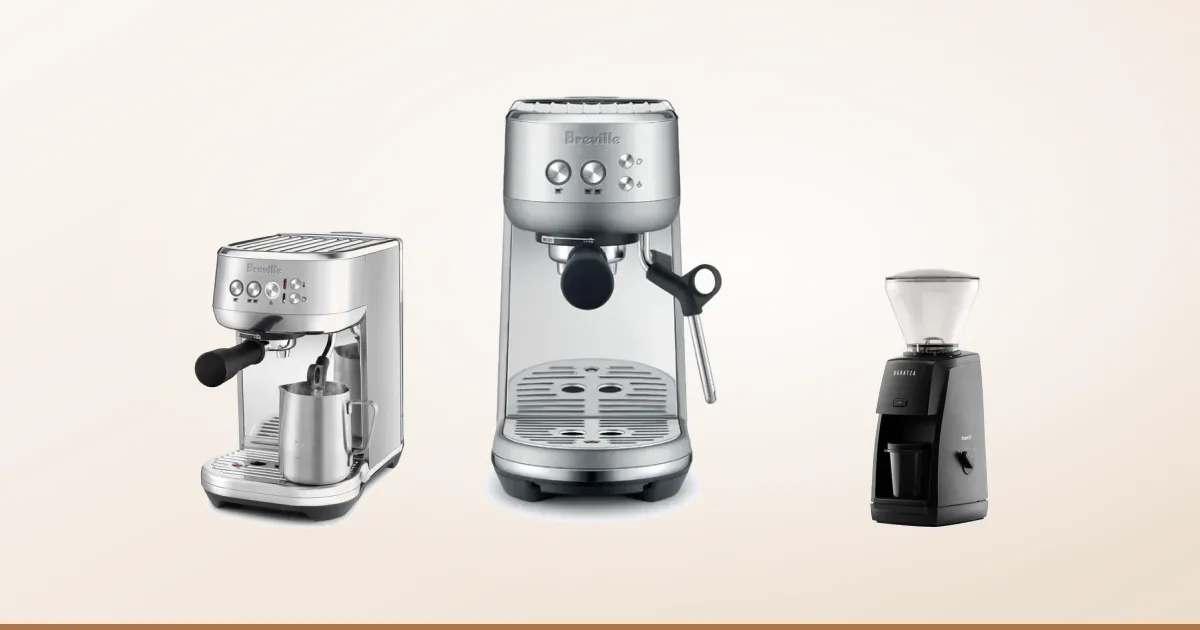
What’s the best espresso grinder for a Breville Bambino?

The Encore ESP, which is the grinder our Bambino accessories guide pairs with it. If you’d rather match the machine, the Breville Smart Grinder Pro has a cradle that holds the portafilter under the spout and a timer that repeats the dose, at the cost of more coffee left inside it between shots.

What’s the difference between an espresso grinder and a coffee grinder?

Fineness and step size. Espresso needs a much finer grind than drip or pour over, and the useful range is narrow, so the grinder has to make small changes and repeat them exactly. Many filter grinders can’t reach that fine, and the ones that can often jump between settings too coarsely to dial in a shot. Every grinder that can do espresso can also grind coarser for filter; the reverse isn’t true.

Flat or conical burrs for espresso?

Both make good espresso. Flat burrs, the style café grinders use, tend toward a more even grind and a clearer-tasting shot; conical burrs are more common in home grinders and are more forgiving. Here the Turin DF54 is the only flat-burr grinder; the rest are conical. Step size and retention will change your shots more than burr shape.

Stepped or stepless: which is better for espresso?

Stepless gives you every point between two settings, which helps when a shot is a second or two off. Stepped is easier to return to: a number on a dial. The Encore ESP gets most of the stepless benefit by making its espresso steps small. If you switch between espresso and filter often, stepped is less fiddly; if you only make espresso, stepless is the finer tool.

Bottom line

For most people, buy the Baratza Encore ESP at $200: small espresso steps, filter range left over, and parts for years. Buy the Turin DF54 if you weigh every dose and want flat burrs and a stepless dial, or the Sette 30 if speed matters more than quiet. Buy the Breville Smart Grinder Pro if you want to press one button and get the same shot all week. And if the grinder never needs to plug in, the 1Zpresso K-Ultra grinds espresso by hand.

Related guides

Stay in the loop

New gear reviews, brew tips, and the occasional deal — straight to your inbox. No spam, ever.