GuidesBrowseComparisons
Roundup

Best Espresso Accessories

Grouped by the problem each one fixes, in both basket sizes: 54mm for the Brevilles, 58mm for most everything else.

By Dana WhitfieldUpdated October 2026
10 products compared8 min read
V4 Spring-Loaded Calibrated Tamper (53.3mm)

★ Our top pick

V4 Spring-Loaded Calibrated Tamper (53.3mm)

Around $45

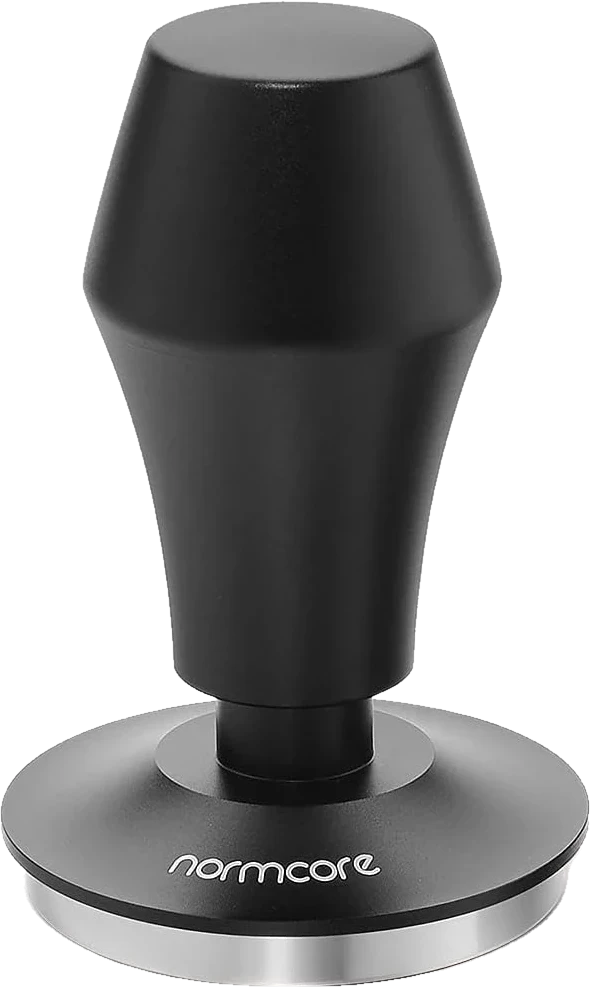
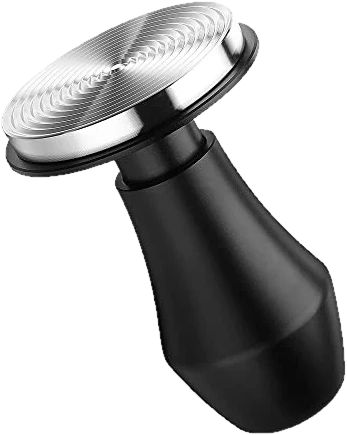
The 58mm Normcore V4 in the size for 54mm Breville baskets: spring-loaded for the same pressure every time, a leveling plate, and three springs.

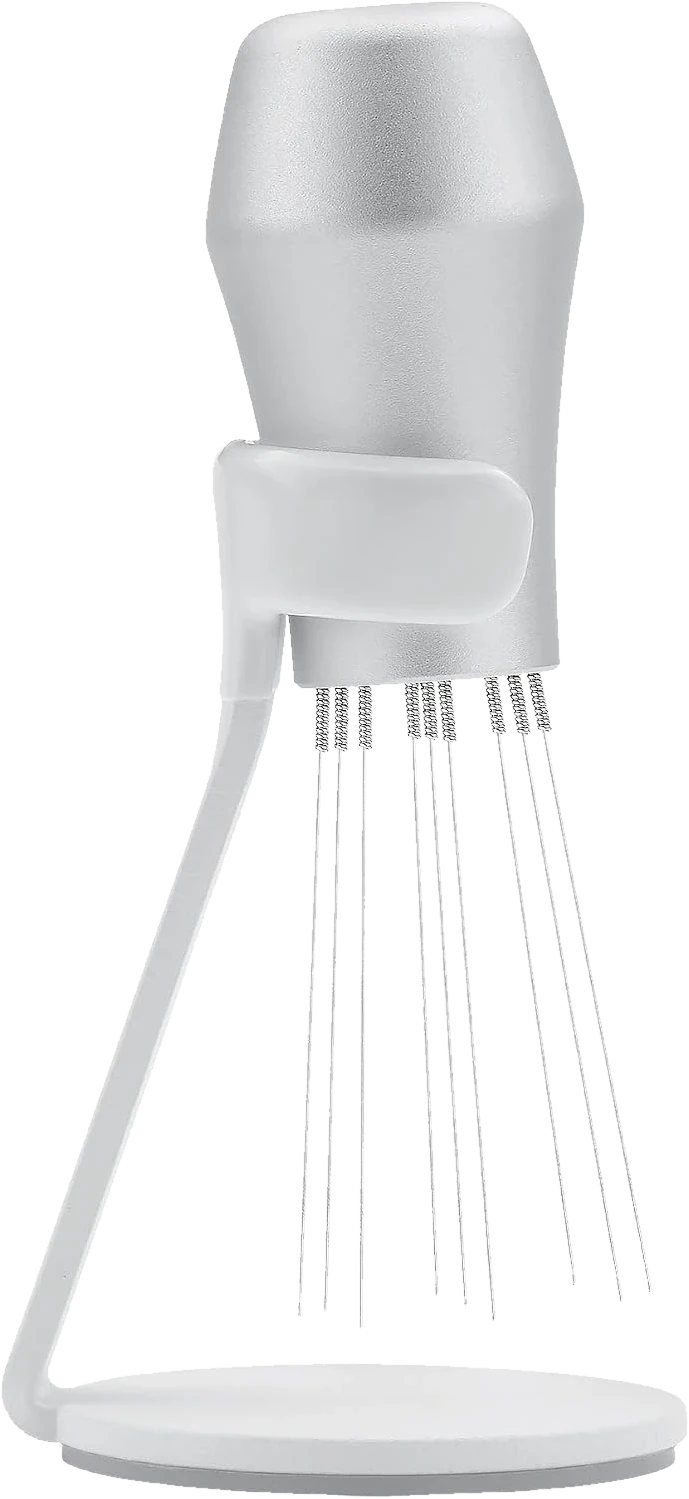
WDT Distribution Tool V3 with Stand

Best Distribution Tool

WDT Distribution Tool V3 with Stand

Around $30

A WDT tool that breaks up coffee clumps and levels the puck before tamping. Dramatically improves espresso shot consistency.

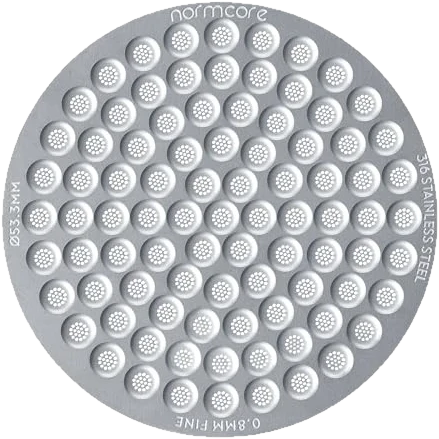
Puck Screen (53.3mm, for 54mm baskets)

Puck Screen (53.3mm, for 54mm baskets)

Around $14

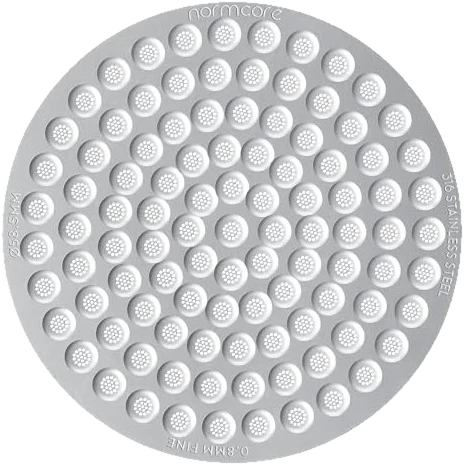
A 0.8mm stainless mesh disc that sits on top of the coffee in a 54mm Breville basket to spread the water evenly and keep the shower screen clean.

Every espresso accessory fixes one specific problem: a tamp that isn’t level, clumps in the grounds, water hitting one side of the puck, a shot you can’t see. Buy for the problem you have. A kit of everything is mostly things you’ll use once.

Ten tools here, grouped by what each one fixes. The size matters more than the brand: Breville’s Bambino, Barista Express and Pro take 54mm baskets, and the Gaggia Classic Pro, the Rancilio Silvia and most others take 58mm. Where a tool comes in both, both are here.

Tamp the same way every time

A spring sets the pressure and a plate on the basket rim keeps it level, so every tamp is the same. Buy the size for your basket: 53.3mm for Breville's tapered 54mm baskets (Bambino, Barista Express, Pro, Touch), 58.5mm for the Gaggia Classic Pro, the Rancilio Silvia and most other machines.

Why we love it

This is the tamper for a Bambino, Bambino Plus, Barista Express, Pro or Touch. Breville's 54mm baskets taper, so a true 54mm tamper binds; Normcore's 53.3mm base is sized to clear the taper and still cover the bed. A spring inside sets the pressure, so you press until it bottoms out and every tamp is the same, and the plate that rests on the basket rim keeps it level. Three springs come in the box, 15, 25 and 30lb, with a stand, and the base has a ripple pattern Normcore uses to cut down on a doughnut-shaped extraction.

Pros

  • Sized for Breville's tapered 54mm baskets
  • Spring-loaded: the same pressure every tamp
  • Leveling plate rests on the basket rim
  • Three springs, 15, 25 and 30lb, and a stand
  • Ripple base

Cons

  • Only for 54mm Breville baskets
  • Taller than a plain tamper: check clearance
  • Costs more than the tamper in the box
Best Tamper

Why we love it

Traditional tamping is harder than it looks — uneven pressure causes channeling, inconsistent shots, and eventually wrist strain. The Normcore V4 fixes all of it with a spring-loaded mechanism that delivers the same calibrated pressure every single time. Just press down until the spring bottoms out, and you're done — perfectly level, perfectly consistent. It comes with three interchangeable springs (15lb, 25lb, 30lb) so you can customize the pressure to your preference. The self-leveling plate rests on the portafilter edge, eliminating the guessing game entirely. Available in multiple sizes to fit any machine. Note: Breville/Sage owners need the 53.3mm version (ASIN: B09C5PWJXL).

Pros

  • Spring-loaded — consistent pressure every time, no guesswork
  • Self-leveling plate eliminates uneven tamps
  • Three interchangeable springs (15lb / 25lb / 30lb)
  • Available in 8+ sizes (45.5mm to 58.5mm)
  • Includes tamper stand

Cons

  • Won't fit all portafilters — measure carefully before buying
  • Spring mechanism adds height — check clearance
  • More expensive than basic flat tampers
  • Not dishwasher safe

Break up the clumps

Fine needles stir the grounds in the basket before you tamp, so clumps from the grinder don't become dense spots the water runs around. One size fits every basket.

Best Distribution Tool

Why we love it

If your espresso shots are inconsistent despite good beans and a good grinder, the problem is probably distribution. Clumps in the coffee bed create channels where water rushes through, leaving other areas under-extracted. A WDT (Weiss Distribution Technique) tool fixes this — you stir the grounds in the portafilter with fine needles to break up clumps and create an even bed before tamping. The Normcore V3 does this beautifully with 9 ultra-fine 0.25mm/0.3mm stainless steel needles, an ergonomic handle that matches their tamper design, and an included stand. It's a $30 tool that can genuinely transform your espresso quality.

Pros

  • 9 ultra-fine needles (includes both 0.25mm and 0.3mm sets)
  • Ergonomic aluminum handle matches Normcore tamper design
  • Includes stand for clean storage
  • Needles are replaceable and easy to swap
  • Dramatic improvement in shot consistency

Cons

  • Only useful for espresso — not needed for other brew methods
  • Needles are delicate and can bend if mishandled
  • Adds another step to the espresso workflow
  • Some users prefer thinner 0.2mm needles

Spread the water evenly

A puck screen sits on the tamped coffee, so the water spreads before it reaches the puck and the coffee never touches the shower screen. Same screen, two sizes.

Why we love it

A puck screen sits on top of the tamped coffee, between it and the machine's shower screen. The water hits the mesh first and spreads before it reaches the coffee, which evens out the extraction, and the coffee never touches the shower screen, so the group stays cleaner. This one is 53.3mm across to sit inside Breville's 54mm baskets, 0.8mm thick 316 stainless steel with 0.18mm perforations, and it rinses clean after each shot. It takes a little headroom, so with a full basket, dose a touch lower.

Pros

  • Spreads the water evenly over the puck
  • Keeps coffee off the shower screen
  • 316 stainless, rinses clean
  • Sized for 54mm Breville baskets

Cons

  • Takes a little headroom in the basket
  • One more thing to rinse after each shot
  • Only for 54mm Breville baskets

Why we love it

The 58mm version of the Normcore puck screen, for machines with a standard commercial-size portafilter like the Gaggia Classic Pro and the Rancilio Silvia. It sits on top of the tamped coffee so the water spreads before it reaches the puck and the shower screen stays clean. It's 0.8mm thick 316 stainless steel with 0.18mm perforations, and it rinses clean after each shot. Dose a little lower if the basket is already full, because the screen takes some headroom.

Pros

  • Spreads the water evenly over the puck
  • Keeps coffee off the shower screen
  • 316 stainless, rinses clean
  • Sized for 58mm baskets

Cons

  • Takes a little headroom in the basket
  • One more thing to rinse after each shot
  • Only for 58mm baskets

See what's going wrong

Without spouts you watch the shot leave the basket: one even stream is right, a spray or a pale streak points at the tamp, the grind or the dose. This one fits the 54mm Brevilles; everything for those machines is in Breville Bambino accessories.

Why we love it

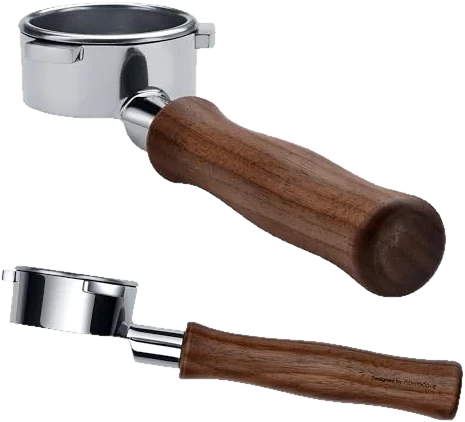
A bottomless portafilter takes away the spouts, so you watch the espresso leave the basket. A good shot runs as one even stream; a spray or a pale streak shows channeling, an uneven tamp or a grind that's off, which a spouted portafilter hides in the cup. This one fits 54mm Breville machines like the Barista Express and the Bambinos, comes with an 18g basket, takes other single, double and triple baskets, and has a stainless body with a walnut handle. It doesn't make better espresso by itself; it shows you what to fix.

Pros

  • Shows channeling and uneven tamps as they happen
  • Fits 54mm Breville machines
  • 18g basket included; takes other baskets
  • Stainless body, walnut handle

Cons

  • A bad shot can spray, so it's messier while you learn
  • Only for 54mm Breville machines
  • Shows the problem, doesn't fix it

Weigh the dose and the shot

Espresso is a ratio, grams in to grams out, and a scale with a timer that starts when the coffee starts flowing turns guessing into a recipe you can repeat.

Best Value Scale

Why we love it

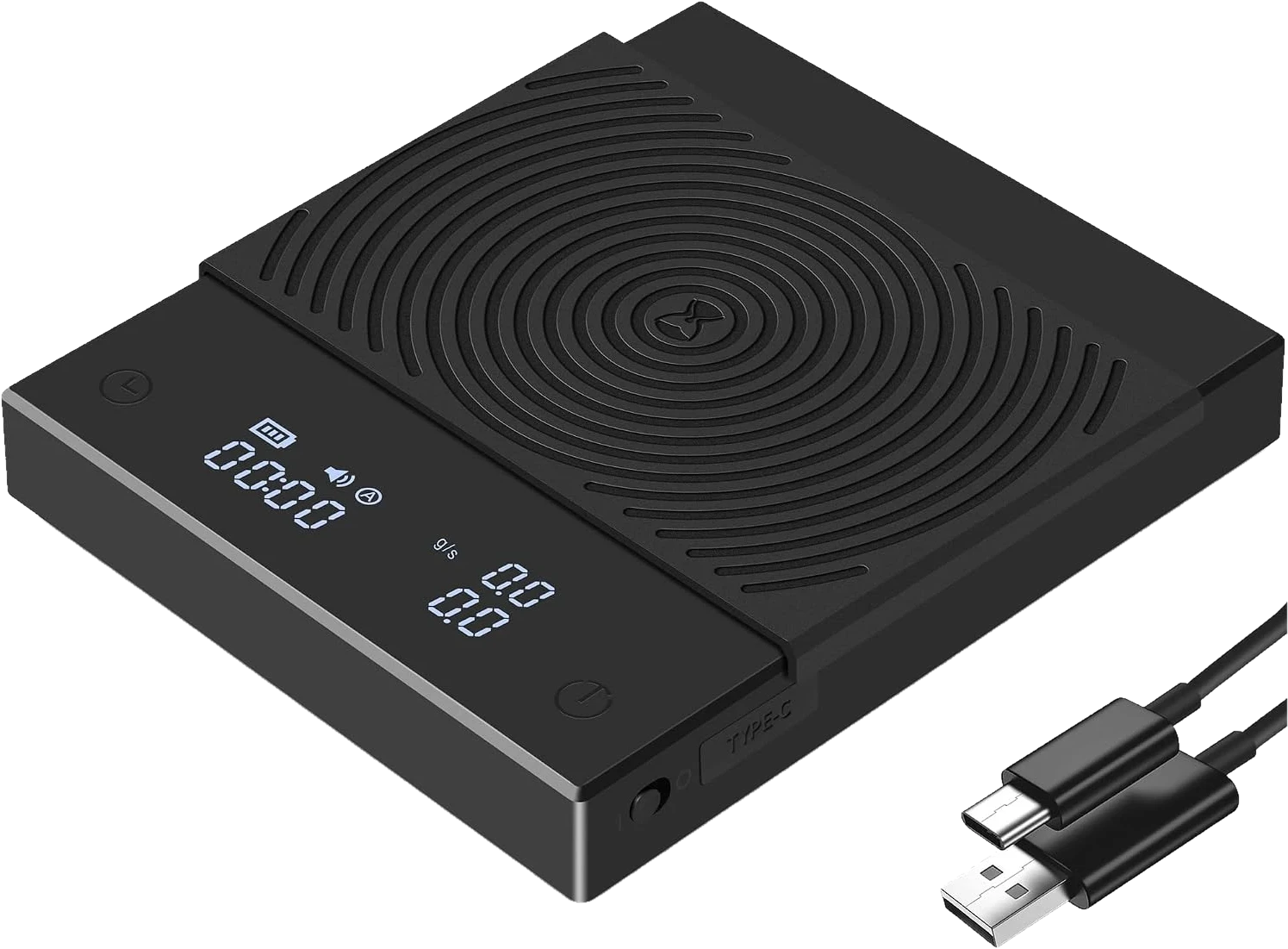
The Timemore Black Mirror does everything most coffee brewers need at a price that doesn't sting. It weighs to 0.1g precision, has a built-in timer with auto-start, shows real-time flow rate, and charges via USB-C. The hidden LED display looks slick — it only appears when the scale is on — and the included silicone heat pad protects it from hot vessels. It's responsive enough for espresso and spacious enough for pour over. For 90% of home brewers, there's zero reason to spend more.

Pros

  • 0.1g precision with 2kg max capacity
  • Built-in timer with auto-start on weight detection
  • Real-time flow rate display
  • USB-C rechargeable — 24-hour battery life
  • LED display hidden in the top, invisible when the scale is off

Cons

  • No Bluetooth or app connectivity
  • Auto-off after 3 minutes can be annoying
  • Silicone pad is essential (scale is sensitive to heat)
  • Display can be hard to read at certain angles

Steam the milk

A heavier pitcher with a sharp spout holds its temperature longer and pours a line you can control, which is most of what latte art is.

Best Milk Pitcher

Why we love it

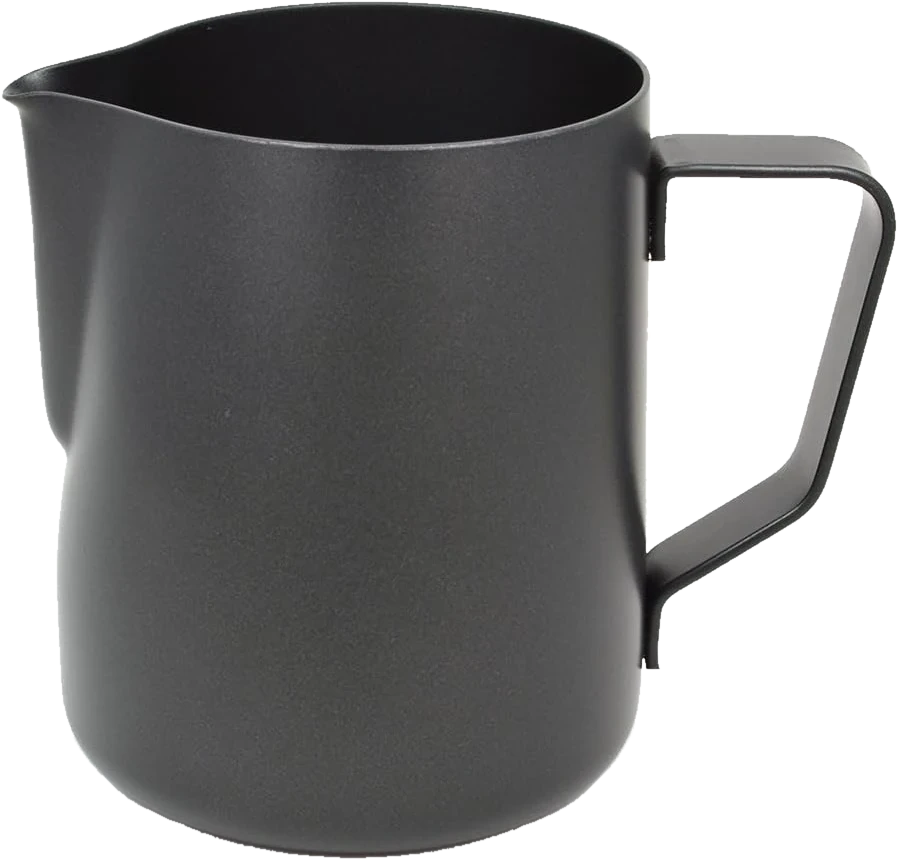
The Rhinowares Stealth is the pitcher you see behind the counter at serious coffee shops. The 1mm thick stainless steel walls are noticeably heavier than cheap pitchers — that extra mass gives you better stretch time when steaming milk, meaning more control over texture. The precision spout is sharp enough for multiple latte art styles, and the non-stick Teflon coating makes cleanup effortless. Available in multiple colors and sizes. The 20oz is the sweet spot for home use — enough for one or two drinks without being oversized.

Pros

  • 1mm thick stainless steel — heavier for better milk steaming control
  • Sharp precision spout for latte art
  • Non-stick Teflon coating for easy cleanup
  • Available in 6+ colors (black, white, red, green, blue)
  • Industry-standard pitcher used in cafes

Cons

  • Teflon coating can wear over time with metal contact
  • Some users report handle alignment issues
  • More expensive than basic stainless pitchers
  • Non-stick coating is a dealbreaker for some

Clean up

The puck goes in the knock box instead of the bin, and on a machine that backflushes, a cleaning tablet clears the coffee oil that builds up in the group head.

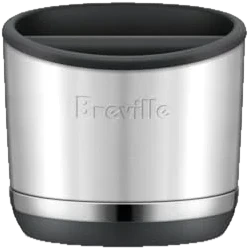
Knock Box 10

Breville

Knock Box 10

8.4/ 10

Why we love it

A knock box is where the used puck goes: you strike the portafilter on the bar and the puck drops out in one piece, instead of scraping it into the bin. Breville's holds about 10 pucks, so a morning's shots go in one place, and the knock bar lifts out so the inside can be washed. It's stainless steel and plastic, styled to match Breville's machines, and it's compact enough to stand on the drip tray when you put it away.

Pros

  • Holds about 10 spent pucks
  • Removable knock bar for cleaning
  • Matches Breville's machines
  • Compact enough to store on the drip tray

Cons

  • Part plastic, not all steel
  • Costs more than a basic knock box
Essential Maintenance

Why we love it

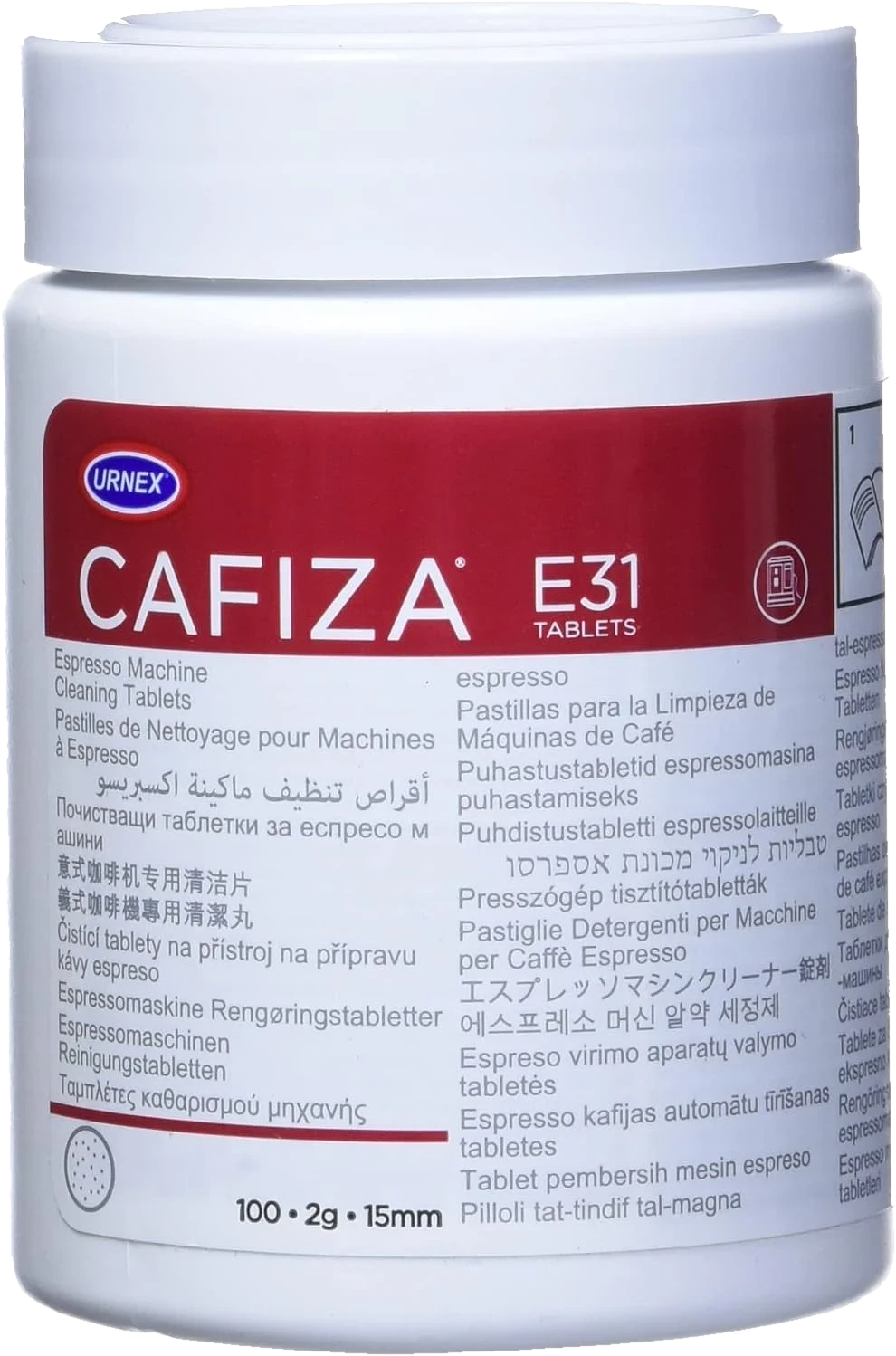
Here's the unsexy truth about espresso: if you're not cleaning your machine regularly, your coffee tastes worse every single day. Old coffee oils oxidize inside the group head, valves, and lines, building up rancid residue that makes every shot bitter. Cafiza is the industry standard fix — drop a tablet in a blind basket, run a backflush cycle, and it dissolves the buildup. Used by cafes and equipment manufacturers worldwide since 1936. The 100-count jar lasts most home users well over a year. This isn't a nice-to-have — it's essential maintenance that most beginners don't know about.

Pros

  • Industry standard — used by cafes and manufacturers worldwide
  • 100 tablets per jar — lasts most home users 1-2 years
  • Works with all traditional and super-automatic espresso machines
  • NSF certified for safety and metal compatibility
  • Since 1936 — trusted for nearly 90 years

Cons

  • Only for espresso machines — not for drip or pour over equipment
  • Requires a blind basket for backflushing (not included)
  • Some machines have specific cleaning procedures — check your manual
  • Not a descaler — you'll also need Dezcal for mineral buildup

How we chose these

Grouped by the problem each tool fixes, then judged on fit (the right size for the baskets most home machines use), build, and whether the maker states the specs that matter: diameter, thickness, spring weight. We read owner reviews at volume and checked each listing for what it actually states.

What to know before you buy

What size tamper for a Breville Bambino or Barista Express?

53.3mm. Breville’s Bambino, Bambino Plus, Barista Express, Pro and Touch use 54mm baskets that taper toward the bottom, so a true 54mm tamper binds against the sides; 53.3mm clears the taper and still covers the coffee. The Normcore V4 53.3mm is sized for exactly that.

What size tamper for a Gaggia Classic Pro?

58.5mm. The Gaggia Classic Pro, the Rancilio Silvia and most machines outside Breville’s range take a standard 58mm basket, and a 58.5mm tamper fills it edge to edge, which is what the Normcore V4 58.5mm is made for.

Do puck screens work?

They do two things reliably: the water spreads across the mesh before it reaches the coffee, and the coffee never touches the shower screen, so the machine stays cleaner. The difference in the cup is smaller than getting the grind and dose right, so add one after those, not instead of them, and dose slightly lower because the screen takes some headroom.

Is a WDT tool worth it?

If your grinder clumps, yes, and most do. Stirring the grounds with fine needles before tamping breaks the clumps up so the puck is even, which cuts the channeling that makes a shot sour and bitter at once. It costs less than any other tool here and needs no particular basket size.

What should be in an espresso accessories kit?

In order: a calibrated tamper in the right size, a scale with a timer, a WDT tool and a puck screen. Add a milk pitcher if you make milk drinks and a knock box once you pull more than a shot or two a day. A bottomless portafilter is for when you want to see what’s going wrong, not something to start with.

What does a bottomless portafilter do?

It removes the spouts so you can watch the espresso leave the basket. A good shot runs as one even stream; a spray, a jet or a pale streak shows channeling from the tamp, the grind or the dose. It doesn’t make better espresso by itself, it shows you what to fix, and it can spray while you learn.

Bottom line

Start with a calibrated tamper in the right size: the Normcore V4 at 53.3mm for a Breville Bambino or Barista Express, 58.5mm for a Gaggia, a Rancilio or most others. Then a WDT tool if your grinder clumps, a puck screen for an even, cleaner shot, and a bottomless portafilter when you want to see what’s going wrong.

Related guides

Stay in the loop

New gear reviews, brew tips, and the occasional deal — straight to your inbox. No spam, ever.