GuidesBrowseComparisons
Roundup

Breville Espresso Machines Compared

Ten Breville espresso machines in one chart: which grind, froth, dose and tamp for you, when each came out, and which one fits how you make coffee.

By Dana WhitfieldUpdated November 2026
10 products compared10 min read
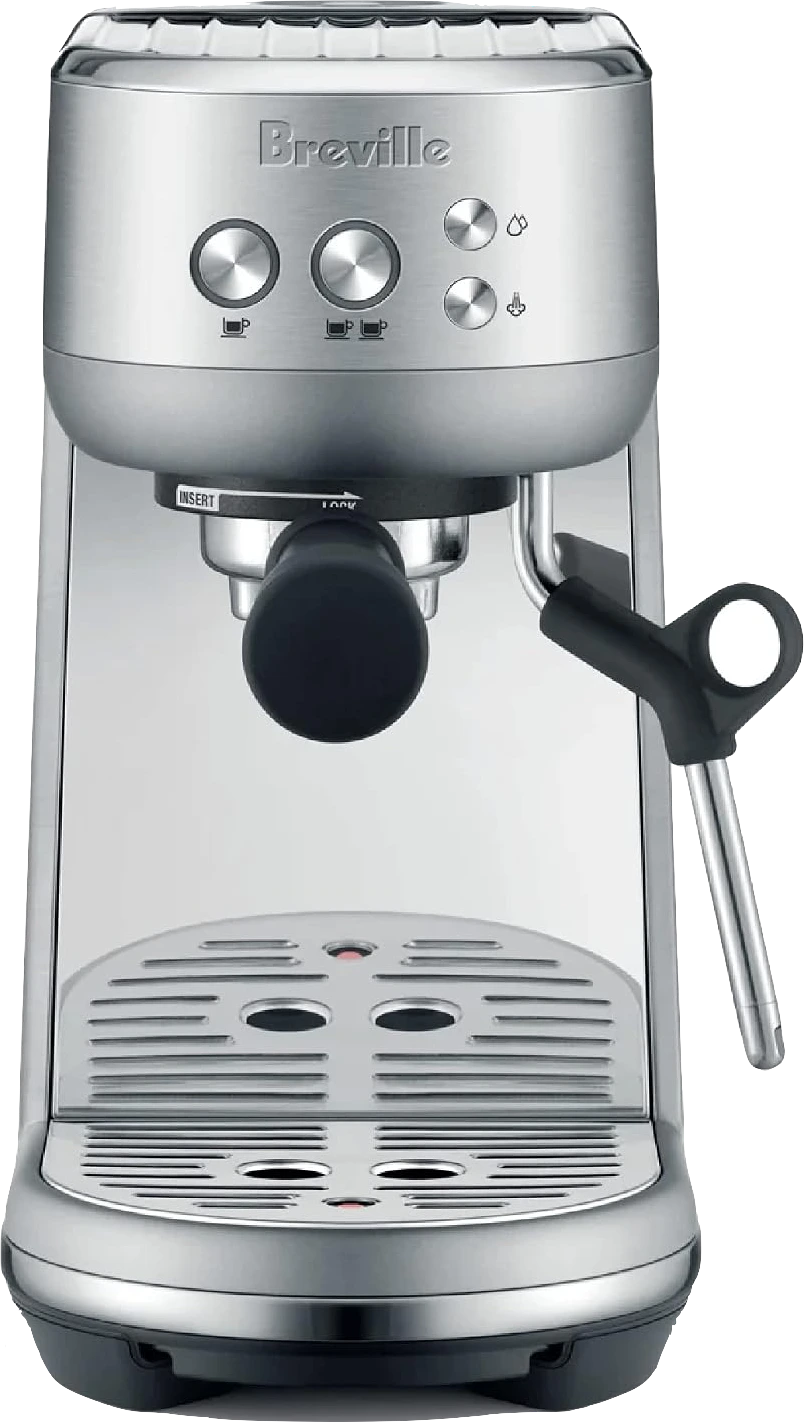
Breville Bambino Plus

★ Our top pick

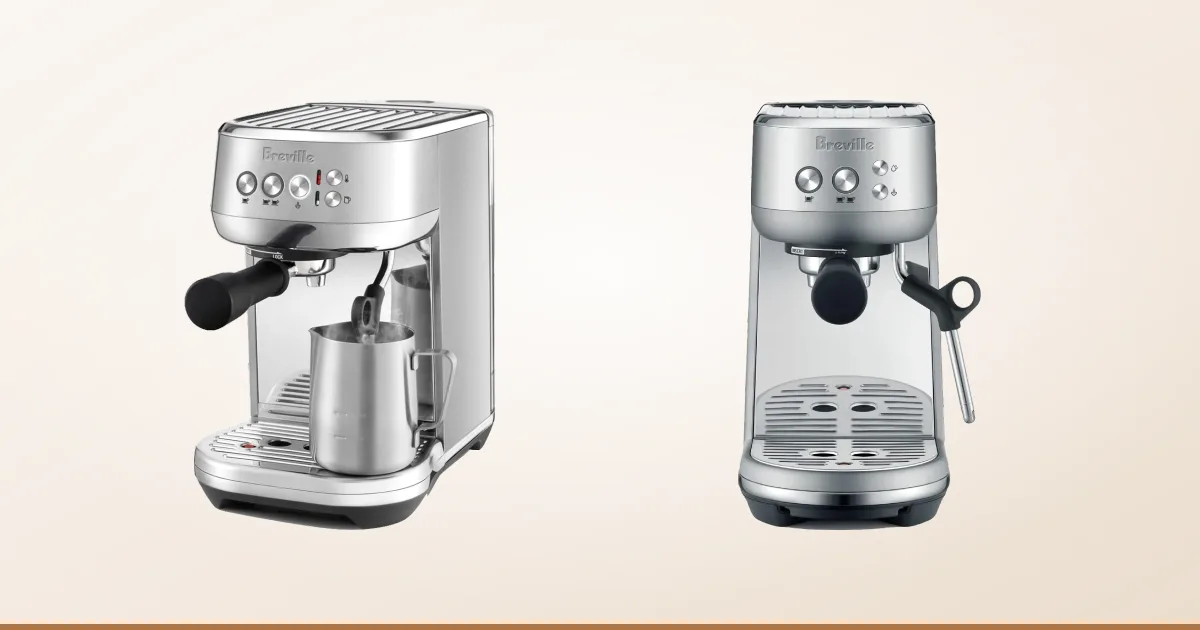
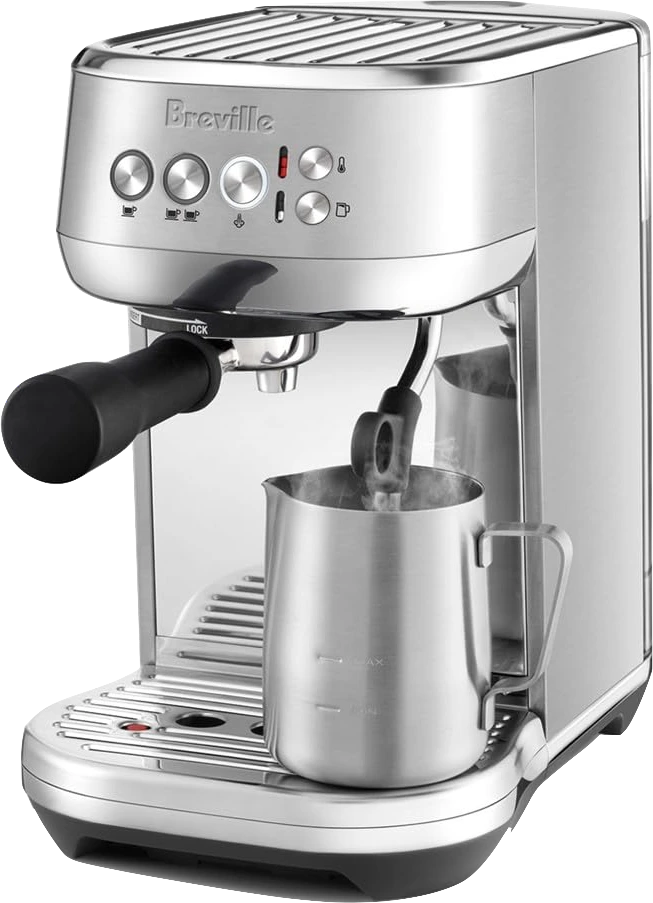
Breville Bambino Plus

Best for Most People · Around $500

Lattes from day one: ready in three seconds, and it froths the milk for you. Add an espresso grinder beside it.

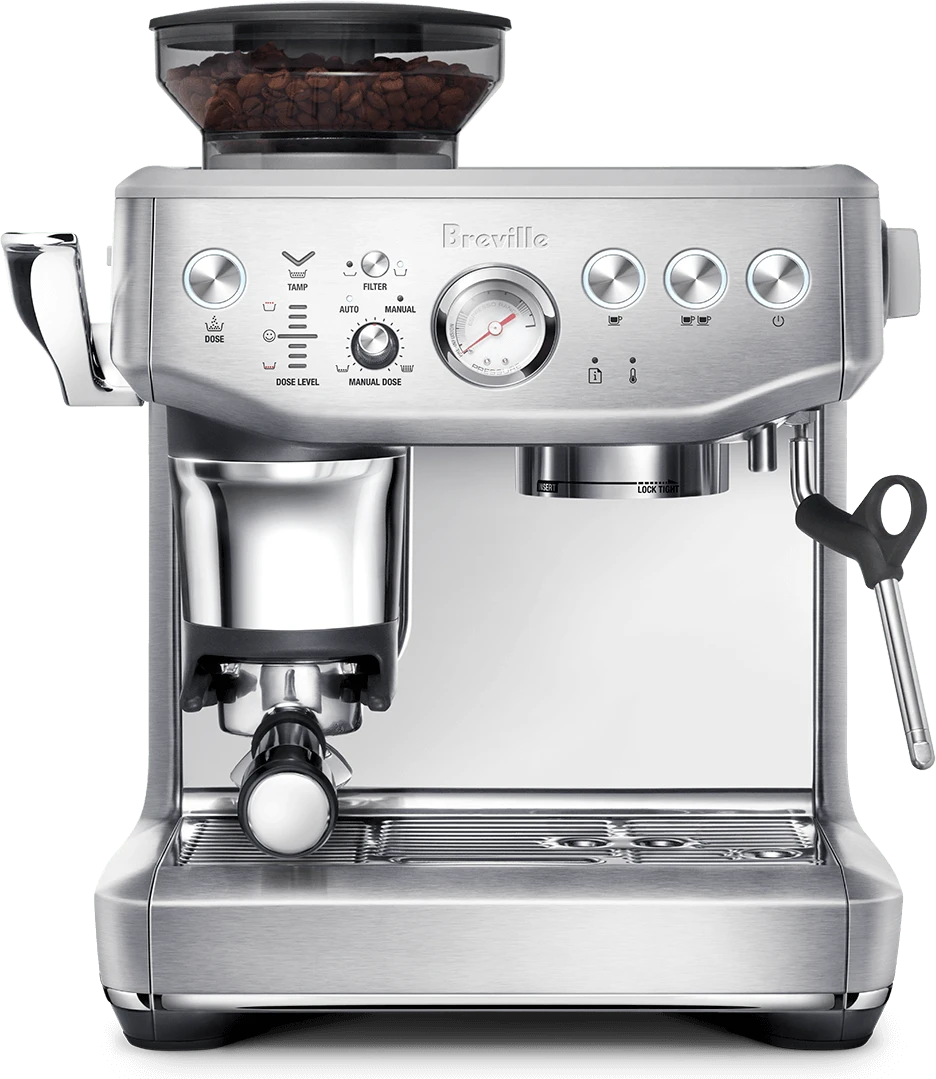
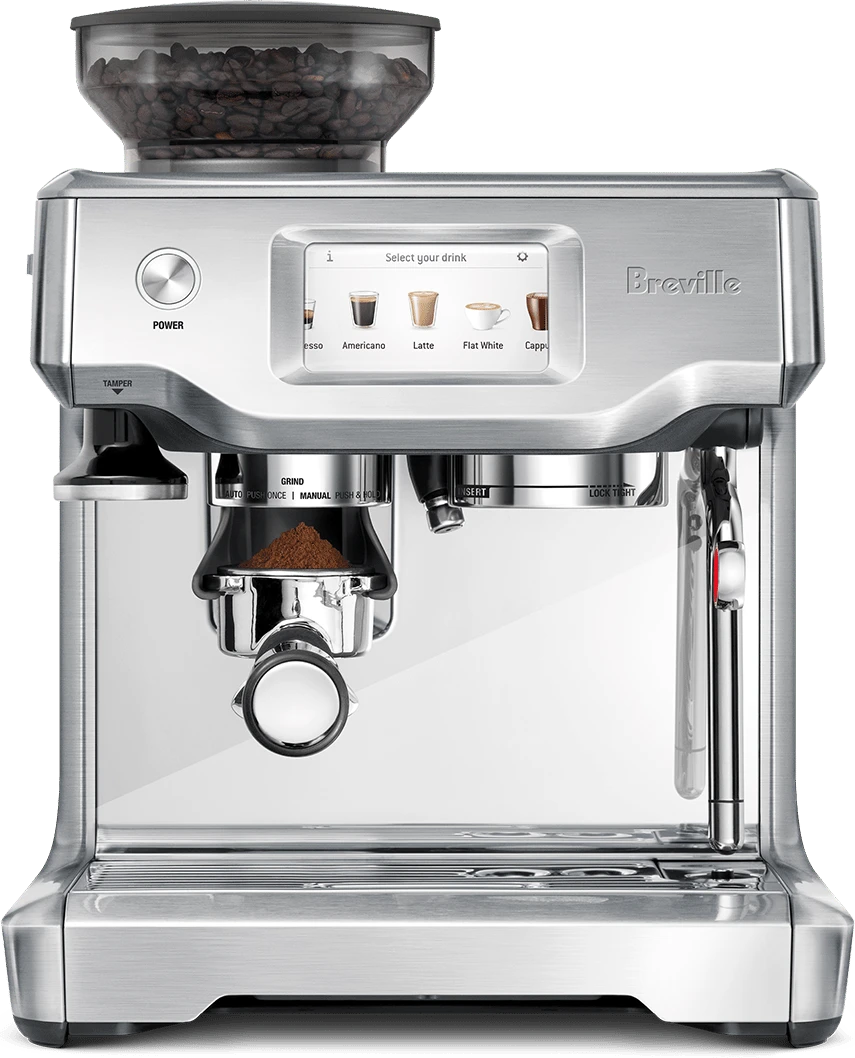
Breville Barista Express Impress

Best All-in-One

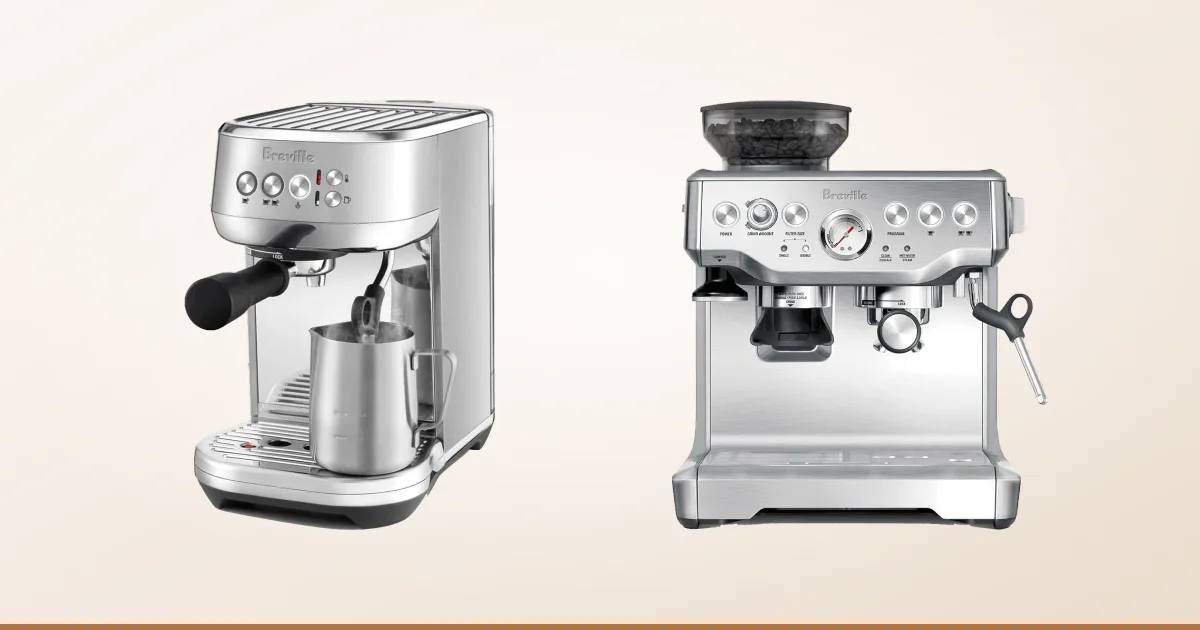
Breville Barista Express Impress

Around $790

The grinder in the box, with the dose and the tamp done for you. You steam the milk.

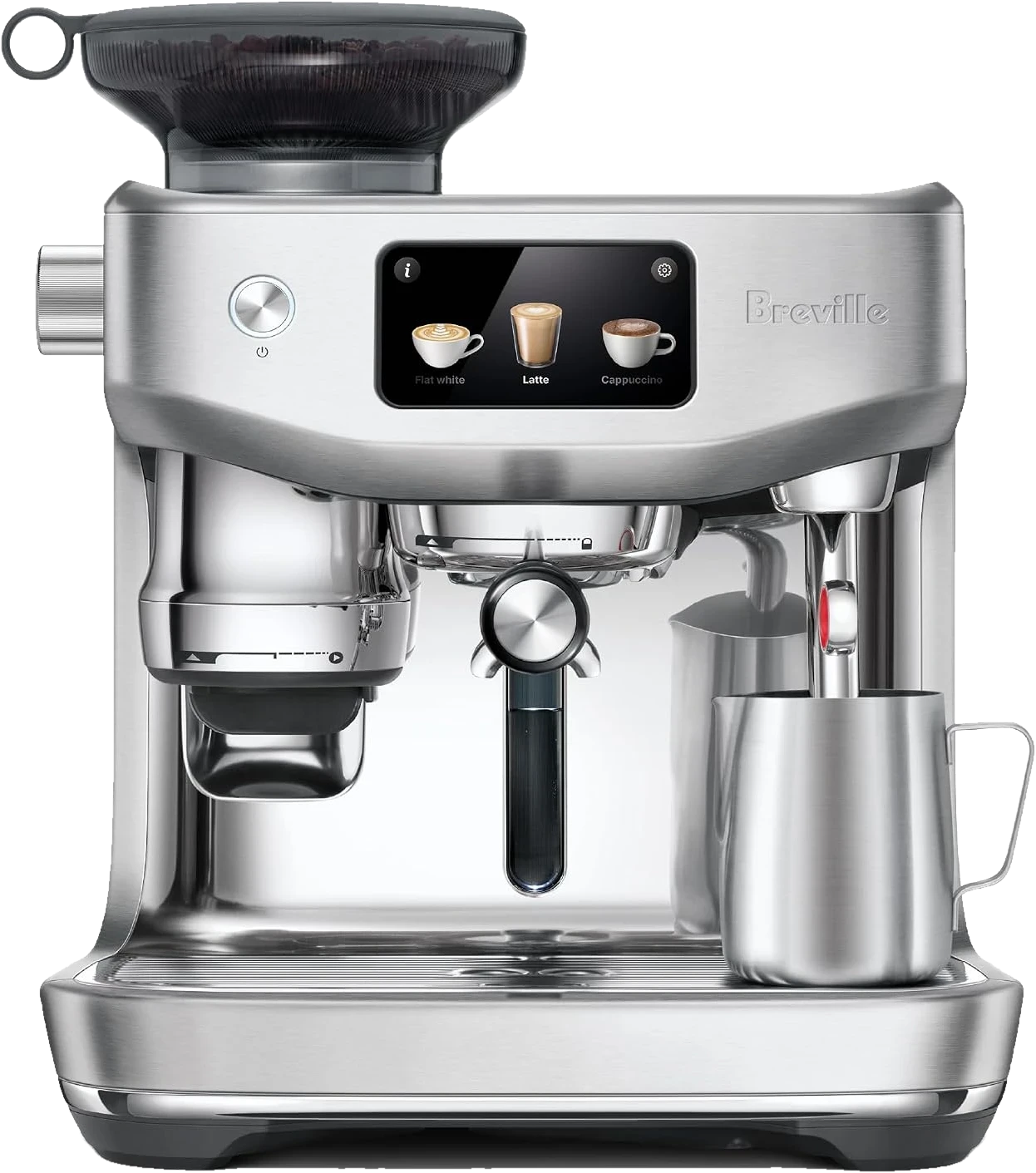
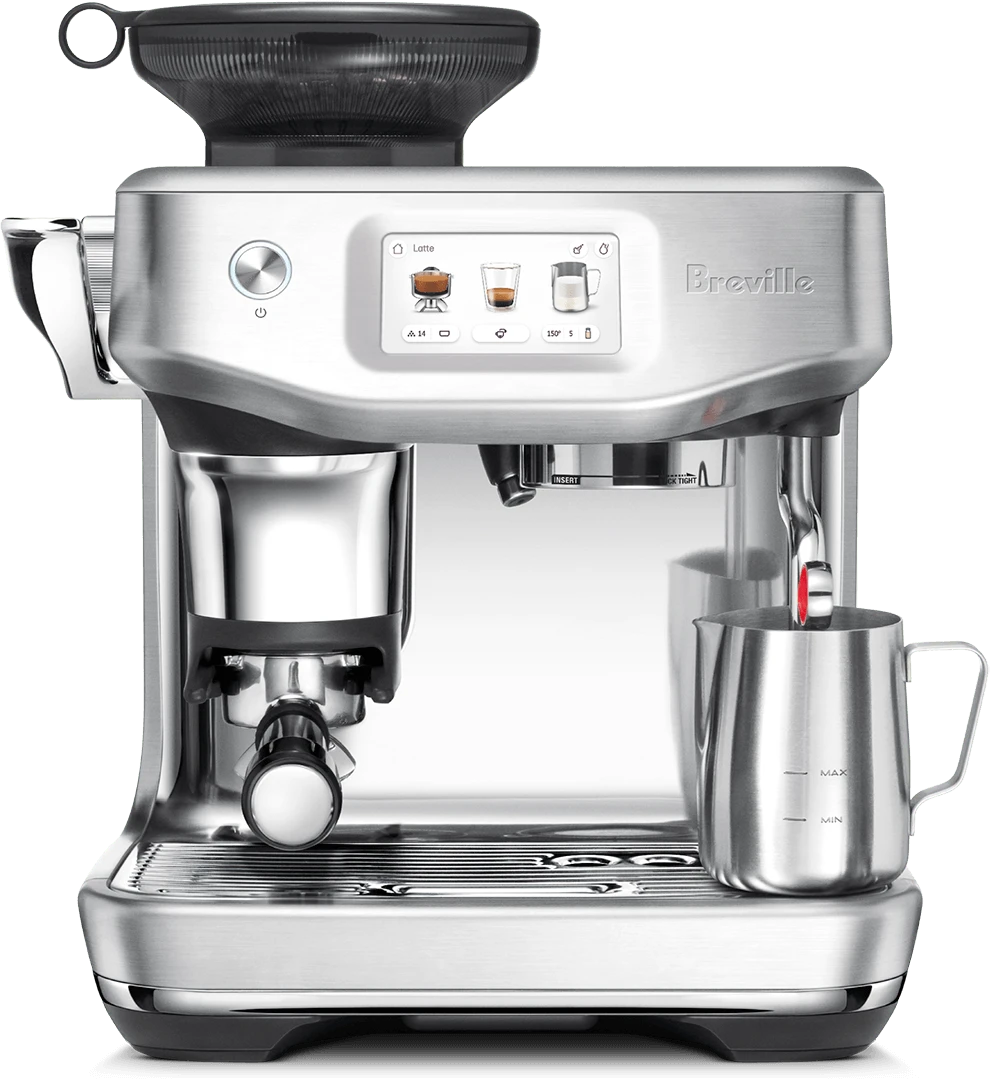
Breville Oracle Jet

Nothing Left to Learn

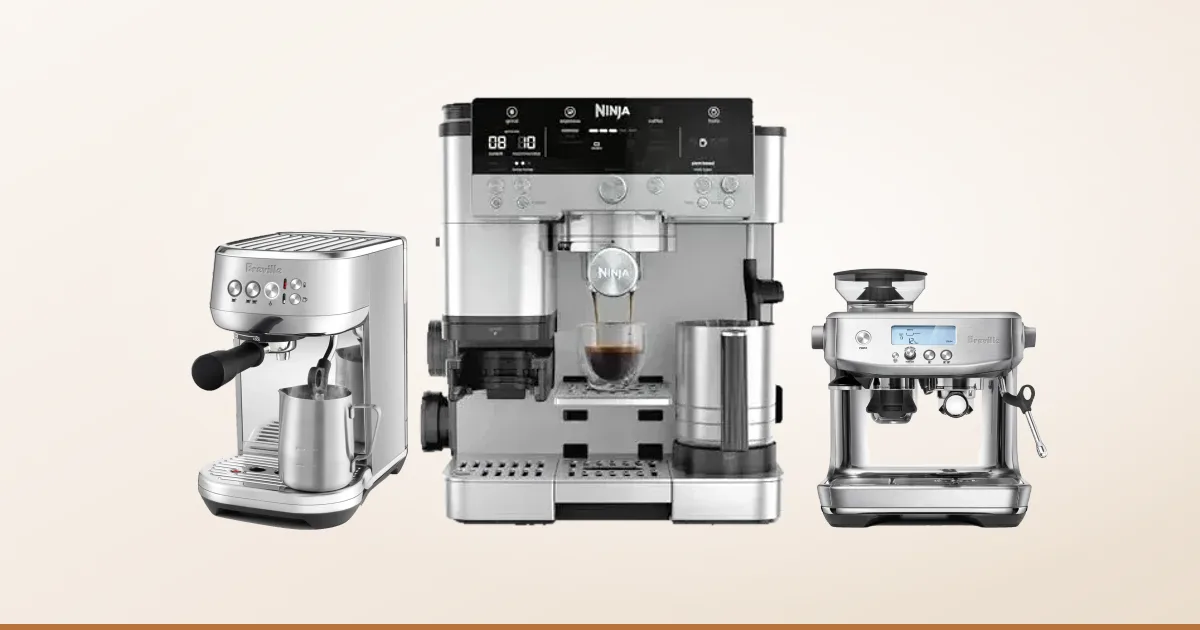
Breville Oracle Jet

Around $2,000

Grinds, doses and tamps itself into a 58mm basket, and froths the milk too.

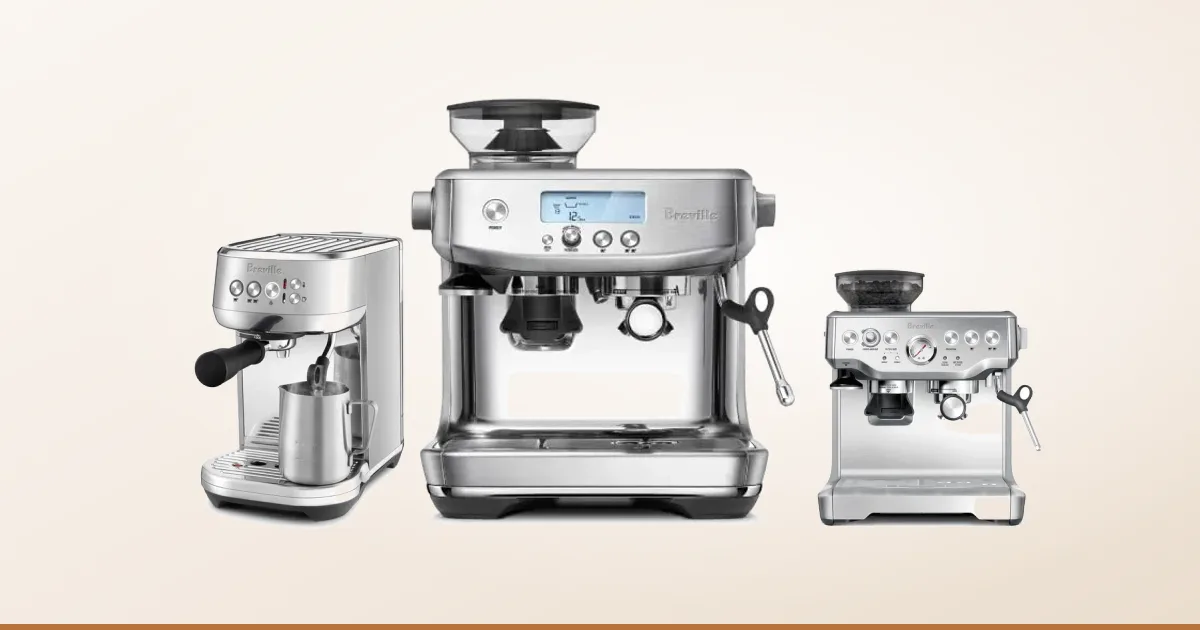
Whatever you want from your mornings, a flat white before work with nothing to learn or a shot you've taught yourself to pull, there's a Breville built for it. The trouble is telling them apart: Breville sells ten espresso machines that look almost alike, named in some mix of Barista, Bambino, Express, Impress and Touch. What separates them is the three jobs a basic machine leaves to you, grinding the beans, measuring and tamping the dose, and steaming the milk, and each step up the lineup takes one of them off you.

So start with two questions. Do you want the grinder inside the machine, or a separate one you can upgrade later? And do you want to learn to steam milk, or have it frothed for you? Those two answers narrow it to one or two machines, and the chart below shows the rest at a glance. Check the year as well: several older models are still on sale beside their replacements, and where a newer one costs less and does everything an older one does, the chart says so.

MachineBuy
No grinder · you steam the milk
Bambino2020–––––54mm~$300Check Price →
InfuserNewer, cheaper: Bambino2012––––––54mm~$600Check Price →
Dual Boiler2014––––––58mm~$1,600Check Price →
No grinder · froths the milk for you
Bambino Plus2018––––54mm~$500Check Price →
Grinder built in · you steam the milk
Barista Express2013–––––54mm~$690Check Price →
Barista Express Impress2022–––54mm~$790Check Price →
Barista Pro2019––––54mm~$850Check Price →
Grinder built in · froths the milk for you
Barista Touch2017––54mm~$1,000Check Price →
Barista Touch Impress202354mm~$1,400Check Price →
Oracle Jet2024Newest58mm~$2,000Check Price →

An icon means the machine does that job for you; a dash means you do it. Years are US launches. Prices come from Amazon and are updated regularly; the current price is always on Amazon.

Froths the milk for you, no grinder

Steam wand
Automatic
Heat-up
3 seconds
Temperature
PID
Stands out
Adjustable milk texture

Why we love it

The Bambino Plus removes every barrier to good espresso. The ThermoJet heating system is ready in 3 seconds — no waiting around. The automatic steam wand handles milk frothing for you, which means you're making lattes on day one without learning steam wand technique. It pulls consistent, balanced shots through a 54mm portafilter, and the whole machine is barely bigger than a toaster. If you want one machine that just works from the moment you unbox it, this is it.

Pros

  • Ready to brew in 3 seconds — fastest heat-up in its class
  • Automatic milk frothing takes the guesswork out of lattes
  • Compact footprint fits under cabinets and on small counters
  • PID temperature control for consistent shot quality
  • Pre-infusion helps extract flavor evenly

Cons

  • No built-in grinder — you'll need to buy one separately or use pre-ground
  • 54mm portafilter limits your upgrade path for accessories
  • Automatic steam wand gives less control than a manual one
Grinder built in, you steam the milk

Learn Every Step
Steam wand
Manual
Temperature
PID
Stands out
Built-in conical burr grinder
Width
12.4 in

Why we love it

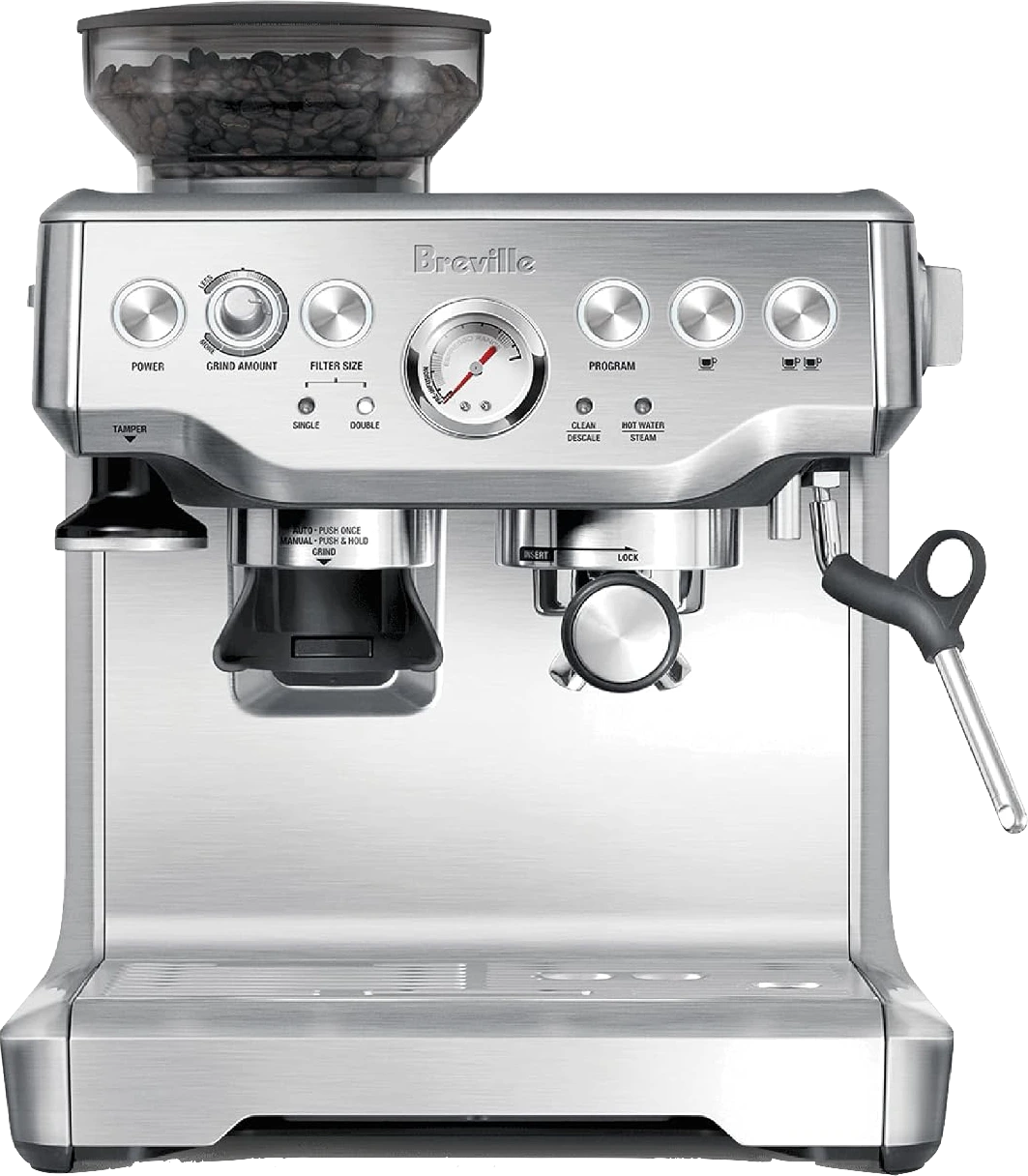
The Barista Express is one of the most popular home espresso machines there is, for a reason. It has a built-in conical burr grinder, so you go from whole beans to espresso in a single machine — no separate grinder cluttering your counter. The grind-to-brew workflow keeps everything tight: adjust grind size, dose, tamp, pull. You learn espresso fundamentals without needing extra equipment. The steam wand is manual, which means you'll need to practice milk texturing, but that's actually a plus — you're building real skills. It's bigger than the Bambino, but you're getting a grinder and espresso machine in one footprint.

Pros

  • Built-in burr grinder — no separate grinder needed
  • Grind size dial makes adjustments easy to see and repeat
  • PID temperature control for consistent extraction
  • Manual steam wand lets you learn real milk texturing
  • Huge community — tons of tutorials and tips online

Cons

  • Built-in grinder isn't as good as a dedicated espresso grinder
  • Bigger footprint — needs more counter space
  • More to learn vs. the Bambino Plus's simpler workflow
  • Higher price point at around $690
Best All-in-One
Steam wand
Manual
Heater
Thermocoil
Temperature
PID
Stands out
Assisted tamping

Why we love it

The Barista Express teaches espresso by making you do everything, and the two jobs beginners get wrong most are the dose and the tamp. The Impress takes over both. Its grinder doses on its own and reads how full the basket came out, then corrects the next dose, and the tamping lever presses at a steady 10kg and finishes with a 7° twist, so every puck starts level. The rest is the Express: a conical burr grinder with 25 settings, PID temperature control with an adjustable brew temperature, single and dual-wall baskets, and a manual steam wand. What you are buying at around $790 is the Express without the first month of sour, uneven shots.

Pros

  • Doses itself and corrects the next dose, so the amount in the basket isn’t a guess
  • Assisted tamping: 10kg of pressure and a 7° twist, level every time
  • Conical burr grinder with 25 settings, straight into the portafilter
  • PID temperature control, with a brew temperature you can adjust
  • Single and dual-wall baskets, so pre-ground coffee works on day one

Cons

  • $100 more than the Barista Express, for the dosing and tamping
  • Thermocoil heating: Breville doesn’t state a heat-up time, and you wait between the shot and the steam
  • Manual steam wand: milk texturing is still a skill to learn
  • Built-in grinder can’t be upgraded or serviced separately
  • 54mm portafilter, not the 58mm commercial size
No Wait for the Milk
Steam wand
Manual
Heat-up
3 seconds
Temperature
PID
Stands out
Built-in grinder

Why we love it

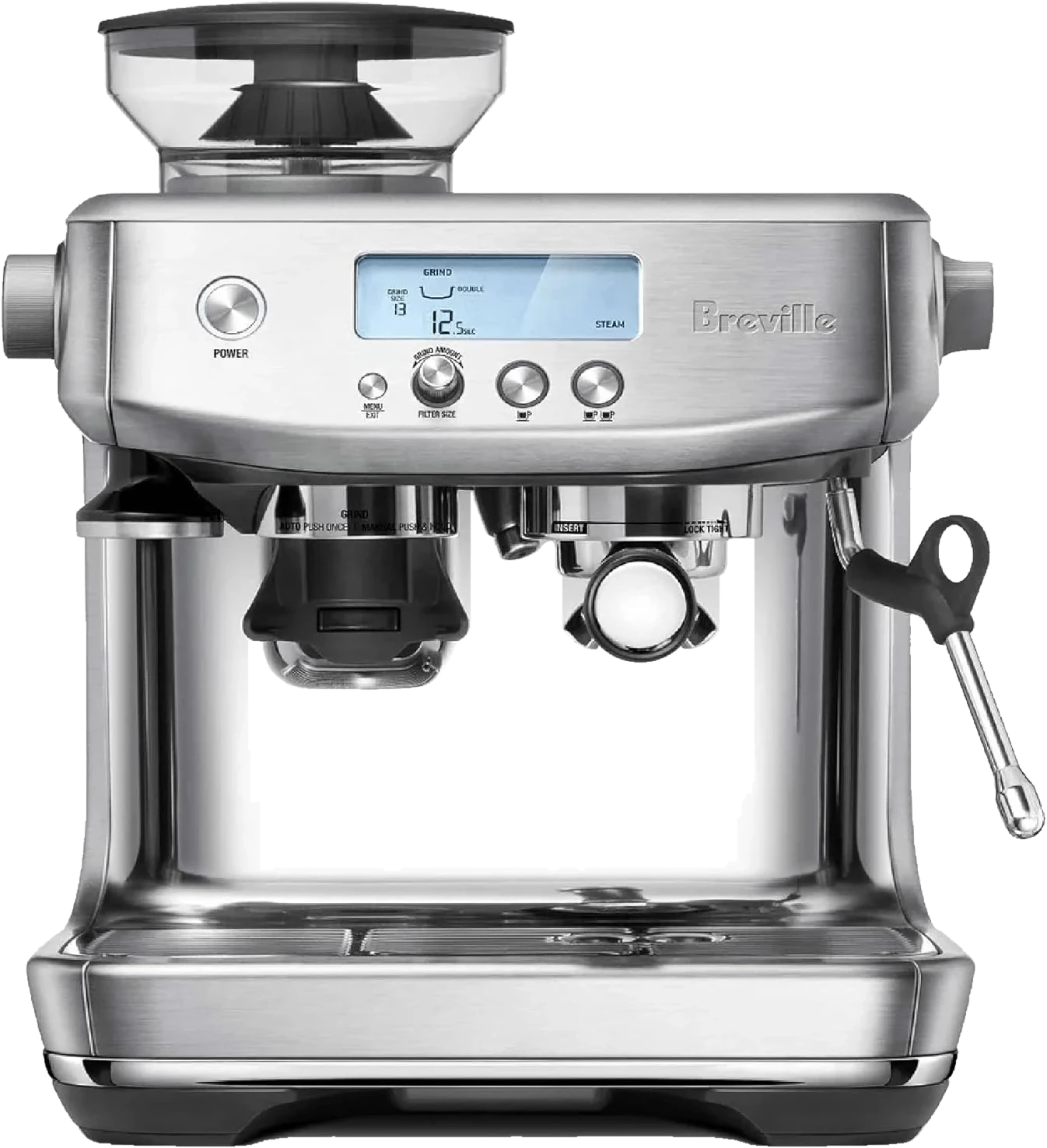
The Barista Express is the machine everyone recommends and the Pro is what it should have been. Same idea — grinder and espresso machine in one body — but with the ThermoJet system from the Bambino, so it reaches extraction temperature in three seconds instead of waiting on a thermocoil, and it switches from espresso to steam instantly rather than making you pause between the shot and the milk. PID regulation holds the brew temperature to within 2°C. The integrated grinder doses straight into the portafilter and is genuinely good, if not the equal of a $200 standalone. What you are buying at around $850 is the all-in-one convenience without the Express’s wait to heat up and to switch to steam.

Pros

  • ThermoJet heat-up in 3 seconds, and no wait between shot and steam
  • PID holds brew temperature within 2°C
  • Integrated conical burr grinder doses into the portafilter
  • Low-pressure pre-infusion for a more even extraction
  • One body, one plug — the whole setup in a moderate footprint

Cons

  • $160 more than the Barista Express, mostly for faster heating
  • Built-in grinder can’t be upgraded or serviced separately
  • 54mm portafilter, not the 58mm commercial size
  • Manual steam wand — milk texturing is a skill you still have to learn

Grinder built in, froths the milk for you

Touchscreen Lattes for Less
Steam wand
Automatic
Heat-up
3 seconds
Temperature
PID
Stands out
Touchscreen, 8 saved drinks

Why we love it

The Barista Touch is for someone who wants the Barista machines’ espresso without learning a steam wand. You choose a drink on the touchscreen, and it walks you through grind, brew and milk, with the automatic wand texturing the milk to the temperature and texture you set, so a flat white comes out the same every morning, and up to eight of your own drinks save to the menu. Underneath it’s the fast Breville: ThermoJet heating reaches extraction temperature in three seconds, PID holds it there, low-pressure pre-infusion starts the shot gently, and a conical burr grinder with 30 settings doses on demand. You still tamp by hand, and the grinder lives and dies with the machine. What you are buying at around $1,000 is café milk drinks with nothing left to practice but the tamp.

Pros

  • Automatic steam wand with milk temperature and texture you set
  • ThermoJet: extraction temperature in 3 seconds, and no wait between shot and milk
  • Touchscreen walks you through grind, brew and milk, and saves 8 drinks of your own
  • Conical burr grinder with 30 settings doses on demand
  • PID temperature control and low-pressure pre-infusion

Cons

  • $150 more than the Barista Pro, for the touchscreen and the automatic wand
  • You still tamp by hand: it doesn’t weigh or level the dose
  • Built-in grinder can’t be upgraded or serviced separately
  • A touchscreen is one more part to fail than buttons and a dial
  • 54mm portafilter, not the 58mm commercial size
Easiest Lattes, Grinder Built In
Steam wand
Automatic
Heat-up
3 seconds
Stands out
Assisted tamping, cold brew
Width
13.3 in

Why we love it

The Touch Impress is the Barista machine with the fewest steps left to you. The touchscreen walks you through each drink, the grinder doses on its own and reads how full the basket came out, then corrects the next dose, and the Impress lever tamps at a steady 22lb with a 7° twist, so the puck starts level every time. The automatic wand froths dairy, oat, almond or soy milk to the temperature and texture you set, ThermoJet heating reaches extraction temperature in three seconds, and a cold brew setting makes iced coffee without a pitcher in the fridge overnight. The Baratza burrs have 30 settings. What you are buying at around $1,400 is a café latte where the only skill left is choosing the drink.

Pros

  • Doses itself, corrects the next dose, and a lever tamps the puck level
  • Automatic steam wand with settings for dairy, oat, almond and soy milk
  • ThermoJet: extraction temperature in 3 seconds
  • Cold brew setting as well as espresso
  • Touchscreen with 13 preset drinks and 6 of your own

Cons

  • $380 more than the Barista Touch, for the dosing, tamping and cold brew
  • Built-in grinder can’t be upgraded or serviced separately
  • 54mm portafilter, not the 58mm commercial size
  • A touchscreen is one more part to fail than buttons and a dial

Grinds, doses and tamps itself

Breville Oracle Jet

Breville

Breville Oracle Jet

9.4/ 10
Steam wand
Automatic
Heat-up
3 seconds
Temperature
Adjustable in 1° steps
Stands out
Grinds, doses and tamps itself

Why we love it

Every other Breville leaves you at least one job. The Oracle Jet does them all except locking the portafilter in: it grinds 22g into a 58mm portafilter, tamps it automatically, and its Barista Guidance reads each shot and tells you whether to grind finer or coarser. The automatic wand froths dairy, soy, almond or oat milk anywhere from 104°F to 167°F at eight textures, and Auto Queue starts the milk while the shot runs. ThermoJet heats the group head, adjustable in single degrees, and the Baratza burrs have 45 settings. It pairs the commercial 58mm portafilter with a grinder in the same body. What you are buying at around $2,000 is café espresso and milk with no technique left to learn and room to tune every variable if you want to.

Pros

  • Grinds, doses and tamps itself: no lever, no tamper
  • 58mm portafilter with a 22g dose, the commercial size
  • Automatic milk from 104°F to 167°F at 8 textures, with oat, almond and soy settings
  • Barista Guidance reads each shot and tells you which way to adjust the grind
  • Group temperature adjustable in 1° steps; cold brew and cold espresso

Cons

  • Newer than the other Oracles, with less owner history behind it
  • Big: it needs a deep counter and room above for the hopper
  • Built-in grinder can’t be upgraded or serviced separately

No grinder, you steam the milk

Each needs an espresso grinder beside it.

Best on a Budget
Steam wand
Manual
Heat-up
3 seconds
Temperature
PID
Stands out
Pressurized + standard baskets

Why we love it

The Bambino is the Bambino Plus's younger sibling. You get the same ThermoJet heating system (3-second heat-up), the same 54mm portafilter, the same PID temperature control, in an even narrower body. The difference? The steam wand is manual instead of automatic. That means you'll need to learn to froth milk yourself — but a lot of people actually prefer this, because you get more control over texture and temperature. It also comes with both pressurized and non-pressurized baskets, so you can start easy and level up your technique over time. At $300, it's $200 less than the Plus and arguably the best value in beginner espresso machines.

Pros

  • Same 3-second ThermoJet heat-up as the Bambino Plus
  • PID temperature control for consistent shots
  • Includes both pressurized and non-pressurized baskets
  • Manual steam wand gives more control over milk texture
  • $200 less than the Bambino Plus

Cons

  • Manual steam wand requires practice to master
  • No built-in grinder — separate purchase needed
  • 54mm portafilter is smaller than the 58mm standard
For the Grinder You Own
Steam wand
Manual
Heater
Dual boiler
Temperature
PID
Stands out
Brews and steams at once

Why we love it

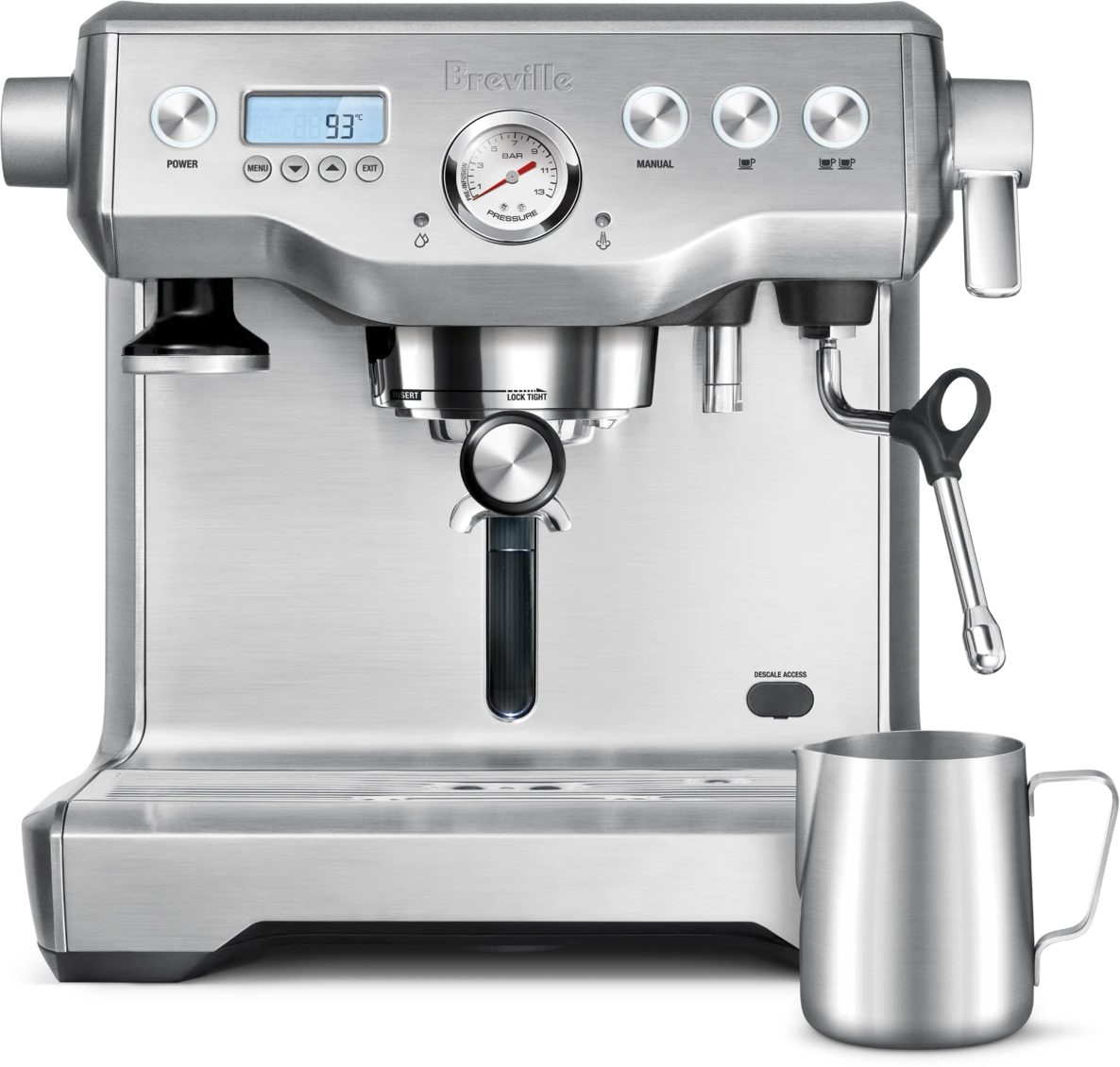
The Dual Boiler is Breville's machine for people who want to work every variable by hand. One boiler brews and the other steams, so a latte doesn't wait for the machine to switch, and PID holds the brew water within 2°F through a heated group head. The 58mm portafilter takes the commercial baskets and tampers, low-pressure pre-infusion starts the shot gently, an over-pressure valve caps the pump, and the LCD runs a shot clock so you can repeat a good extraction. There's no grinder and the steam wand is manual. Budget for an espresso grinder on top, one that adjusts finely enough to hold an espresso setting: the machine is only as good as the grind you feed it.

Pros

  • Two boilers: brew and steam at the same time
  • PID temperature control and a heated group head
  • 58mm portafilter, the commercial size
  • Low-pressure pre-infusion and an over-pressure valve
  • LCD with a shot clock, so a good shot is easy to repeat

Cons

  • No built-in grinder: budget for an espresso grinder
  • Manual steam wand: milk texturing is a skill to learn
  • Breville doesn’t state a heat-up time
  • Large, and heavy to move
Older Design
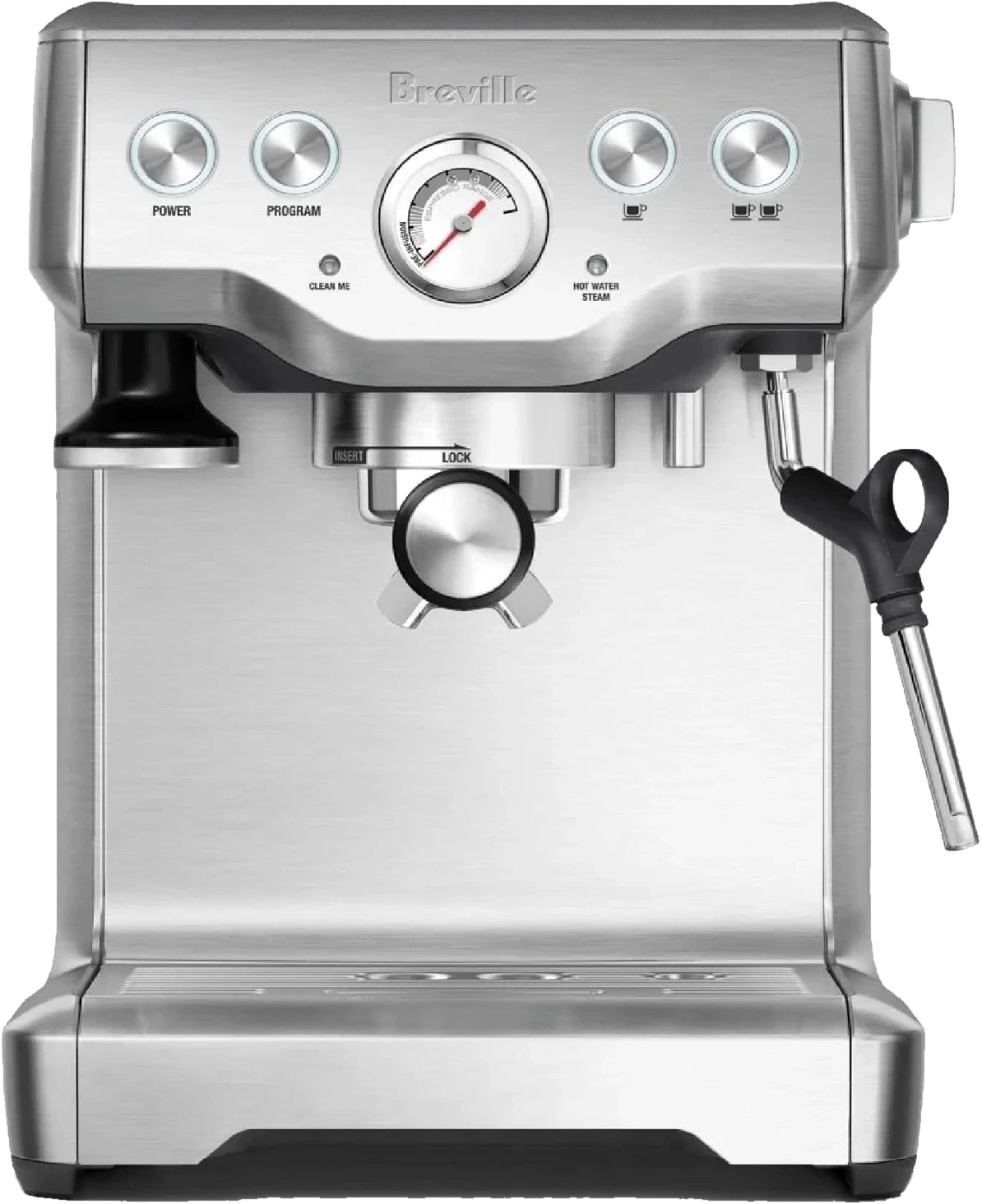
Breville Infuser

Breville

Breville Infuser

8.3/ 10
Steam wand
Manual
Heater
Thermocoil
Temperature
PID
Stands out
Pressure gauge

Why we love it

The Infuser is Breville’s older no-grinder machine, from before the Bambino. It has PID temperature control you can adjust in 2°F steps, low-pressure pre-infusion, a pressure gauge that shows whether the shot is in range, single and double shots that stop themselves with a manual override, and an automatic purge after steaming so the next shot isn't too hot. It has no grinder and a manual wand, and it heats with a thermocoil, so Breville states no three-second heat-up for it. It's worth knowing the newer Bambino Plus costs $100 less, heats in three seconds and froths milk for you.

Pros

  • PID temperature control, adjustable in 2°F steps
  • Pressure gauge shows whether a shot is in range
  • Low-pressure pre-infusion for an even extraction
  • Shots stop themselves, with a manual override
  • Purges itself after steaming, so the next shot isn't too hot

Cons

  • No built-in grinder: budget for an espresso grinder
  • Thermocoil heating: Breville doesn’t state a heat-up time
  • Manual steam wand: milk texturing is a skill to learn
  • One-year warranty, where Breville’s newer machines carry two

How we chose these

Every Breville here was read against the others on the jobs a machine can take off you: grinding, dosing, tamping, steaming the milk and the wait to heat up, plus the portafilter size and when it came out. Specs come from each Amazon listing and Breville's own spec pages, release years from Breville's launch announcements and dated launch reviews, and where Breville doesn't state something, we say so. Prices come from Amazon and are updated regularly; the current price is always on Amazon.

Questions people ask

Which Breville espresso machine is best?

For most people, the Bambino Plus at $500, with an espresso grinder beside it. It heats in three seconds, froths the milk for you, and leaves the grinder as a separate part you can upgrade. If you want the grinder in the same box, the Barista Express Impress does the dose and the tamp for you; if you want nothing left to learn, the Oracle Jet grinds, doses and tamps itself.

What's the difference between the Barista Express and the Barista Express Impress?

The Impress measures the dose itself and corrects the next one, and a lever tamps the puck level; on the Express you do both by hand. The Impress also has 25 grind settings to the Express's 16. Both have a manual steam wand, PID and a 54mm portafilter. Our Barista Express vs Express Impress comparison goes through it line by line.

What's the difference between the Barista Pro and the Barista Touch?

The Touch adds a touchscreen and an automatic steam wand: you pick a drink and it froths the milk to the temperature and texture you set. On the Pro you steam the milk yourself. Both heat in three seconds and have a 30-setting grinder and a 54mm portafilter. Our Barista Pro vs Barista Touch comparison goes through it line by line.

What's the difference between the Barista Express and the Barista Touch?

The Touch froths the milk for you with an automatic wand, heats in three seconds and runs from a touchscreen; on the Express you steam by hand, it heats with a slower thermocoil, and its grinder has 16 settings to the Touch's 30. Both have PID and a 54mm portafilter. Our Barista Touch vs Barista Express comparison goes through it line by line.

What's the difference between the Barista Touch and the Barista Touch Impress?

The Touch Impress adds the Impress puck system, so it measures the dose, corrects the next one and tamps the puck level with a lever, plus a cold brew setting and milk settings for oat, almond and soy. On the Touch you dose and tamp by hand. Both have a touchscreen, an automatic wand and a three-second heat-up.

What's the newest Breville espresso machine?

The Oracle Jet, released in 2024. Every machine's release year is in the chart above, so you can see which models are current and which are older designs still on sale.

Which Breville espresso machines have a 58mm portafilter?

The Oracle Jet and Dual Boiler. Every other Breville here uses 54mm, which makes the same espresso but takes fewer third-party baskets and tampers.

Which Breville espresso machine is best for beginners?

The Bambino Plus if you want lattes, because it froths the milk for you, or the Barista Express Impress if you want the grinder built in, because it doses and tamps for you. Those are the two jobs beginners get wrong most. Our espresso machines for beginners guide has the other brands.

Bottom line

For most people, buy the Bambino Plus and an espresso grinder: lattes from the first morning, and a grinder you can upgrade later. For one box with the grinder inside, the Barista Express Impress does the dose and the tamp for you, and the Touch Impress adds milk that froths itself. For no technique at all, the Oracle Jet grinds, doses and tamps on its own. And if you already own a good grinder, the Dual Boiler brews and steams at the same time.

Related guides

Stay in the loop

New gear reviews, brew tips, and the occasional deal — straight to your inbox. No spam, ever.