GuidesComparisons
Roundup

Best Espresso Machines Under $1,000

The most machine a four-figure budget buys — and an honest note on why you may not want to spend all of it.

By Dana WhitfieldUpdated September 2026
8 products compared12 min read
Best Espresso Machines Under $1,000

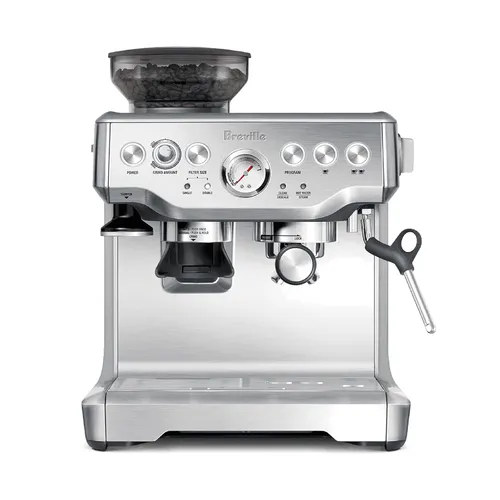
A four-figure budget buys a genuinely complete espresso setup, and the machine that makes the most of it is the Breville Barista Pro at $850: a conical burr grinder, PID temperature control and three-second heat-up in one body, with change left over. Nothing else under $1,000 gives you the whole setup out of one box.

If you would rather have the better machine and buy the grinder yourself, that is the Rancilio Silvia at $995 — a brass boiler and commercial components that will outlast everything here. Budget $200 or more on top and accept that the total passes the ceiling.

One honest caveat, because it is the most useful thing we can tell you at this budget: above about $500 the extra money buys automation, integration and build quality rather than better espresso. A $300 machine with a $300 grinder makes a better cup than a $995 machine with a cheap one. If the grinder is not already sorted, spend there first — the cheaper machines on this page are listed for exactly that reason.

Quick picks

Breville Barista ProBest All-in-One

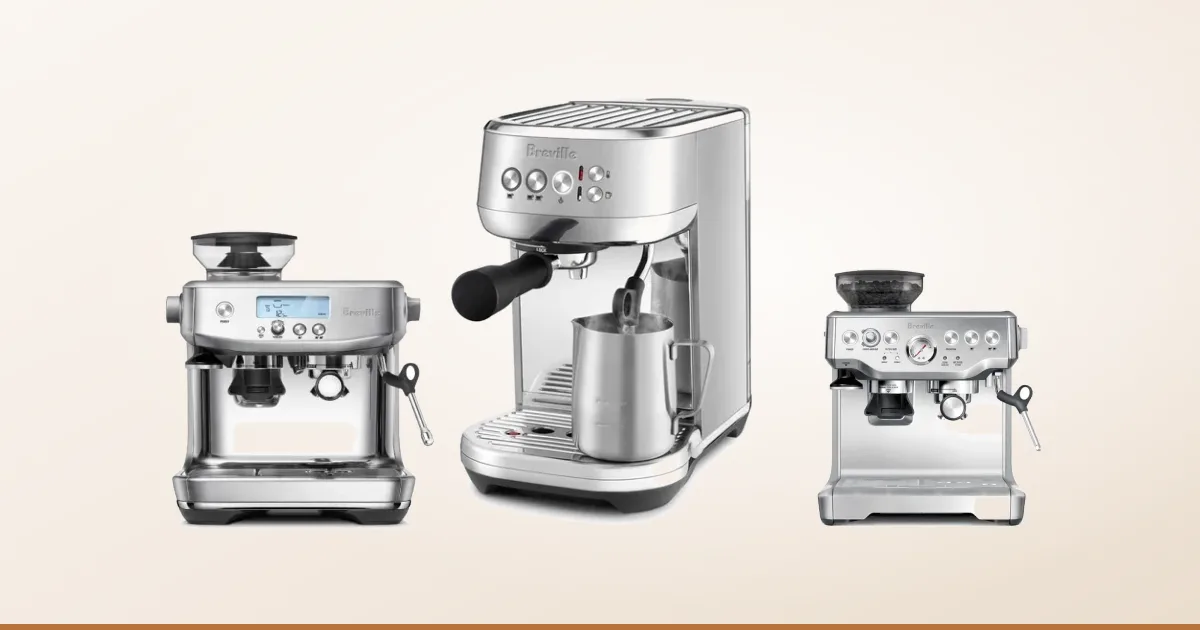
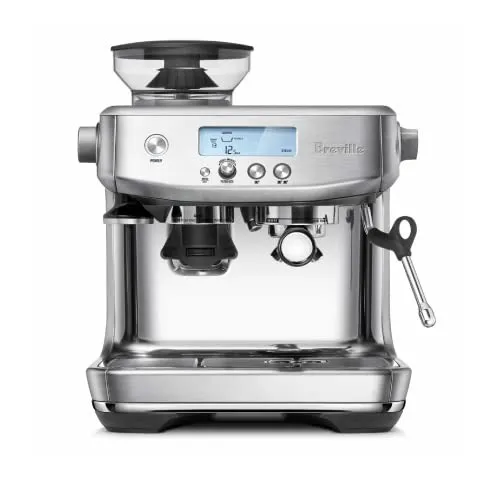
Breville Barista Pro

$850

The Barista Express with the two things it was missing: ThermoJet heating and PID temperature control. Built-in conical burr grinder, three-second heat-up.

Jump to review
Rancilio SilviaBest to Grow Into

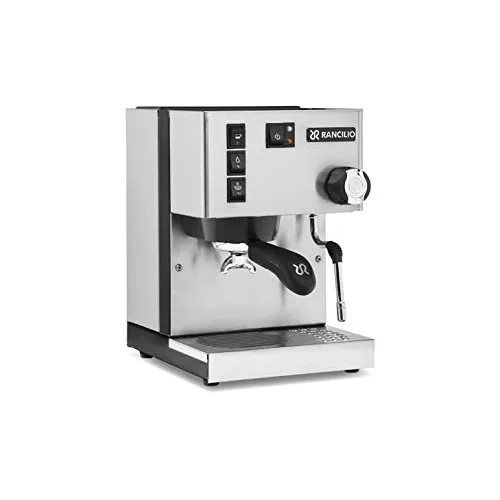
Rancilio Silvia

$995

Twenty years in production, a 12oz brass boiler and commercial components. No grinder, no screen, no assistance — the machine you stop upgrading.

Jump to review
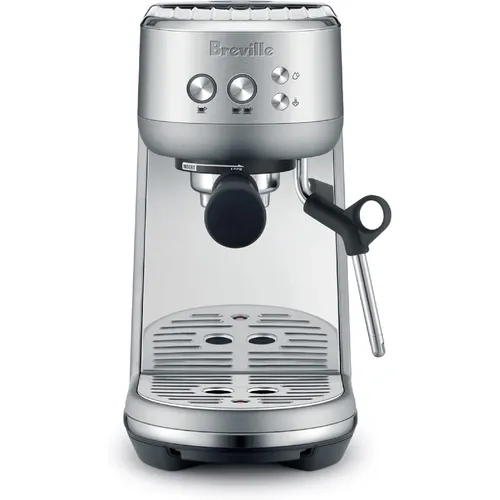
Breville Bambino PlusOur Top Pick

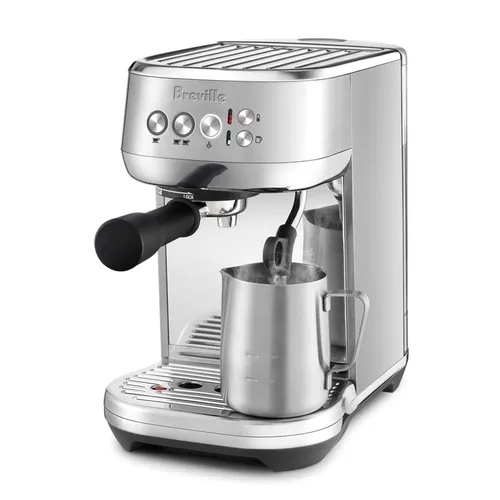
Breville Bambino Plus

$500

The easiest way to start making real espresso at home. Heats up in 3 seconds, froths milk automatically, and fits in tight kitchens.

Jump to review

The best machine under $1,000

Grinder, PID temperature control and three-second heat-up in one body. Nothing else at this budget gives you a complete setup out of one box, and the two things it adds over the cheaper all-in-one are the two that were missing.

Best All-in-One
Breville Barista Pro

Breville

Breville Barista Pro

$849.95
9.2/ 10
Check price on Amazon

Why we love it

The Barista Express is the machine everyone recommends and the Pro is what it should have been. Same idea — grinder and espresso machine in one body — but with the ThermoJet system from the Bambino, so it reaches extraction temperature in three seconds instead of waiting on a thermocoil, and it switches from espresso to steam instantly rather than making you pause between the shot and the milk. PID regulation holds the brew temperature to within 2°C, which is the difference between a machine that is consistent and one that is consistent once it has warmed up. The integrated grinder doses straight into the portafilter and is genuinely good, if not the equal of a $200 standalone. What you are buying at around $850 is the all-in-one convenience without the Express’s two real compromises.

Pros

  • ThermoJet heat-up in 3 seconds, and no wait between shot and steam
  • PID holds brew temperature within 2°C
  • Integrated conical burr grinder doses into the portafilter
  • Low-pressure pre-infusion for a more even extraction
  • One body, one plug — the whole setup in a moderate footprint

Cons

  • $160 more than the Barista Express for heating and PID
  • Built-in grinder can’t be upgraded or serviced separately
  • 54mm portafilter, not the 58mm commercial size
  • Manual steam wand — milk texturing is a skill you still have to learn
Best machine if you’ll buy the grinder separately

Commercial components and twenty years of unchanged production. It is the better machine and the harder one — no PID, no grinder, so budget $200 or more on top and expect the total to pass $1,000.

Best to Grow Into
Rancilio Silvia

Rancilio

Rancilio Silvia

$995.00
9/ 10
Check price on Amazon

Why we love it

The Silvia has been made largely unchanged for over two decades, which in this category is the strongest recommendation there is: it is still sold because people still want it, not because it was refreshed. A single 12-ounce brass boiler serves brew and steam, the case is steel rather than plastic, and the components come off the same line as Rancilio’s commercial machines. The three-way solenoid purges pressure after the shot, so the puck comes out dry and the group can be backflushed like a café machine — which is why fifteen-year-old Silvias are still running. It gives you nothing to help with: no PID from the factory, no pre-infusion, no grinder, and a steam wand that will humble you for a month. What it gives you is a machine that will outlast every other espresso maker on this page, and a ceiling you will not reach.

Pros

  • Commercial-grade components in a 9.5-inch-wide footprint
  • 12oz brass boiler holds temperature far better than a thermoblock
  • Three-way solenoid — dry pucks and proper backflushing
  • Unchanged for 20+ years, so parts and guides are everywhere
  • 58mm commercial portafilter opens the whole accessory ecosystem

Cons

  • No grinder — budget $200 or more on top
  • No PID from the factory; temperature surfing is a real technique you’ll learn
  • Single boiler means waiting between espresso and steam
  • Unforgiving — the wrong machine if you want coffee without a hobby

If milk drinks matter more than the grinder

Automatic texturing is the one feature that removes a month of practice. Neither of these grinds, so plan for that; the Express does, more slowly than the Pro above.

Our Top Pick
Breville Bambino Plus

Breville

Breville Bambino Plus

$499.95
9.4/ 10
Check price on Amazon

Why we love it

The Bambino Plus removes every barrier to good espresso. The ThermoJet heating system is ready in 3 seconds — no waiting around. The automatic steam wand handles milk frothing for you, which means you're making lattes on day one without learning steam wand technique. It pulls consistent, balanced shots through a 54mm portafilter, and the whole machine is barely bigger than a toaster. If you want one machine that just works from the moment you unbox it, this is it.

Pros

  • Ready to brew in 3 seconds — fastest heat-up in its class
  • Automatic milk frothing takes the guesswork out of lattes
  • Compact footprint fits under cabinets and on small counters
  • PID temperature control for consistent shot quality
  • Pre-infusion helps extract flavor evenly

Cons

  • No built-in grinder — you'll need to buy one separately or use pre-ground
  • 54mm portafilter limits your upgrade path for accessories
  • Automatic steam wand gives less control than a manual one
Best All-in-One
Breville Barista Express

Breville

Breville Barista Express

$689.99
9/ 10
Check price on Amazon

Why we love it

The Barista Express is the most popular home espresso machine in the world for a reason. It has a built-in conical burr grinder, so you go from whole beans to espresso in a single machine — no separate grinder cluttering your counter. The grind-to-brew workflow keeps everything tight: adjust grind size, dose, tamp, pull. You learn espresso fundamentals without needing extra equipment. The steam wand is manual, which means you'll need to practice milk texturing, but that's actually a plus — you're building real skills. It's bigger than the Bambino, but you're getting a grinder and espresso machine in one footprint.

Pros

  • Built-in burr grinder — no separate grinder needed
  • Grind size dial makes adjustments easy to see and repeat
  • PID temperature control for consistent extraction
  • Manual steam wand lets you learn real milk texturing
  • Huge community — tons of tutorials and tips online

Cons

  • Built-in grinder isn't as good as a dedicated espresso grinder
  • Bigger footprint — needs more counter space
  • More to learn vs. the Bambino Plus's simpler workflow
  • Higher price point at around $690

You don’t have to spend it all

Not our picks at this budget, and worth knowing about: these make the same espresso as anything above once the grinder is right. If you’d rather put $400 of the budget into the grinder than into the machine, that is a defensible trade — just not what this page is for.

Best Value
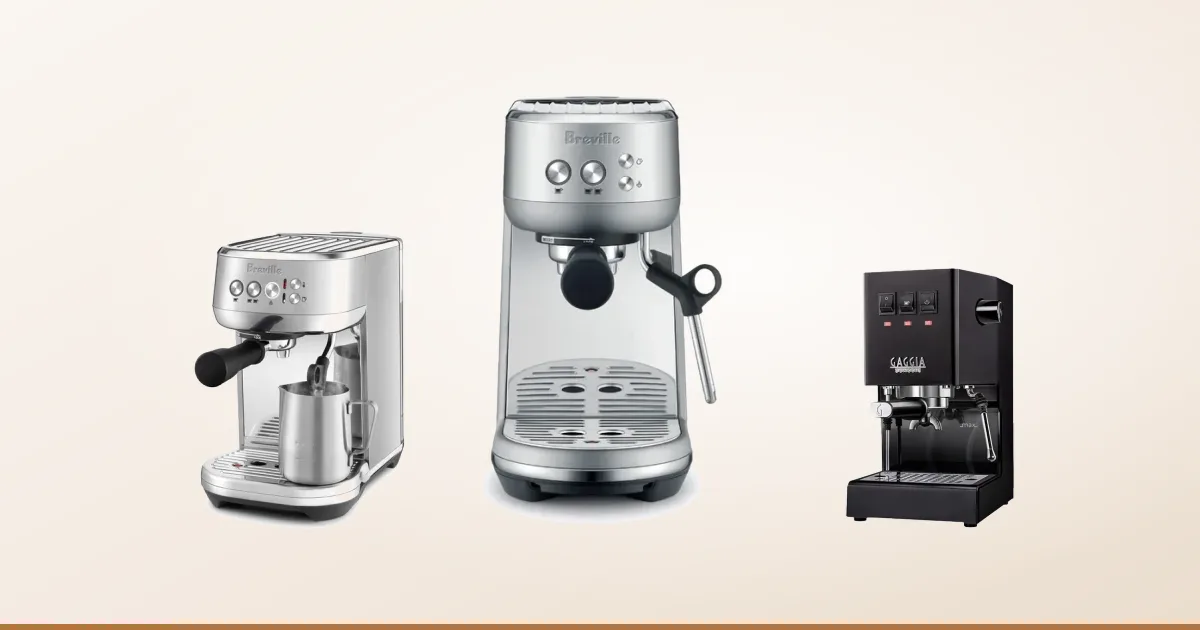
Breville Bambino

Breville

Breville Bambino

$299.95
9/ 10
Check price on Amazon

Why we love it

The Bambino is the Bambino Plus's younger sibling. You get the same ThermoJet heating system (3-second heat-up), the same 54mm portafilter, the same PID temperature control, and the same compact footprint. The difference? The steam wand is manual instead of automatic. That means you'll need to learn to froth milk yourself — but a lot of people actually prefer this, because you get more control over texture and temperature. It also comes with both pressurized and non-pressurized baskets, so you can start easy and level up your technique over time. At $300, it's $200 less than the Plus and arguably the best value in beginner espresso machines.

Pros

  • Same 3-second ThermoJet heat-up as the Bambino Plus
  • PID temperature control for consistent shots
  • Includes both pressurized and non-pressurized baskets
  • Manual steam wand gives more control over milk texture
  • $200 less than the Bambino Plus

Cons

  • Manual steam wand requires practice to master
  • No built-in grinder — separate purchase needed
  • 54mm portafilter is smaller than the 58mm standard
  • No dedicated hot water button for Americanos
Best for Growing Into
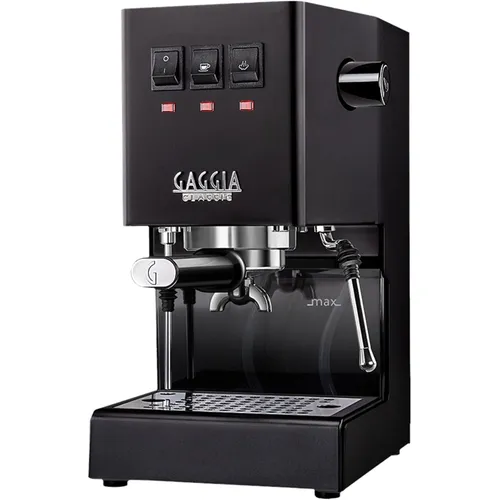
Gaggia Classic Evo Pro

Gaggia

Gaggia Classic Evo Pro

$499.00
8.8/ 10
Check price on Amazon

Why we love it

The Gaggia Classic Evo Pro is the machine serious coffee people recommend to beginners who know they're going to stick with this hobby. It's made in Italy with a stainless steel body, a commercial-spec 58mm portafilter, a 3-way solenoid valve for clean puck removal, and 9-bar extraction pressure — the same standard used in specialty coffee shops. It doesn't automate anything for you, which means there's more to learn, but it also means you're building real barista skills from day one. The huge modding community means you can add a PID controller, swap baskets, upgrade the steam wand tip — this machine grows with you instead of holding you back.

Pros

  • Commercial 58mm portafilter — same size as pro machines
  • Made in Italy with stainless steel construction
  • 9-bar extraction meets specialty coffee standards
  • 3-way solenoid valve for dry, clean puck knock-out
  • Massive upgrade and modding ecosystem

Cons

  • No built-in grinder — requires a quality burr grinder ($100–200+)
  • Steeper learning curve than more automated machines
  • Single boiler means you wait between brewing and steaming
  • Needs 8–10 minutes to fully heat up
Best for Small Spaces
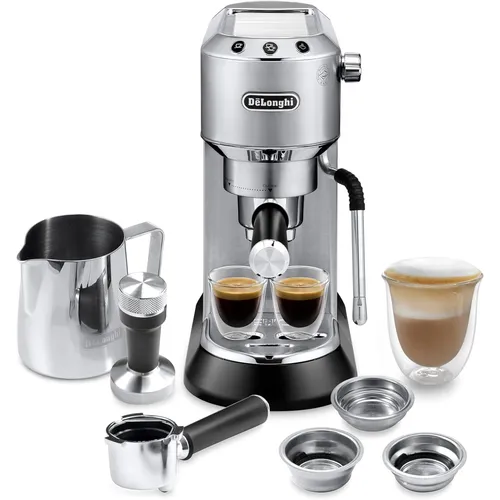
De'Longhi Dedica Arte

De'Longhi

De'Longhi Dedica Arte

$299.95
8.2/ 10
Check price on Amazon

Why we love it

The Dedica Arte is only 6 inches wide. That's narrower than most coffee makers, and it still pulls genuine espresso with 15 bars of pressure. The standout upgrade over older Dedica models is the LatteArt steam wand — a panarello-style wand that makes it genuinely easy to texture milk and pour latte art from day one. It heats up in about 40 seconds and has a clean stainless steel design that looks sharp on any counter. The pressurized baskets are forgiving for beginners — you don't need a perfect grind to get a decent shot. It's the best option if counter space is your biggest constraint and you want something that feels like a real espresso machine, not a toy.

Pros

  • Ultra-slim 6-inch profile — fits anywhere
  • LatteArt steam wand makes milk texturing accessible for beginners
  • Attractive stainless steel design
  • 40-second heat-up time
  • Works with ESE pods as a convenience option

Cons

  • Pressurized baskets limit espresso quality ceiling
  • Plastic internals in some areas feel less premium
  • Small water tank (35 oz) needs frequent refills
Best Budget Pick
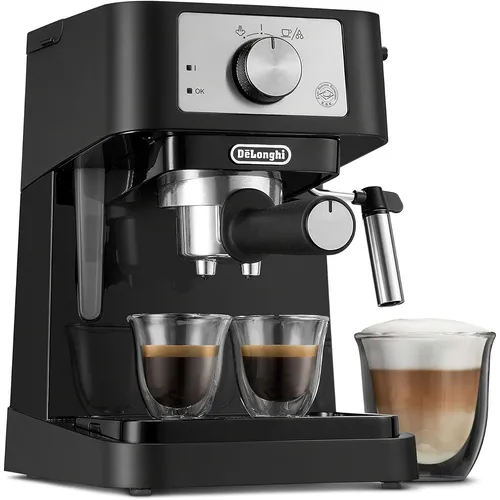
De'Longhi Stilosa

De'Longhi

De'Longhi Stilosa

$104.97
7.8/ 10
Check price on Amazon

Why we love it

At around $105, the Stilosa is the floor for a real espresso machine. It has a 15-bar pump, a stainless steel boiler, and a manual steam wand — everything you need to make actual espresso, not just strong coffee. There's no screen, no menus, no complexity — just a dial and two lights. The pressurized baskets mean you can use pre-ground coffee and still get decent crema. It's not going to compete with machines costing 3x more, but it does exactly what it promises: it makes real espresso, it teaches you the basics, and it costs less than a month of coffee shop visits. The perfect first machine for anyone who isn't sure they want to commit yet.

Pros

  • Unbeatable price — real espresso for around $105
  • Simple dial control — no learning curve for the machine itself
  • Stainless steel boiler for durability
  • Compact and lightweight — easy to store or move
  • Pressurized baskets work well with pre-ground coffee

Cons

  • Basic steam wand produces decent but not silky foam
  • No PID — temperature consistency isn't as tight
  • Plastic portafilter feels cheap compared to pricier machines
  • Small 1-liter water tank

The trade almost everyone should make

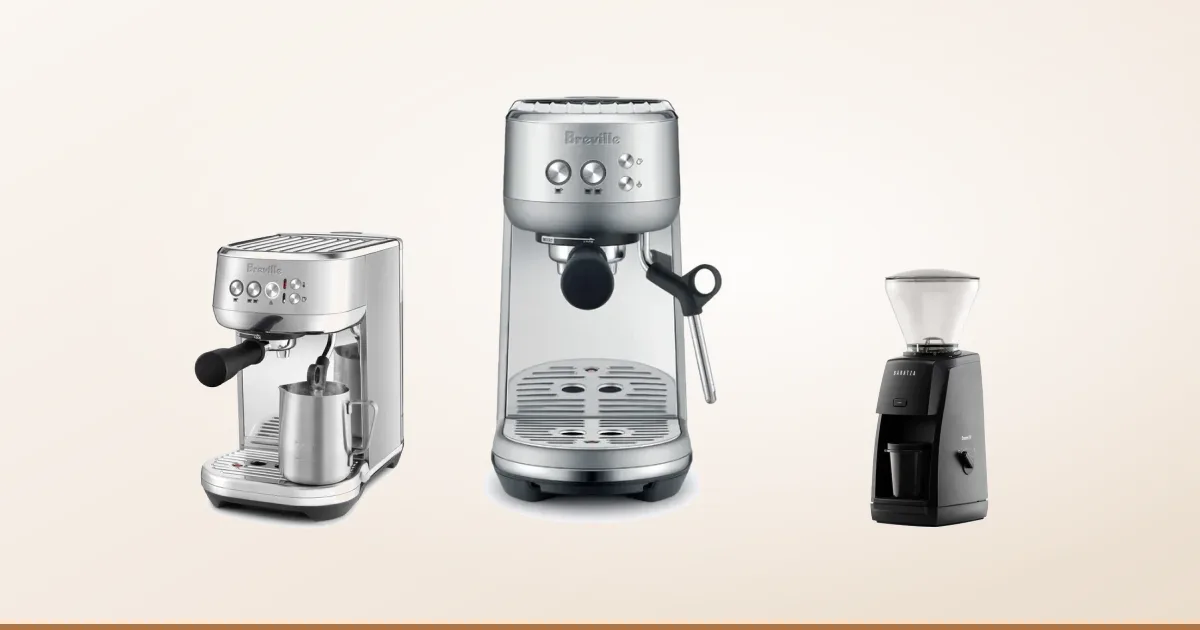
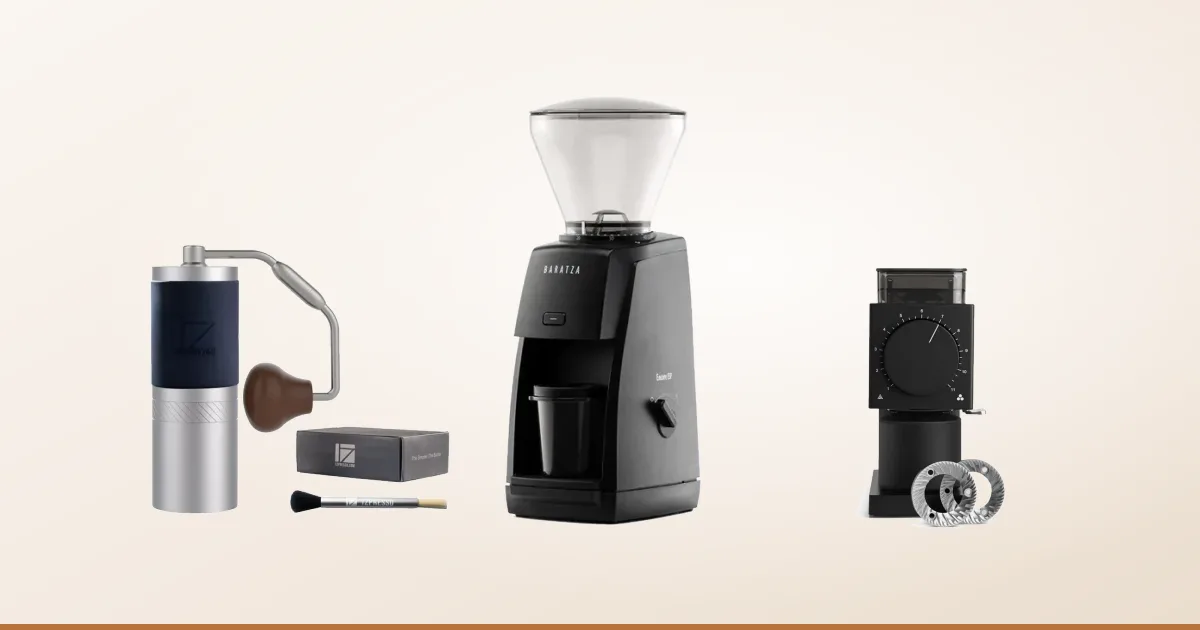
A cheaper machine with a better grinder beats a dearer machine with a cheap one, for less money, and it is not close. Grind decides extraction; the machine mostly needs stable temperature and pressure, which everything here delivers. Matched machine and grinder pairings price the whole setup rather than half of it.

New to espresso?

This page assumes you know what you are buying. If this is a first machine, the ranking changes completely — learning curve matters more than ceiling, and the Silvia above is the wrong place to start. See best espresso machines for beginners.

How we chose these

Grouped by what the additional spend buys rather than ranked by price, since ranking would imply the dearest is the best and it isn’t. Every machine has a real steam wand and reaches proper brewing pressure. Super-automatics and pod machines are out of scope — different category, different decision. Prices come from Amazon at build time, so the $1,000 ceiling is checked rather than assumed.

What to know before you buy

What’s the best espresso machine under $1,000?

The Bambino Plus at $500, which is nowhere near the ceiling, and that is the point. It heats in three seconds and textures milk automatically, which is what most people are missing. Spending the remaining budget gets you a grinder in the same box (the Barista Pro at $850) or a machine built like commercial equipment (the Rancilio Silvia at $995). Both are excellent and neither makes better espresso than the Bambino Plus in ordinary use.

What does spending more than $500 actually get you?

Automation, integration and build — in that order of usefulness, and none of them is better espresso. The Bambino Plus textures milk for you, which removes the hardest skill. The Barista Pro puts a grinder in the same body, which removes an appliance and a purchase. The Silvia is built like commercial equipment and will outlast the rest. All three are real reasons to spend the money. What you will not get is a noticeably better shot, assuming the grinder is equally good in both cases.

Is the Rancilio Silvia worth $995?

If you want a machine that will still be working in fifteen years and you are willing to learn it, yes. It has been in production largely unchanged for two decades, the boiler is brass, the components come off Rancilio’s commercial line, and the three-way solenoid means it backflushes like a café machine. It also has no PID, no pre-infusion and no grinder, so you are managing temperature by timing and budgeting $200 or more on top. It is the wrong machine for a first setup and the right one for a last.

Barista Pro or Barista Express?

The Pro at $850, if you are buying an all-in-one at all. It is the Express with the two things that machine was missing: ThermoJet heating so it is ready in three seconds, and PID regulation holding brew temperature within 2°C. The Express at $690 does the same job on a slower thermocoil. The wider question is whether to buy an all-in-one, and on value the answer is usually no — the same money buys a better machine and a better grinder as two boxes.

Should I buy a cheaper machine and a better grinder?

Almost always, and it is the single most useful thing on this page. A $300 machine with a $300 grinder makes better espresso than a $995 machine with a $72 one, for less money. Grind is what decides extraction; the machine mostly needs to deliver stable temperature and pressure, which everything here does. Budget the grinder first and buy the machine with what is left.

Do I need a dual boiler at this budget?

No, and you cannot really get a good one under $1,000 anyway. A dual boiler brews and steams simultaneously, which matters when you are making several milk drinks back to back. Every machine here is single boiler or thermoblock, meaning a short wait between the shot and the milk. For one or two drinks that wait is seconds and irrelevant. If you are regularly making four lattes in a row, that is the reason to look above this ceiling — not shot quality.

Bottom line

Buy the Barista Pro. At $850 it is the most complete setup a sub-$1,000 budget buys — machine and grinder in one, ready in three seconds, with PID holding the temperature where it should be. If you would rather own the better machine and choose your own grinder, buy the Silvia and expect to pass the ceiling. And if the grinder in your kitchen is still a blade grinder, ignore all of this and fix that first: it will do more for the coffee than anything on this page.

Related guides

Stay in the loop

New gear reviews, brew tips, and the occasional deal — straight to your inbox. No spam, ever.