GuidesBrowseComparisons
Roundup

Best Moka Pots

Strong, espresso-style coffee from the stove in five minutes, sorted by the stove you have: gas and electric, induction, and one pot that makes crema.

By Dana WhitfieldUpdated November 2026
5 products compared7 min read
Bialetti Moka Express

★ Our top pick

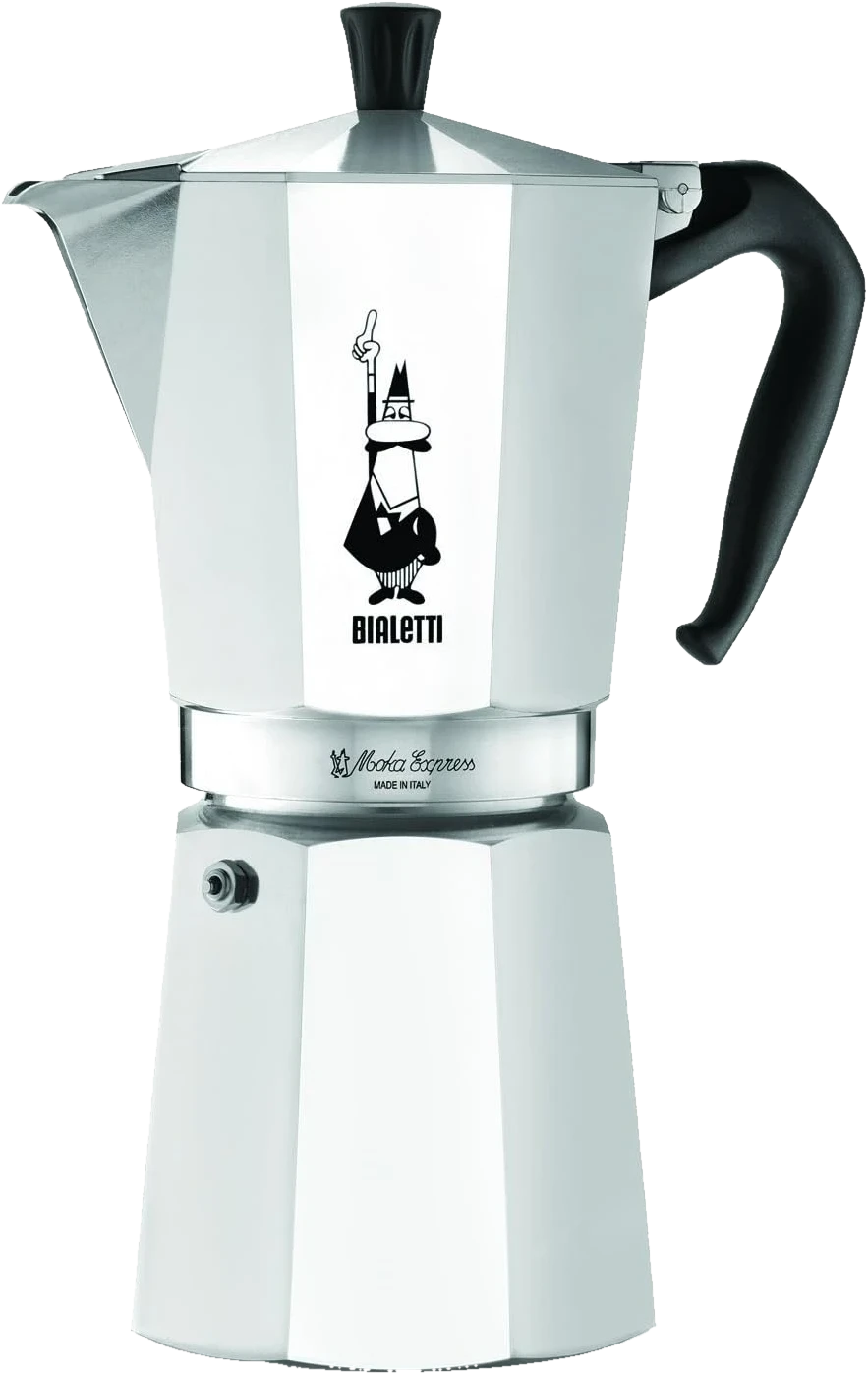
Bialetti Moka Express

The Original · Around $50

Strong stovetop coffee in five minutes, from the pot every other one copies.

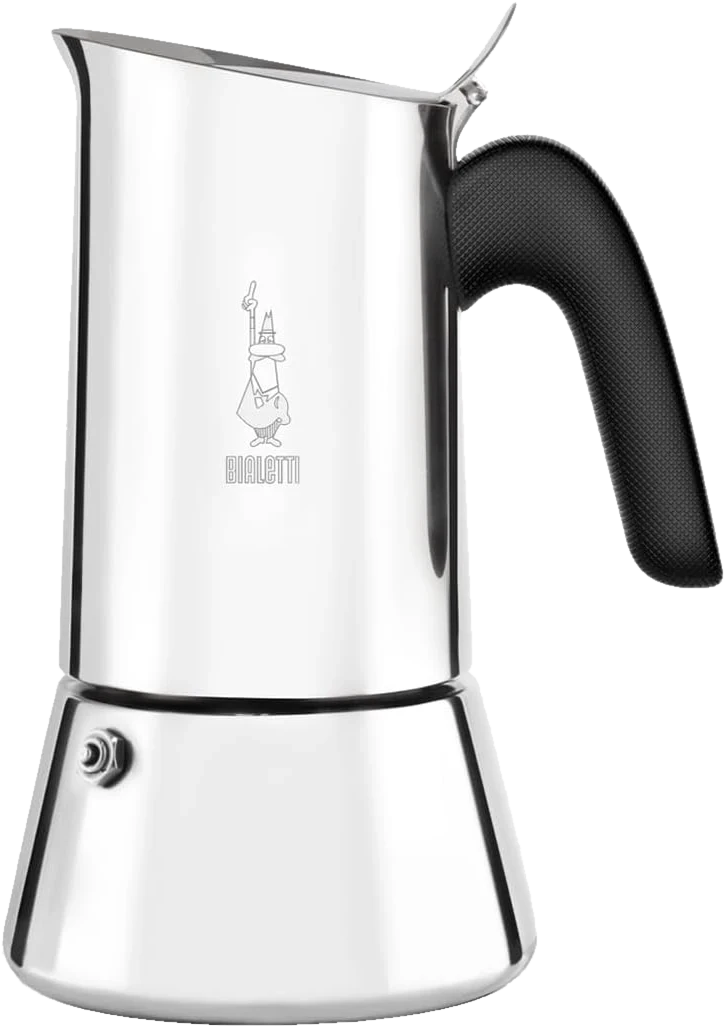
Bialetti Venus

For Induction

Bialetti Venus

Around $50

Stainless steel that heats on any stove, induction included.

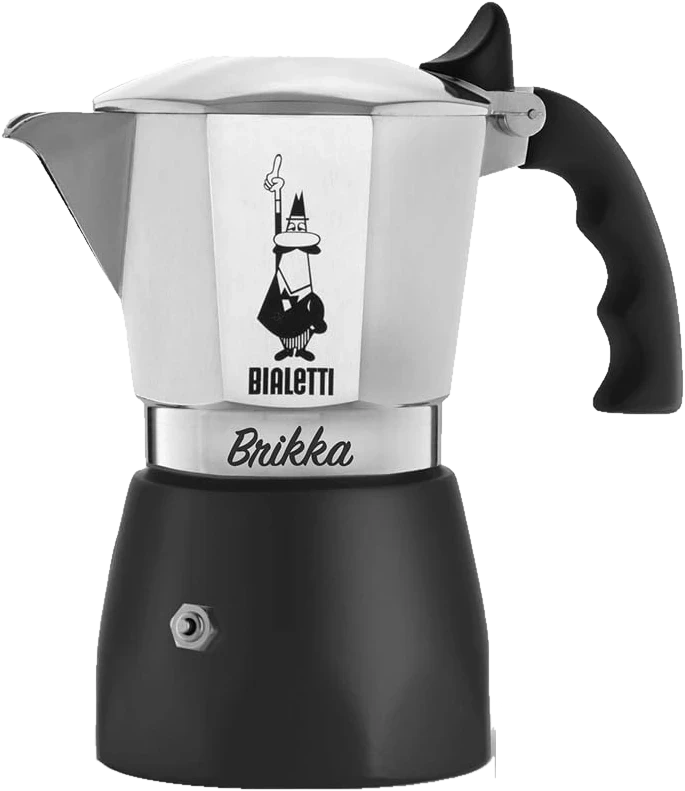
Bialetti Brikka

Makes Crema

Bialetti Brikka

Around $70

Two shots with foam on top, sized for a latte.

A moka pot puts a short, strong, dark coffee on the table five minutes after you light the stove, with no machine on the counter and nothing to plug in. Pour it over hot milk and it's the base of a latte; top it up with hot water and it's an Americano; drink it from a small cup and it's the coffee Italian kitchens have run on since 1933. New to one? Our moka pot how-to has the steps and the fixes.

What decides between pots is your stove. Aluminum, the original material, heats fast on gas and electric and won't heat on induction by itself; stainless steel works on all three. Five picks here, grouped that way, plus one pot built to make crema. Sizes are in the makers' espresso cups, about 1.5 oz each, so the 6-cup Bialetti Moka Express makes about 9 oz: one big mug or two lattes.

For gas and electric stoves

Aluminum, the material the moka pot was invented in: it heats fast and evenly, and an induction cooktop can't heat it on its own.

The Original
Makes
9.1 oz
Body
Aluminum
Induction
No
Stands out
The 1933 original

Why we love it

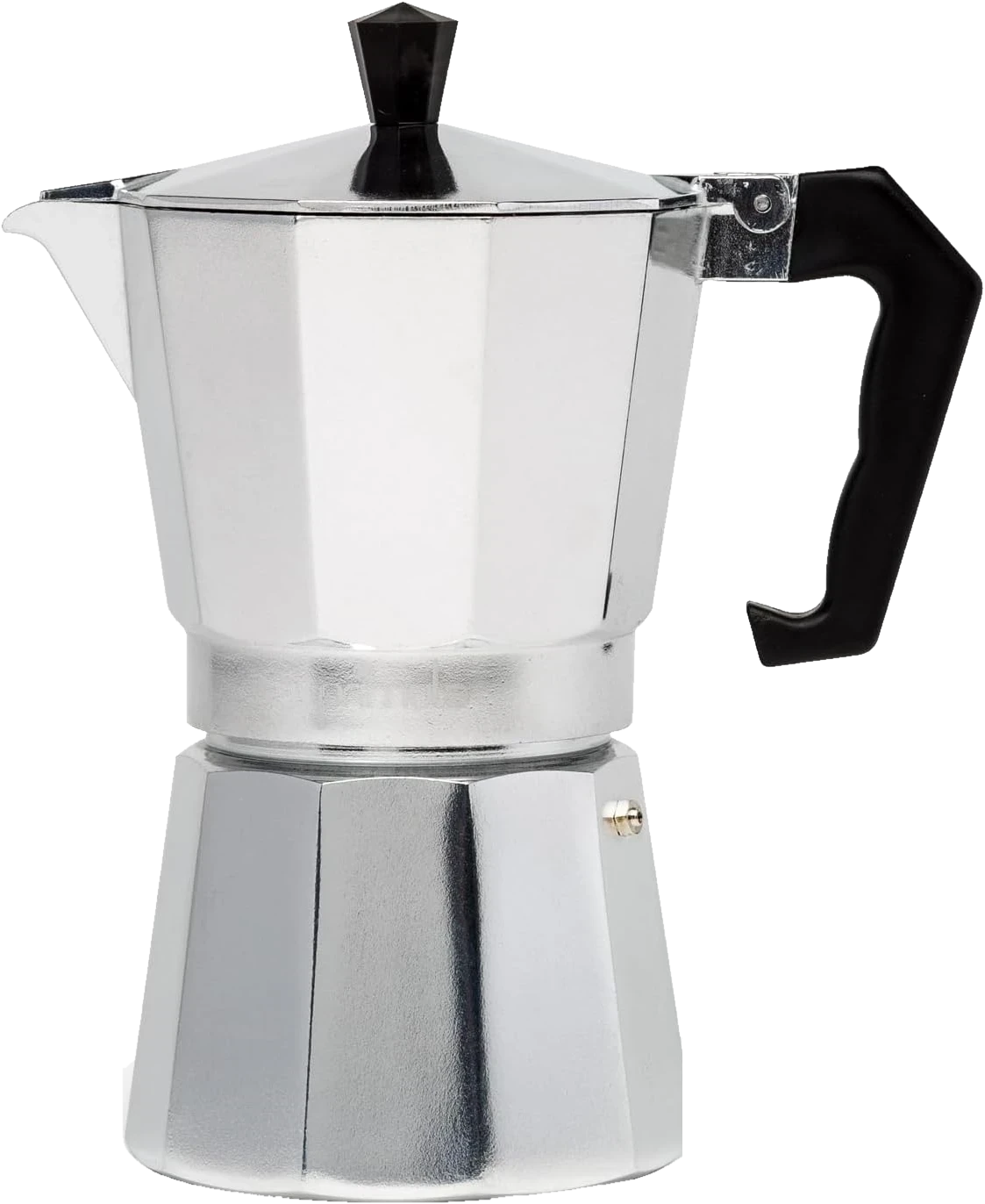
This is the pot the whole category copies. Water goes in the bottom up to the safety valve, ground coffee in the basket, loosely, with no tamping, and the stove does the rest: steam pressure pushes the water up through the grounds, and when it starts to gurgle you turn off the heat and pour. What comes out is short, strong and dark, closer to espresso than to drip, and it makes a good base for a latte or an Americano. It's aluminum, the same eight-sided body Bialetti has made in Italy since 1933, which heats fast and evenly on gas and electric. The care is the part to know before you buy: rinse it with water only, no soap and no dishwasher, which Bialetti says damages the pot and the taste. Induction needs Bialetti's adapter plate. The 6-cup makes about 9 oz, six espresso cups, two or three people's worth.

Pros

  • The original design, made in Italy, with a patented safety valve
  • Strong, espresso-style coffee for lattes and Americanos, no machine needed
  • About 9 oz from the 6-cup, six espresso cups
  • No filters, no power, nothing to wear out but a gasket
  • Aluminum heats fast and evenly on gas and electric

Cons

  • Rinse with water only: no soap, no dishwasher
  • Induction needs Bialetti's adapter plate
  • Brews a full pot every time: fill it to the valve, or the coffee comes out wrong
  • The handle is the part owners most often report breaking
  • It's strong, espresso-style coffee, not true espresso or crema
Burn-Guard Handle
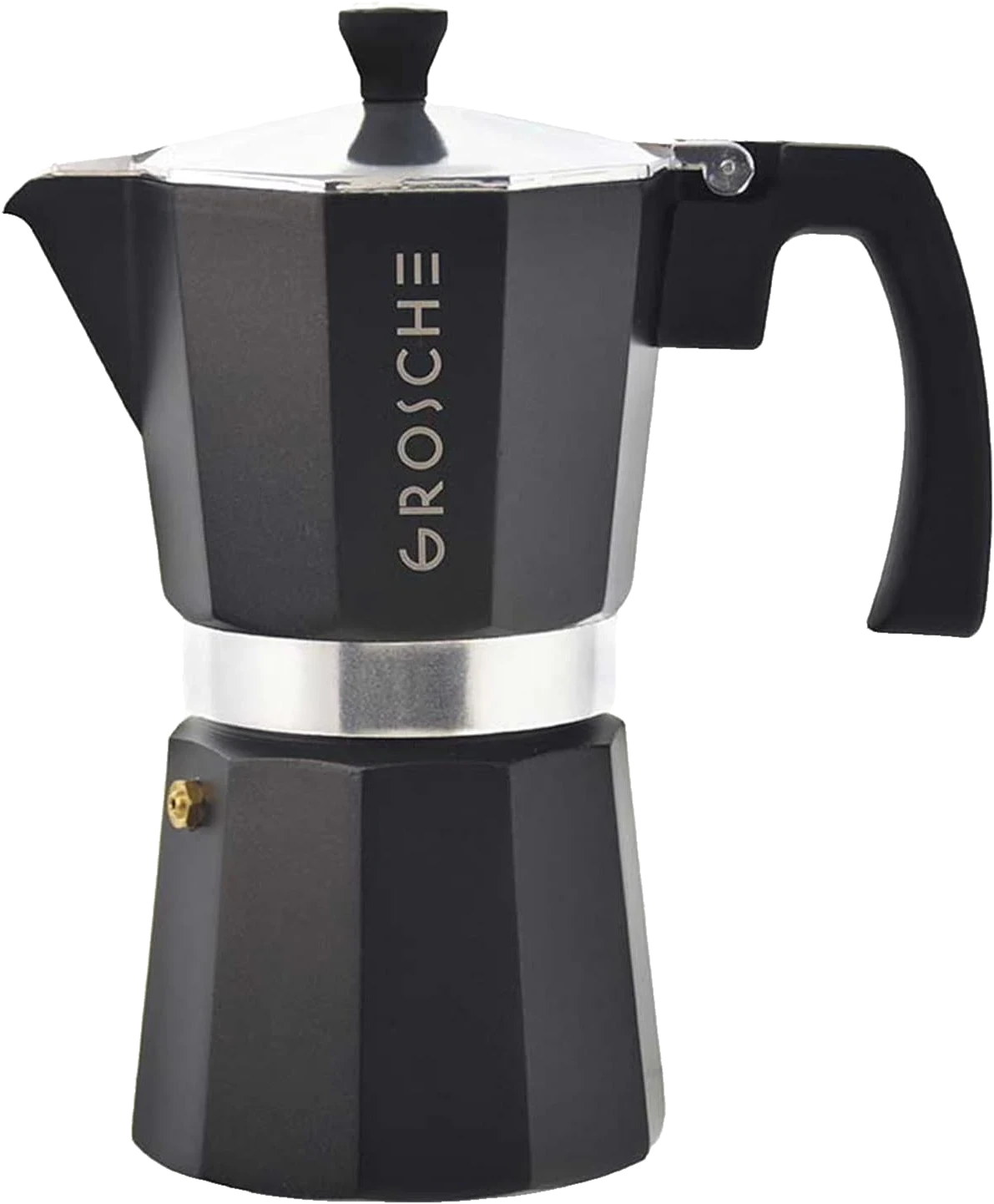
GROSCHE Milano

GROSCHE

GROSCHE Milano

8.4/ 10
Makes
9.3 oz
Body
Anodized aluminum
Induction
No
Stands out
Burn-guard handle

Why we love it

GROSCHE took the classic moka pot and fixed the complaint people have about it: a small handle that gets hot and a finger that touches the pot. The Milano's handle is bigger, soft-touch and has a guard where your finger sits. Under it is the familiar design, anodized aluminum with an Italian-made safety valve and a silicone gasket in the standard 6-cup size, so replacements are easy to find. It works on gas, electric and propane camp stoves. GROSCHE says it will heat on a glass induction top but slowly, because aluminum isn't magnetic, so treat it as a gas-and-electric pot. The 6-cup makes about 9.3 oz.

Pros

  • Bigger soft-touch handle with a burn guard for your finger
  • About 9.3 oz from the 6-cup, six espresso cups
  • Standard 6-cup gasket size, so spares are easy to find
  • Works on gas, electric and propane camp stoves
  • Comes in several colors

Cons

  • Barely works on induction: aluminum isn't magnetic
  • A small base that can sit unsteadily on wide gas grates
  • Hand wash only
The Cheap Way In
Body
Cast aluminum
Induction
No
Stands out
Heat-resistant handle
Width
6.34 in

Why we love it

If you want to find out whether you like moka pot coffee before spending more, this is the pot to do it with. It's cast aluminum in the classic shape, with a flip-top lid, a heat-resistant knob and handle, and a reusable filter basket, and it makes six demitasse servings of strong, espresso-style coffee, Cuban coffee or a base for a latte. It works on gas, electric and ceramic stoves and on a propane camp stove, so it doubles as the camping pot. Care is a rinse in warm water and a full dry before you put it back together.

Pros

  • The price of a bag of good beans, not a machine
  • Six demitasse servings per pot
  • Works on gas, electric, ceramic and propane camp stoves
  • Heat-resistant knob and handle, flip-top lid

Cons

  • Not for induction
  • Owners report leaks at the middle seal and handles that break
  • Primula doesn't state the capacity in ounces

A moka pot wants a fine, even grind

Finer than drip, a little coarser than espresso. Pre-ground espresso coffee works; a burr grinder that holds a fine setting works better.

See the grinders→

For induction cooktops

Bialetti Venus

Bialetti

Bialetti Venus

8.8/ 10
Makes
7.9 oz
Body
18/10 stainless steel
Induction
Yes
Stands out
No aluminum

Why we love it

The Venus is the moka pot for an induction kitchen. It's 18/10 stainless steel rather than aluminum, so it works on induction with no adapter plate, as well as gas and electric, and there's no aluminum anywhere the coffee touches. The brew is the classic one: water in the bottom, grounds in the basket, heat until it gurgles, pour. The rounded, polished body looks like a piece of cookware rather than a camp pot. Stainless heats a little slower than aluminum. Care is the same as every Bialetti: rinse with water only, no detergent and no dishwasher. The 6-cup makes about 8 oz, six espresso cups.

Pros

  • Works on induction as well as gas and electric, no adapter plate
  • 18/10 stainless steel: no aluminum in the pot
  • Polished, rounded body that looks like good cookware
  • About 8 oz from the 6-cup, six espresso cups

Cons

  • Rinse with water only: no soap, no dishwasher
  • Stainless heats more slowly than an aluminum pot
  • Some owners report corrosion despite the stainless steel

For crema on your latte

Bialetti Brikka

Bialetti

Bialetti Brikka

8.5/ 10
Makes
3.4 oz
Body
Aluminum
Induction
No
Stands out
Makes crema

Why we love it

A regular moka pot makes strong coffee with no crema, which is the main thing that separates it from espresso. The Brikka is Bialetti's answer: a moka pot built to make two shots with a layer of crema on top, which Bialetti says no other stovetop maker does. You measure the water with the cup in the box rather than filling to a valve, add coffee, put it on the heat, and when it gurgles turn the heat off and let it finish. It's aluminum, made in Europe, and runs on gas, electric and a propane camp stove; induction needs Bialetti's adapter plate. It makes about 3.4 oz, two shots, so it's the one for someone who drinks a cortado or a latte rather than a pot.

Pros

  • Makes crema, which a regular moka pot doesn't
  • Two shots, about 3.4 oz: sized for a latte or a cortado
  • Measuring cup in the box takes out the guesswork
  • Works on gas, electric and propane camp stoves

Cons

  • Two shots only: not the pot for a household
  • Crema comes and goes, owners say, and some report leaks
  • Induction needs Bialetti's adapter plate

How we chose these

Grouped by the stove each pot works on, then judged on what its maker states: the material, what one pot makes in ounces, which stoves it heats on and how it's cleaned. We read owner reviews at volume for what goes wrong (handles, mostly, and leaks at the seal) and checked each listing for what it actually says. Capacities are the makers' figures; where a maker gives none, the write-up says so. Prices come from Amazon and are updated regularly; the current price is always on Amazon.

What to know before you buy

What's the best moka pot?

The Bialetti Moka Express. It's the 1933 original, still made in Italy, in aluminum that heats fast on gas and electric, and the 6-cup makes about 9 oz of strong coffee. On an induction cooktop, buy the Bialetti Venus instead: the same brew in 18/10 stainless steel.

Is a moka pot espresso?

Close, but no. A moka pot pushes water through the grounds with steam at around 1 to 2 bar; an espresso machine brews at about 9. What comes out is short, dark and stronger than drip or French press, without espresso's thick body or its crema. The Bialetti Brikka is built to add crema, though owners say it comes and goes. For true espresso, our espresso machines for beginners guide is the place to start.

What's the best moka pot for an induction stove?

The Bialetti Venus: 18/10 stainless steel, made for induction as well as gas and electric. Aluminum pots like the Bialetti Moka Express, the GROSCHE Milano and the Primula Classic won't heat on induction by themselves. Bialetti sells an adapter plate for its aluminum pots, and GROSCHE says the Milano heats only slowly on an induction top.

What's the difference between a moka pot and a percolator?

A moka pot sends hot water up through the grounds once, into the top chamber, and you take it off the heat when it gurgles: a short, strong coffee. A percolator keeps cycling brewed coffee back over the grounds until you stop it: a pot of regular-strength coffee for a group. Our camping coffee maker guide has a stainless percolator.

What size moka pot should I buy?

Moka pots are sized in espresso cups of about 1.5 oz, and they brew best filled to the line, so buy the size you'll actually drink. The 2-cup Bialetti Brikka makes one latte's worth; the 6-cup Bialetti Moka Express makes about 9 oz, one big mug or two lattes. Every pot here comes in other sizes on its listing.

Aluminum or stainless steel moka pot?

Choose by your stove first. Aluminum is the original: it heats fast and evenly on gas and electric, and it's what the Bialetti Moka Express, the GROSCHE Milano and the Primula Classic are made of. Stainless steel, the Bialetti Venus, works on induction too, keeps aluminum away from the coffee and heats more slowly.

Can you put a moka pot in the dishwasher?

Not a Bialetti: Bialetti says to rinse its pots with water only, with no detergent and no dishwasher, because both damage the pot and the taste of the coffee. Primula says the same for its Classic: a rinse in warm water, then let every part dry before you put it back together.

Bottom line

For most kitchens, buy the Bialetti Moka Express: the original, strong coffee five minutes after you light the stove. On induction, buy the Bialetti Venus. For a latte with crema on top, the Bialetti Brikka. For a handle with a burn guard, the GROSCHE Milano, and to try moka coffee for the least money, the Primula Classic.

Related guides

Stay in the loop

New gear reviews, brew tips, and the occasional deal — straight to your inbox. No spam, ever.

Just your email, nothing else. Privacy