GuidesBrowseComparisons
Roundup

Best Camping Coffee Makers

No power needed: one cup that packs anywhere, a pot for the whole campsite, espresso by hand, and a grinder and a bottle to go with them.

By Dana WhitfieldUpdated October 2026
8 products compared7 min read
AeroPress Go

★ Our top pick

AeroPress Go

Best camping coffee maker · Around $50

A clean cup in about two minutes from stove-heated water, and the whole kit packs inside its own mug.

Bozeman Percolator

Best for a group

Bozeman Percolator

Around $35

Four big mugs from any stove, grill or fire, in stainless steel with nothing to break.

Portable Propane Coffeemaker

Drip coffee, no outlet

Portable Propane Coffeemaker

Around $180

Ten cups of drip coffee from a propane cylinder, lit with a push button.

Good coffee at camp comes down to two questions: how many people you're making it for, and how far you're carrying it. A backpacker wants one cup from something that weighs nothing; a campsite of six wants a pot on the stove before anyone's out of their sleeping bag.

Eight picks here, none of which needs a plug: a single cup that goes anywhere, a pot for the whole campsite, espresso by hand, a grinder so your beans stay fresh all trip, and a bottle to keep it hot. Each one runs on a camp stove, a fire, a propane cylinder or your own arm.

The best cup, anywhere you carry it

Heat water on the stove, brew one cup, pack it back up. The AeroPress Go makes the cleanest coffee here and packs inside its own mug; the GSI cone folds flat to an inch high and weighs next to nothing, so it's the one for a backpack.

Best camping coffee maker
AeroPress Go

AeroPress

AeroPress Go

9.2/ 10

Why we love it

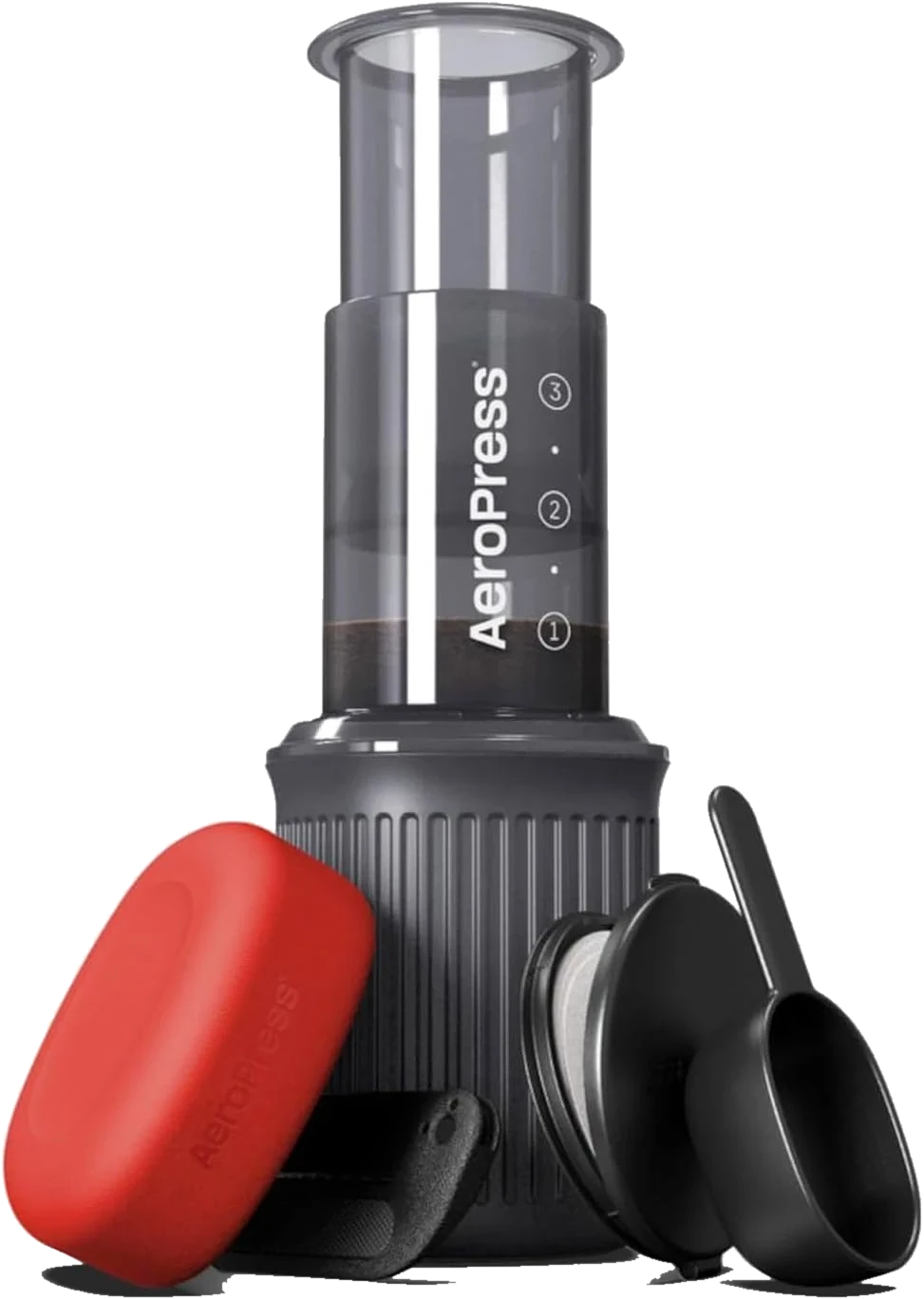
The AeroPress Go is the AeroPress shrunk to fit its own mug. The brewer, filters, scoop and stirrer pack inside a microwaveable mug with a silicone lid, so the whole kit is one small cylinder in a pack, and at camp you unpack it, brew into the same mug and drink from it. The coffee is the AeroPress's: add grounds and water, wait 30 seconds, press, and you have a clean cup with no grit in under two minutes, hot or iced. It's plastic, so a dropped pack doesn't end your mornings, and cleanup is popping out the puck and rinsing.

Pros

  • Packs inside its own mug: one small cylinder in a pack
  • A clean, grit-free cup in under two minutes
  • Plastic: nothing to break
  • Hot or iced, and rinses clean in seconds

Cons

  • One cup at a time
  • Needs hot water from a stove or a kettle
  • Paper filters to pack (or a metal one, sold separately)
Body
Silicone, collapsible
Filter
#4 paper

Why we love it

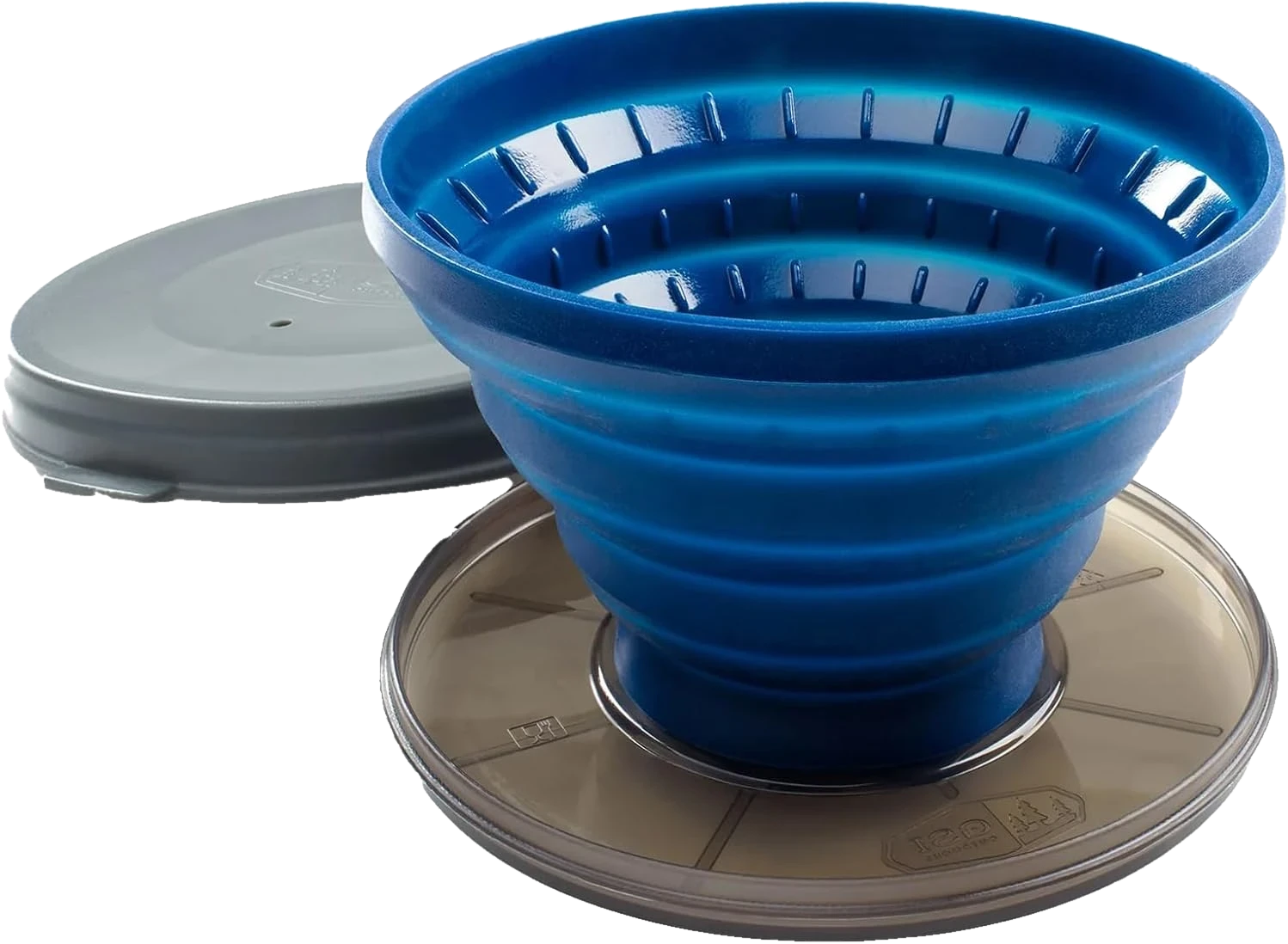
This is the lightest way to drip coffee at camp: a silicone cone that pops open over a mug, a wide-mouth bottle or a small pot, takes a standard #4 paper filter, and folds back to a disc about an inch high and 5.6 inches across. The clear base shows you the cup filling, so you don't pour over the brim, and the snap-on cover doubles as a place to set the wet cone down. It makes one or two cups at a time from water you heat on the stove. GSI covers it for the life of the product against manufacturing defects.

Pros

  • Collapses to about 1 inch high: the smallest brewer here
  • Sits on almost any mug, bottle or small pot
  • Takes standard #4 paper filters, sold everywhere
  • Clear base shows the level so you don't overfill
  • Lifetime warranty against defects, per GSI

Cons

  • Filters not included
  • One or two cups at a time
  • A silicone cone holds heat less evenly than a ceramic or plastic dripper

Coffee for the whole campsite

A pot for four or more. The percolator sits on any stove, grill or fire and has nothing to break or plug in; the Coleman makes drip coffee like home on a propane cylinder; the Stanley press is steel and keeps the coffee hot for hours, per Stanley.

Best for a group
Holds
45 oz
Made of
Stainless, glass top
Power
Any stove or fire

Why we love it

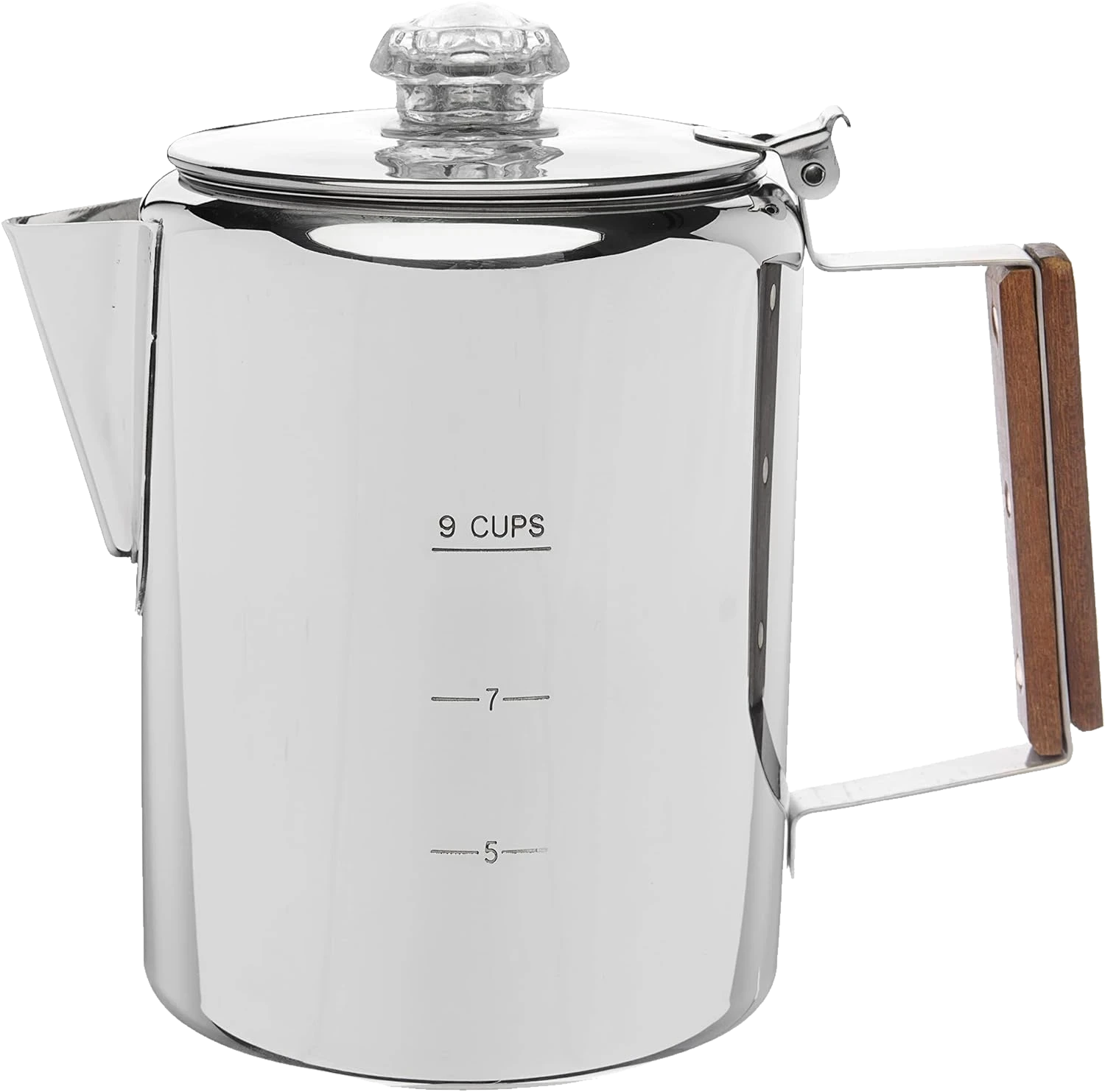
The percolator is the camp coffee pot for a reason: it sits on whatever heat you have, a two-burner stove, a grill grate or the edge of a fire, and keeps cycling hot water through the grounds until you take it off. The Bozeman is stainless steel with a glass knob on top, so you watch the coffee darken and pull it when it's the strength you like, and nothing in the pot is plastic or aluminum. Nine cups is about 45 oz, four big mugs. It rinses clean at camp and goes in the dishwasher at home, and filters come in the box to keep the grounds down.

Pros

  • Works on a camp stove, a grill or over a fire, no power needed
  • Stainless steel and a glass top: no plastic or aluminum in the pot
  • About 45 oz, four 12 oz mugs, per pot
  • Glass knob lets you watch the strength and stop when it's right
  • Dishwasher safe, and filters are included

Cons

  • Doesn't work on induction (COLETTI sells a separate induction model)
  • Easy to over-boil into bitter coffee if you walk away
  • Some fine grounds get through without a filter
Drip coffee, no outlet
Holds
10 cups
Power
Propane, 16.4 oz cylinder
Stands out
10 cups in about 18 min

Why we love it

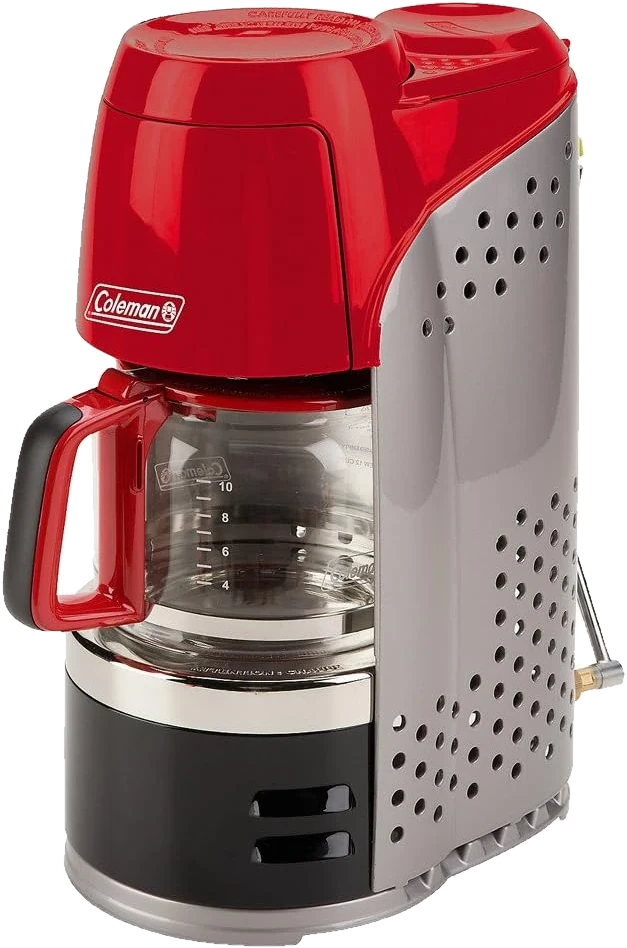
If the coffee you want at camp is the coffee from your kitchen, this is the machine that makes it there. It's an ordinary drip brewer, a basket, a filter and a ten-cup glass carafe, heated by a 4,500 BTU propane burner instead of an element, so there's nothing to learn and the pot tastes like home. Coleman puts ten cups at about 18 minutes and a 16.4 oz cylinder at up to 4.4 hours of burn, and its regulator is built to hold the heat steady in cold weather, at altitude and as the cylinder runs low. The push-button igniter means no matches. It's the heaviest and dearest way to make camp coffee here, and the one for a group that wants a real pot.

Pros

  • Drip coffee like home, ten cups at a time
  • Runs on a standard 16.4 oz propane cylinder, up to 4.4 hours per cylinder per Coleman
  • Push-button ignition, no matches
  • Regulator holds the heat in cold weather and at altitude, per Coleman

Cons

  • About 18 minutes for a pot, slower than a kitchen machine
  • Heavy at about 9.6 lb, and bulky to pack
  • Glass carafe needs protecting in the car
  • Propane cylinders sold separately
Best for Outdoors
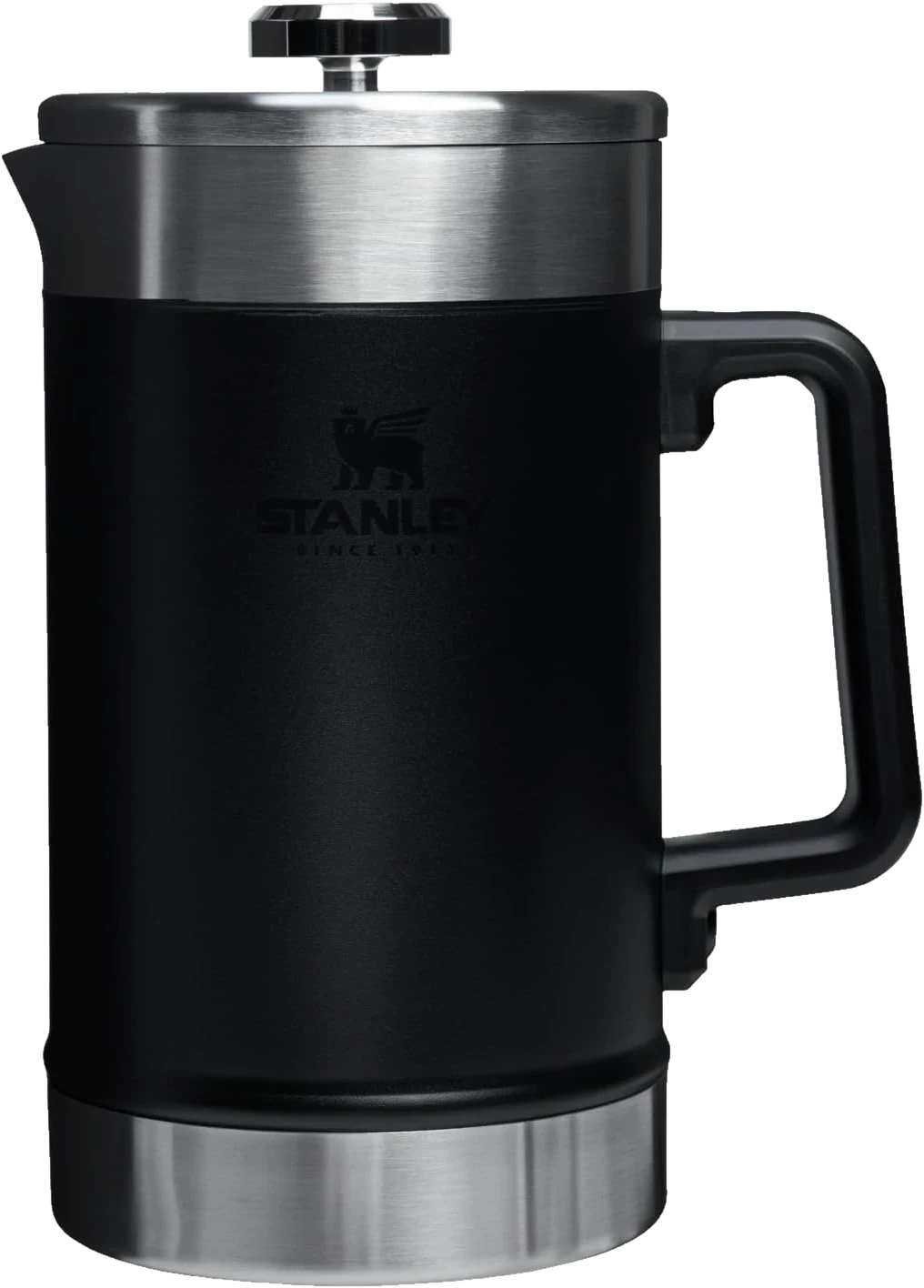
Classic Stay Hot French Press

Stanley

Classic Stay Hot French Press

8.5/ 10
Classic Stay Hot French Press is sold out on AmazonCheck Chambord French Press on AmazonAround $35
Makes
48 oz
Body
Insulated steel
Filter
Steel mesh
Hot for
4 hours

Why we love it

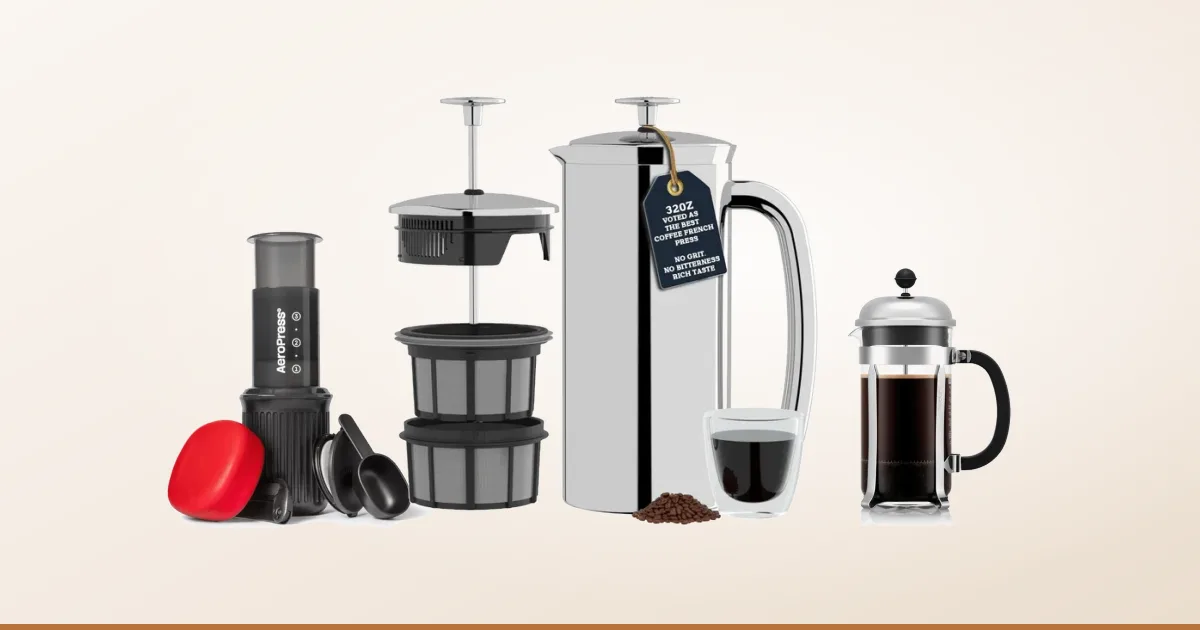
If your French press needs to survive a truck bed, a campsite, or three teenagers, the Stanley is your pick. The double-wall vacuum insulated stainless steel keeps coffee hot for up to four hours (or cold brew cold for nine), the 48oz capacity brews enough for a small crowd, and the whole thing is built like the thermos your grandfather had — because it basically is. The mesh filter isn't as refined as Espro or Fellow, so expect a bit more sediment, but for outdoor use and batch brewing, nothing else comes close. Every piece is dishwasher safe.

Pros

  • Double-wall vacuum insulation — hot 4 hours, cold 9 hours
  • 48oz capacity — largest press on this list
  • Nearly indestructible stainless steel build
  • Great for camping, tailgating, and group brewing
  • Fully dishwasher safe

Cons

  • Basic mesh filter — more sediment than premium presses
  • Heavy and bulky — not ideal for small kitchens
  • No visual brew indicator (opaque steel body)

Espresso at camp

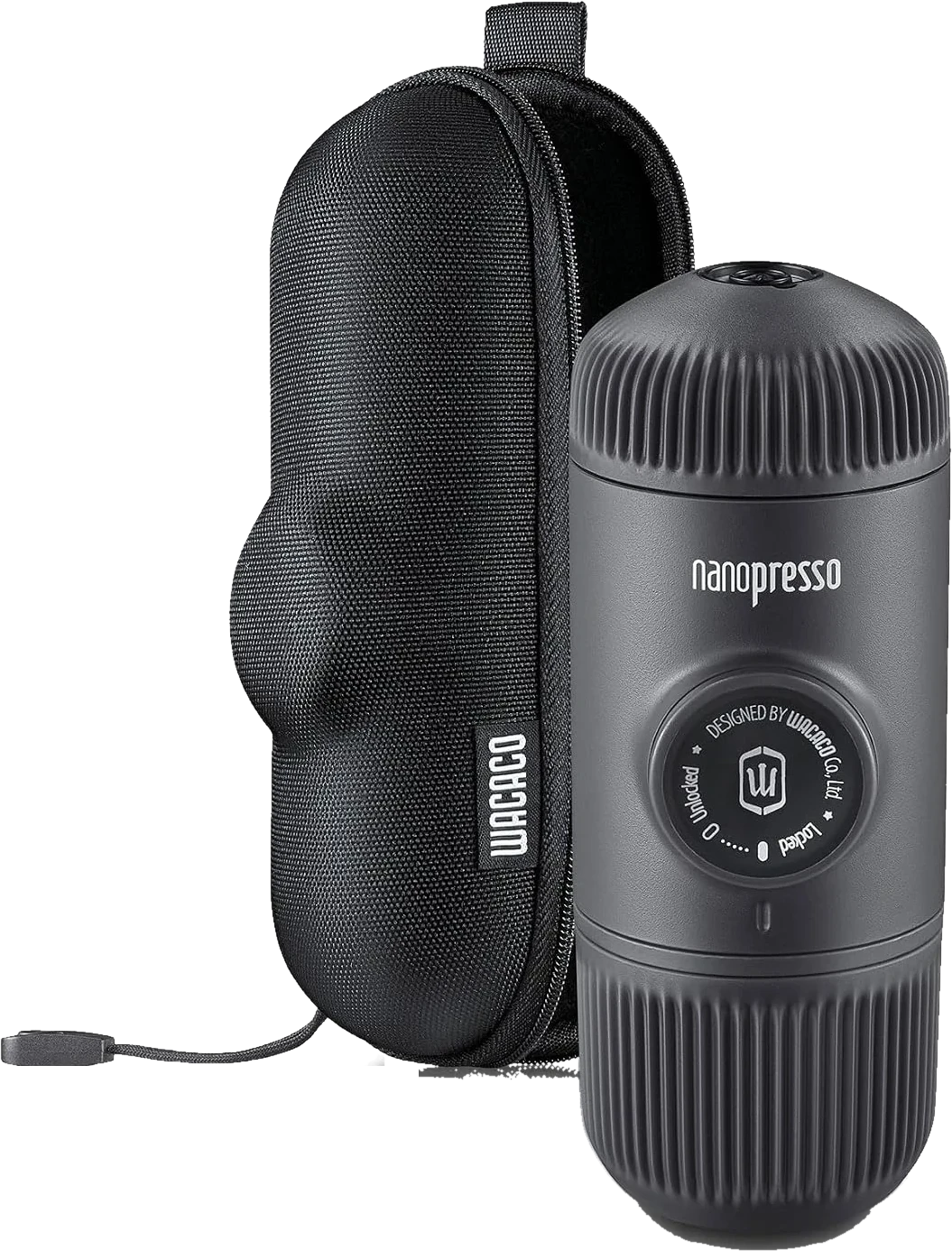
A hand pump does what an espresso machine's motor does: push hot water through fine coffee at pressure, and a real shot with crema comes out the bottom.

Holds
80 ml water
Power
Hand pump
Stands out
Up to 18 bar

Why we love it

The Nanopresso is the way to pull an espresso where there's no power: pour hot water into its 80 ml tank, load finely ground coffee tamped firmly into the basket, and pump. WACACO rates the pump at up to 18 bar, more than most home machines run at, and the shot comes out with crema. It's about 6 inches long and 0.74 lb, comes with a protective case, and the cup that covers the tank is the cup you drink from. It asks for espresso-fine coffee, so pair it with a grinder that goes that fine or bring pre-ground espresso.

Pros

  • Real espresso with crema and no power, up to 18 bar per WACACO
  • About 6 inches long and 0.74 lb, with a protective case
  • The tank cover doubles as the cup
  • Takes Nespresso Original capsules with an adapter, sold separately

Cons

  • Needs espresso-fine coffee, tamped hard
  • A single shot at a time (a double needs the Barista Kit)
  • Pumping takes a little effort every shot

Grind on site

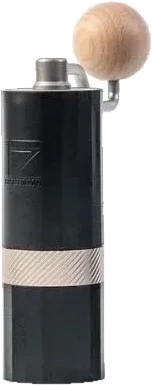
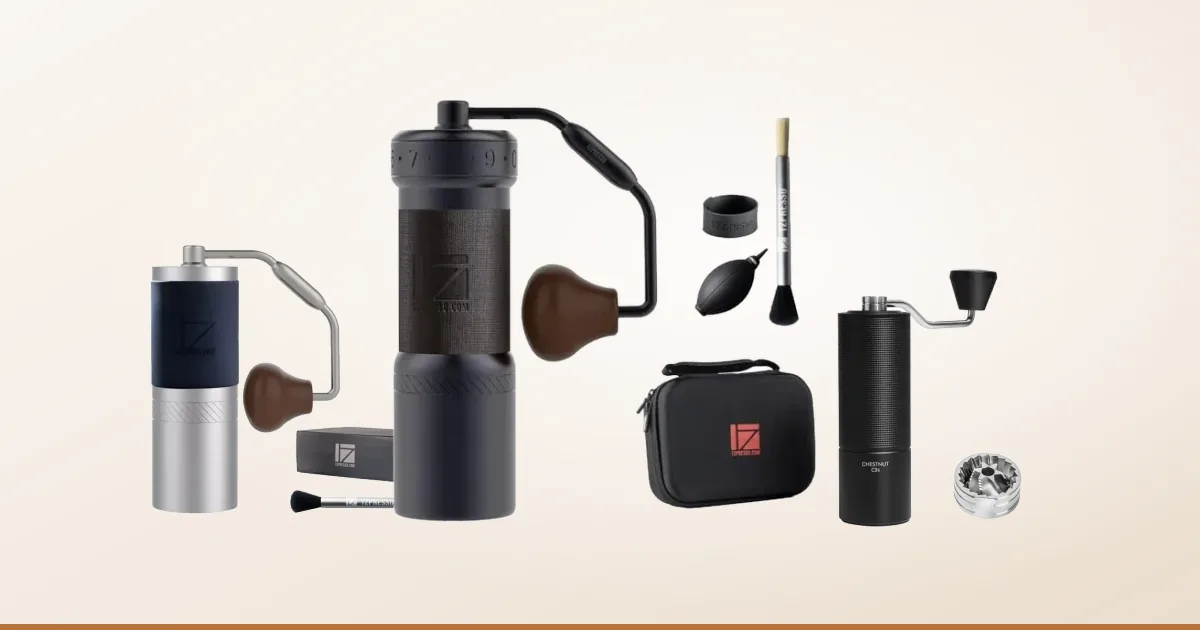
Whole beans keep for the whole trip where ground coffee goes flat in a day or two. This hand grinder is small, needs no power, and nests inside an AeroPress plunger.

1Zpresso Q Air

1Zpresso

1Zpresso Q Air

8.4/ 10
Burrs
Conical
Settings
30 clicks a turn
Espresso
Filter only
Holds
15–20 g

Why we love it

Built around one idea: it nests inside an AeroPress plunger. That makes it the grinder for a hotel room, a desk drawer or a rucksack, and it doesn't cut the thing that matters to get there — the burr is a real stainless conical and the adjustment is numbered clicks, so you can write down a setting and come back to it. Capacity is one brew, which is the honest trade for the size.

Pros

  • Nests inside an AeroPress plunger — a genuine travel kit
  • Numbered clicks, so a setting is repeatable
  • 30 clicks per rotation is fine enough control for filter
  • Cheapest 1Zpresso, and the burr is not where they saved
  • Factory-calibrated burr, one-year warranty

Cons

  • Holds one brew's worth of beans, 15 to 20 g
  • Not intended for espresso
  • Small body and short crank mean more effort per turn than a full-size hand grinder
  • Slower per gram than the bigger 1Zpresso grinders

Keep it hot

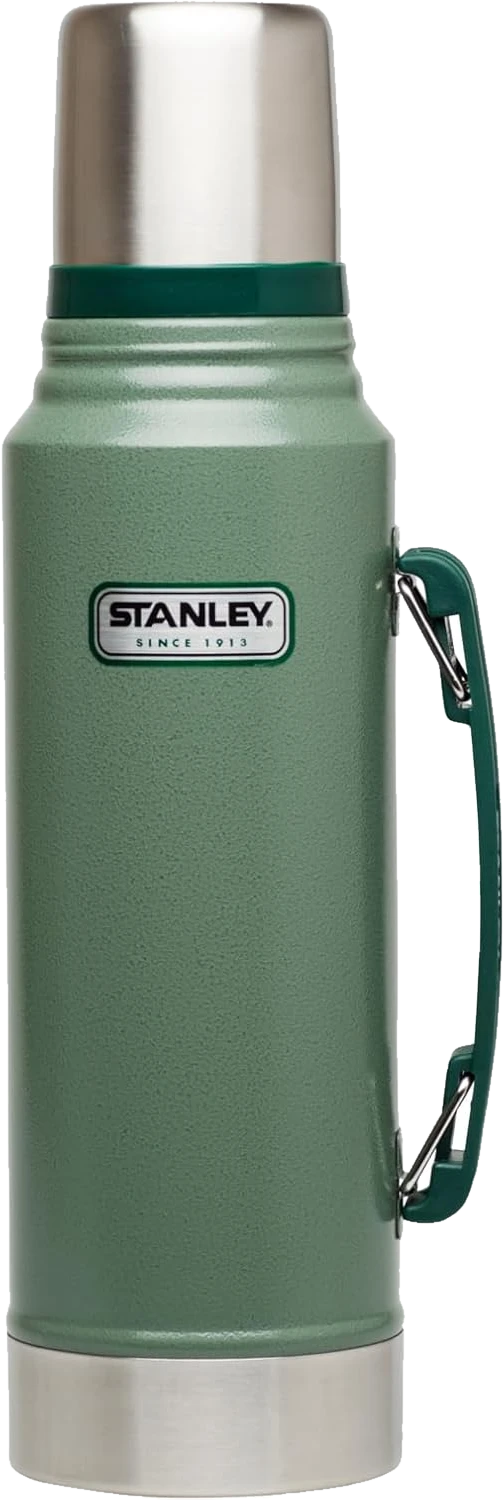
Brew once at dawn, drink it on the trail. A vacuum bottle keeps a pot hot for the day; the rest are in our best thermos for coffee.

Holds
35 oz
Hot for
24 hours

Why we love it

This is the green bottle from job sites and campsites. It holds 1.1 quarts, about four mugs, and Stanley rates it hot for up to 24 hours. The lid is the cup, the stopper is leakproof for the bag, and the handle folds flat. It's 18/8 stainless steel with a powder-coated outside. For a full pot carried out for the day, nothing here costs less.

Pros

  • 1.1 quarts, about four mugs
  • Hot up to 24 hours, per Stanley
  • Lid doubles as a cup
  • Fold-down handle; leakproof stopper
  • The least expensive here

Cons

  • Too big for a cupholder
  • Pour into the cup to drink; you can't sip from it
  • Stopper has to come out to clean

Camping with power?

At a site with a hookup, or in an RV or a van with an inverter, a small plug-in machine is easier than any of these. The picks, and the wattage each one draws, are in our best coffee makers for RV living.

How we chose these

Judged on the coffee first, then on what camp asks of a brewer: the heat it needs (a stove, a fire or a propane cylinder, never an outlet), what it weighs and how small it packs, and whether anything can break in a bag. We read owner reviews at volume and checked each listing for the specs it states, and took figures like brew time and burn time from the makers.

What to know before you buy

What is the best camping coffee maker?

The AeroPress Go at $50. It makes a clean, grit-free cup in about two minutes from water heated on the stove, and the whole kit packs inside its own mug. For a group, the COLETTI Bozeman percolator makes four big mugs at a time on any stove or fire.

What is the best camping coffee maker for a large group?

A percolator or a propane drip maker. The COLETTI Bozeman percolator brews about 45 oz, four 12 oz mugs, on any heat source; the Coleman propane coffeemaker brews ten cups of drip coffee from a 16.4 oz cylinder. For more than that, brew twice, or keep the first pot hot in a vacuum bottle while the second brews.

How do you make coffee while camping?

Heat water on a camp stove or over a fire, then brew it one of three ways: press it (an AeroPress or a French press), pour it through a cone (a collapsible dripper with a paper filter), or percolate it (a percolator pot on the heat, cycling water through the grounds until it's as strong as you like). The first two make the cleanest coffee; the percolator makes the most at once.

Is a percolator good for camping?

Yes, for a group. It works on any stove, grill or fire, there's nothing to break or plug in, and a stainless one like the COLETTI Bozeman lasts for years. The catch is that it's easy to over-boil: take it off the heat once the coffee in the glass knob looks the strength you want, usually after a few minutes of steady perking.

What is the best backpacking coffee maker?

The GSI Java Drip, if weight and space matter most: a silicone cone that folds to about an inch high and sits on any mug, with a standard #4 paper filter. If you'd rather carry a little more for a better cup, the AeroPress Go packs into its own mug.

Can you make espresso while camping?

Yes, with a hand-pumped espresso maker like the WACACO Nanopresso, which WACACO rates at up to 18 bar, enough for a real shot with crema. Bring espresso-fine coffee, or a hand grinder that goes that fine, and hot water from the stove.

Bottom line

For most camping, buy the AeroPress Go: the best cup here, from stove-heated water, in a kit that packs inside its own mug. For a group, the COLETTI Bozeman percolator makes four big mugs on any heat; if you want drip coffee like home, the Coleman runs on a propane cylinder; and for a backpack, the GSI Java Drip folds to an inch.

Related guides

Stay in the loop

New gear reviews, brew tips, and the occasional deal — straight to your inbox. No spam, ever.