GuidesBrowseComparisons
Roundup

Best Coffee Grinders Under $200

Under $200 buys the grinder you keep for years: espresso that dials in, a pot ground at one press, or the most even grind a hand grinder makes. Six burr grinders, by what you brew.

By Dana WhitfieldUpdated
6 products compared8 min read
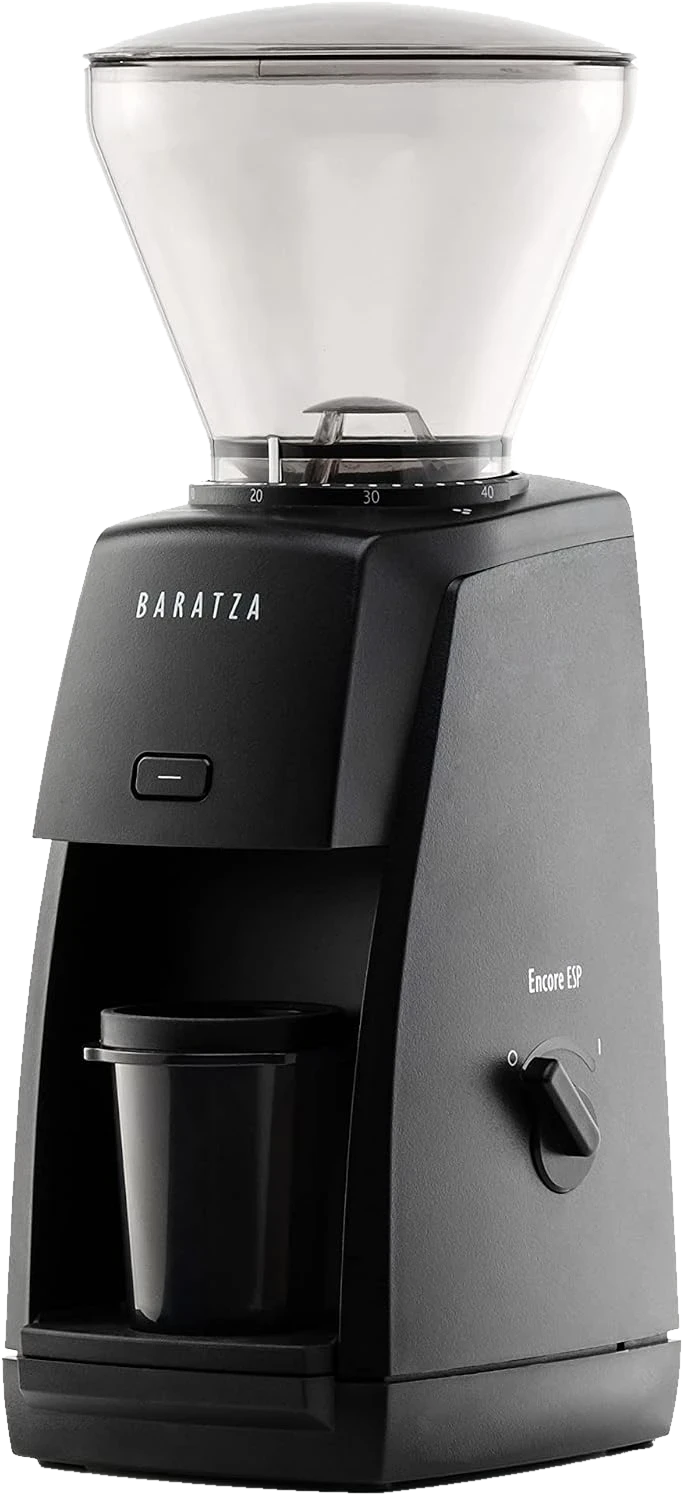
Baratza Encore ESP

★ Our top pick

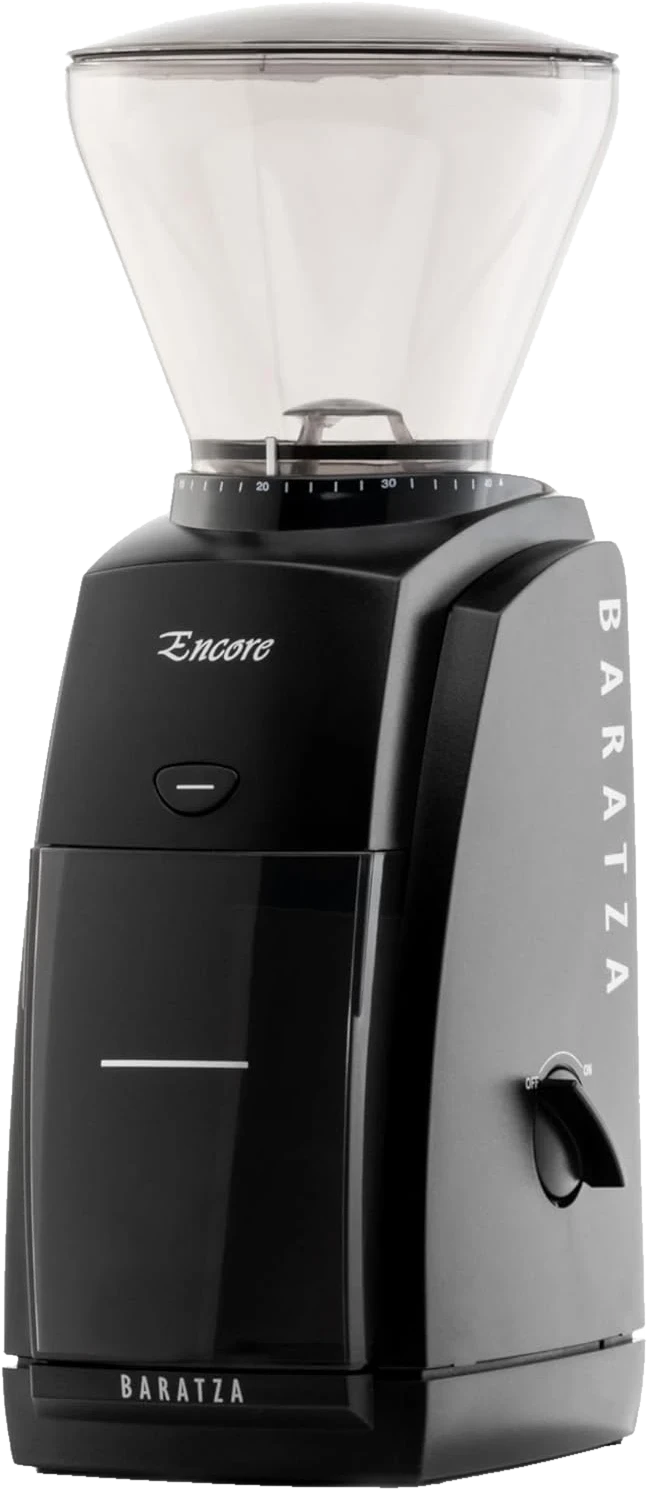
Baratza Encore ESP

Best Espresso Grinder · Under $200

The most trusted name in entry-level grinders, now tuned for espresso: 20 small steps in the fine range, plus 20 more for filter coffee.

Baratza Encore

Best for Pour Over & Drip

Baratza Encore

Around $150

The original beginner grinder. 40 settings covering every brew method — perfect if you're not focused on espresso.

Kingrinder K6

Espresso to French Press

Kingrinder K6

Around $95

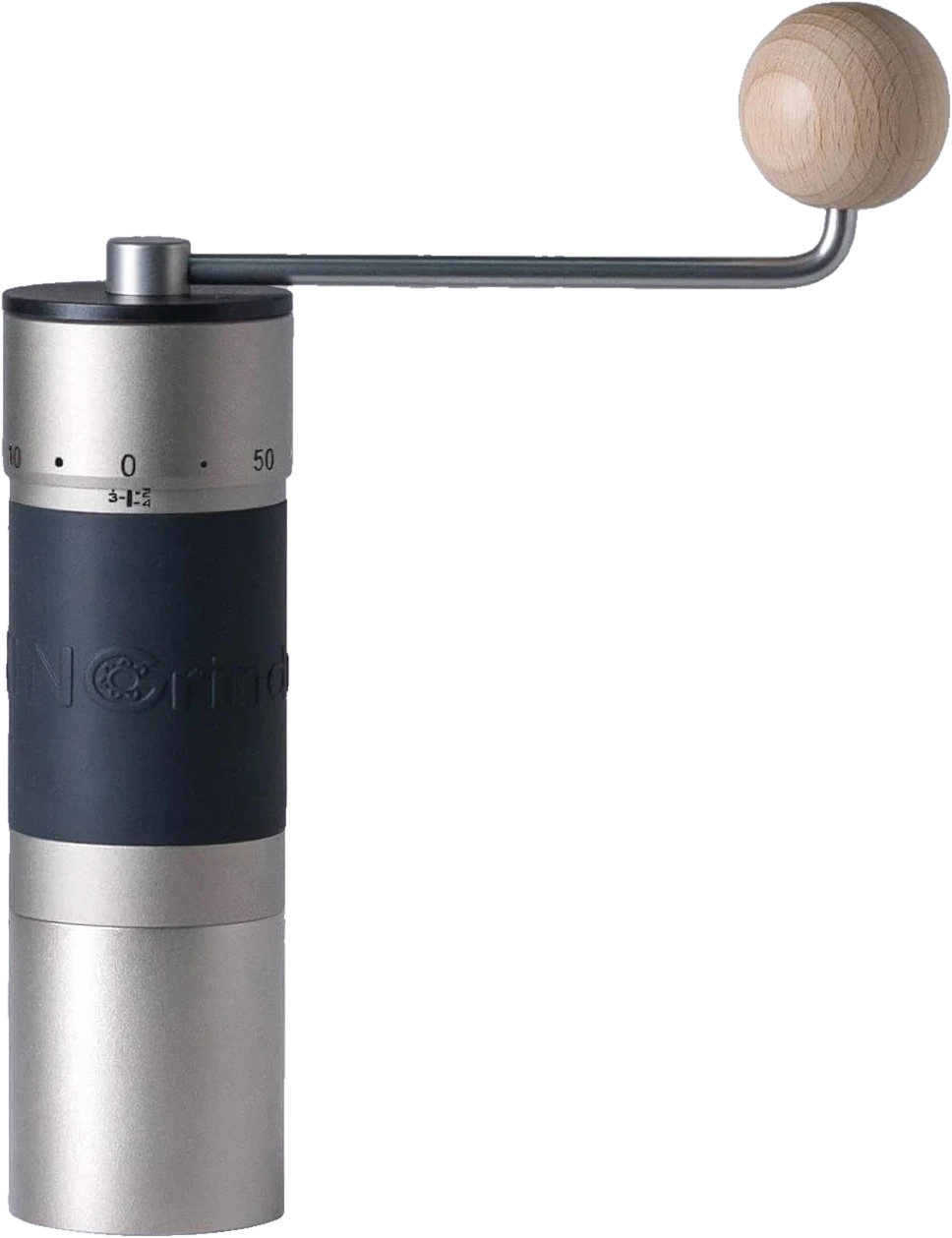
One hand grinder for espresso and filter: an outside dial at 16 microns a click, and big 48mm steel burrs that grind a dose quickly.

Under $200 buys a grinder you stop thinking about. Espresso that dials in a click at a time instead of a guess, a pot’s worth ground at one press before the kettle boils, or a hand grinder that out-grinds electrics costing the same.

What the money buys depends on what you brew. Espresso needs small steps in the fine range, which cheaper electrics don’t have; under $200 is where they start. Filter coffee doesn’t need those steps, so a filter grinder here spends the money on a hopper, a motor that doses a pot and parts that last. A hand grinder spends nearly all of it on the burrs.

So the picks are grouped that way: espresso and filter from one grinder, filter only, and by hand. Every one has conical burrs. Brewing on a tighter budget? Our grinders under $100 guide starts lower.

For espresso, and filter too

Espresso needs small steps in the fine range, and both of these have them while still grinding for a pot.

Best Espresso Grinder
Burrs
40 mm conical
Settings
40
Espresso
Yes
Width
5.12 in

Why we love it

Baratza has been the go-to brand for beginner grinders for over a decade, and the Encore ESP is their answer to espresso specifically. It keeps the original Encore's compact body and 40mm conical size, with a different burr (Baratza's M2) on a quick-release mount, and it splits its 40 settings in two: 20 small steps in the fine range for espresso, then 20 larger ones for filter brewing. The small steps are what make a shot easy to dial in. It's simple to use (one button, one dial), and built to last (Baratza will sell you replacement parts for years). It's the grinder to start a first espresso setup with.

Pros

  • 20 small espresso steps, plus 20 filter settings
  • Baratza's legendary serviceability — replacement parts available for years
  • Simple one-button, one-dial operation
  • Compact footprint fits next to any espresso machine

Cons

  • Only 20 settings for filter coffee, so pour over and French press get coarser steps than on the original Encore
  • Stepped adjustments mean less precision than stepless grinders
  • Plastic body feels less premium than pricier options
  • No built-in timer — you grind by time/feel
Easiest to Use
Burrs
Conical
Settings
60
Espresso
Yes
Holds
18 oz

Why we love it

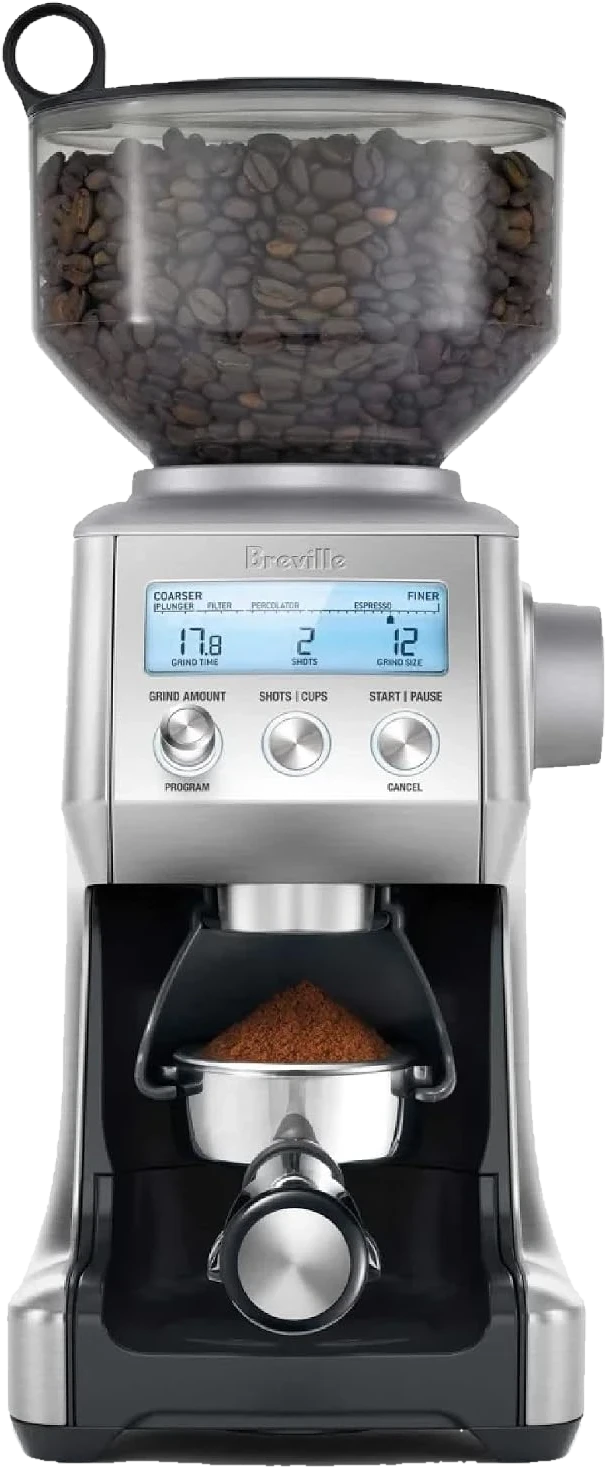
If you own a Breville espresso machine, the Smart Grinder Pro is its natural companion. It has 60 grind settings, a digital display that shows grind size and dose time, and a cradle that holds your portafilter directly under the grinder for mess-free dosing. It's the grinder equivalent of the Bambino Plus — Breville has thought about every friction point and smoothed it out. The stainless steel conical burrs do a good job across brew methods, and the precision timer means you get the same dose every morning without thinking about it. It pairs especially well with any Breville machine since the aesthetics match.

Pros

  • 60 settings, so one grinder covers a shot and a drip pot
  • Digital LCD display shows grind size and time
  • Portafilter cradle for direct, mess-free dosing
  • Programmable timed dosing for consistency
  • Matches Breville espresso machine aesthetics

Cons

  • Stepped grind adjustment — some espresso users want stepless
  • Retention is higher than single-dose grinders
  • Hopper-fed design means beans sit exposed to air
  • A harder sell if you only make espresso: a dedicated espresso grinder does that one job better

For drip, pour over and French press

Every setting goes to brewed coffee, and a hopper holds the beans for the week.

Best for Pour Over & Drip
Baratza Encore

Baratza

Baratza Encore

8.8/ 10
Burrs
40 mm conical
Settings
40
Espresso
Filter only
Width
5.12 in

Why we love it

The Baratza Encore has been the default recommendation for beginner coffee grinders for years, and it's earned that spot. It has 40 grind settings that cover everything from fine (Aeropress, Moka pot) to coarse (French press, cold brew), with a sweet spot in the drip and pour over range. It won't win espresso competitions — the steps are too wide in the fine range for serious dialing in — but if you're making pour over, drip, or French press, it's the grinder to beat at its price, period. Baratza's customer service is legendary: they sell individual replacement parts and publish repair guides, so this grinder can last you a decade if you take care of it.

Pros

  • 40 settings covering every non-espresso brew method
  • Proven reliability — this design has been around for years
  • Baratza's repair program means it lasts for years
  • Simple, intuitive operation — one button, one dial
  • Great price for the quality you get

Cons

  • Not ideal for espresso — grind steps are too wide in the fine range
  • Plastic body feels less premium than some competitors
  • No timer — you grind by weight or time manually
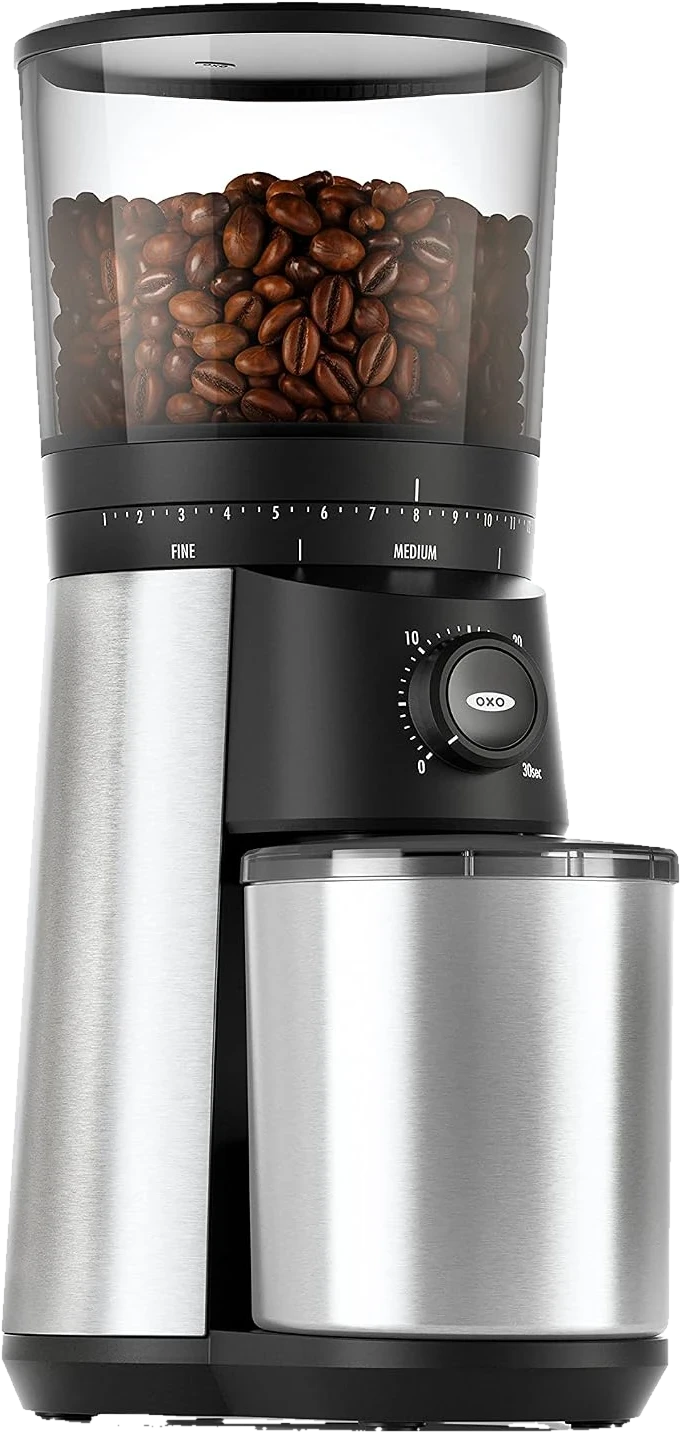
Best Set-and-Forget
Burrs
40 mm conical
Settings
15 + micro-steps
Espresso
Filter only
Holds
12 oz

Why we love it

If you want a set-it-and-forget-it grinder that just works, the OXO Brew is hard to beat. The reason is the one-touch timer remembers your last setting, so every morning you just press the button and walk away. The 15 grind settings plus micro-adjustments cover everything from medium-fine for drip to coarse for French press (it technically has an espresso setting, but dedicated espresso grinders will outperform it there). The UV-blocking hopper is a nice touch — it protects beans from light degradation in sunny kitchens. The stainless steel grounds container fights static, so you won't have grounds clinging to everything. At around $80, it's the best grinder for someone who wants consistent, hassle-free grinding without thinking about it too much.

Pros

  • One-touch timer remembers your last setting — just press and go
  • UV-blocking hopper protects beans from light
  • Static-fighting stainless steel grounds container
  • 12oz hopper capacity for the whole week's beans

Cons

  • Not precise enough for serious espresso dialing-in
  • 15 settings is limited compared to 40+ setting grinders
  • Some owners report it breaking down within months
  • Hopper-fed design means beans sit exposed between uses

By hand, for a cup or two

A hand grinder spends its whole price on the burrs, so at this price it grinds fine enough for espresso; you turn the crank for every dose.

Espresso to French Press
Kingrinder K6

KINGrinder

Kingrinder K6

8.9/ 10
Burrs
48 mm conical
Settings
16-micron clicks
Espresso
Yes
Holds
30–35 g

Why we love it

The K6 is the hand grinder that does both ends of the dial for under $95. The adjustment ring sits outside the body, so you change grind size with the grinder assembled, and at 16 microns a click, 60 clicks a turn, per KINGrinder, you can step an espresso shot a little finer and find the same setting again tomorrow. Turn it back four rotations and the same burrs grind for a French press. The burrs are 48mm and heptagonal, large for the price, and they pull beans through quickly; the body is aluminum on two bearings, and it comes apart by hand for cleaning. It holds 30 to 35 g, a full pour-over or a double shot with room to spare. The trade is weight and hand feel: at over 600 g with a straight handle it's a grinder for the kitchen more than the backpack, and a fine espresso dose is still real work every morning.

Pros

  • Outside dial at 16 microns a click, so you can dial in espresso and return to a setting
  • 48mm heptagonal steel burrs, large for the price, so a dose grinds quickly
  • Goes from espresso to French press on the same dial
  • Aluminum body on two bearings, no plastic shell
  • Holds 30 to 35 g, enough for a full brew or a double shot
  • Comes apart by hand for cleaning

Cons

  • Over 600 g with a straight handle that doesn't fold, so it packs worse than a travel grinder
  • A fine espresso dose by hand takes real effort every morning
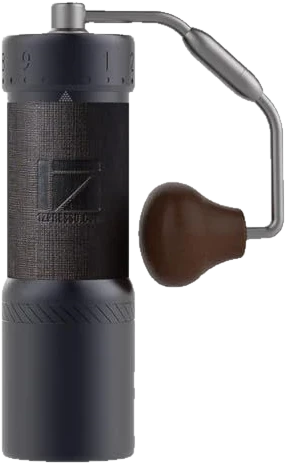
Dials In Espresso
Burrs
48 mm conical
Settings
8-micron clicks
Espresso
Yes

Why we love it

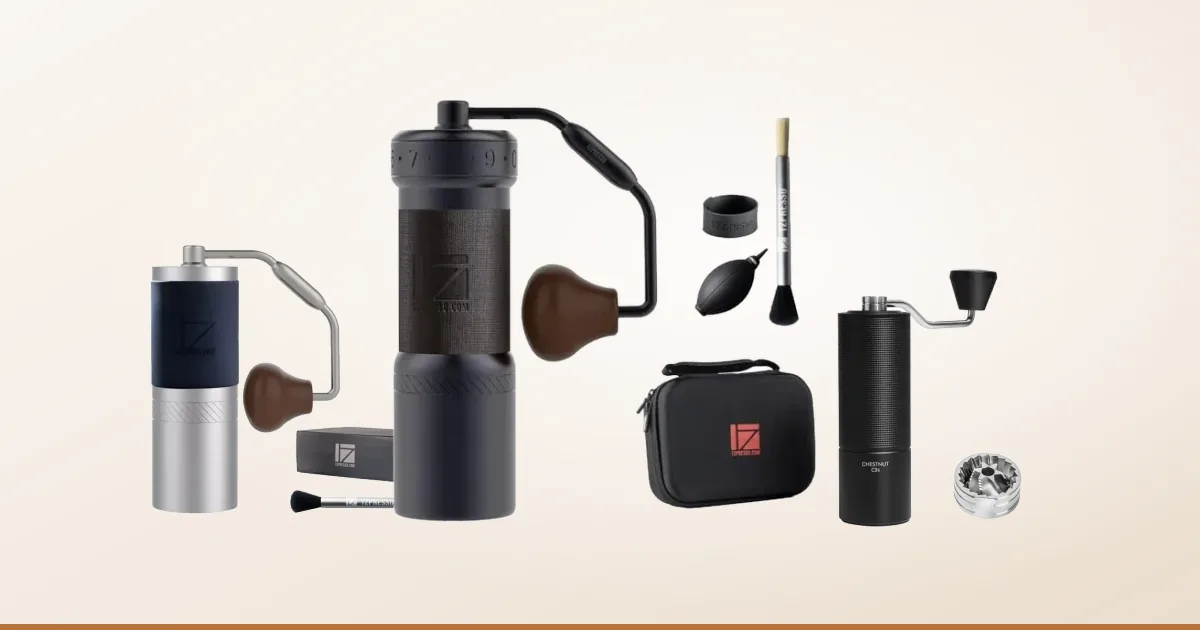
The J-Ultra is 1Zpresso's espresso hand grinder, and the successor to the JX-Pro this page used to carry. The dial sits outside the body and each click moves the burr 8 microns, per 1Zpresso, which is the difference between a shot that gushes and one that drips. That fine a step is the point: espresso lives in a narrow band, and a grinder you can return to exactly is the one that lets you dial in a new bag in two shots rather than six. The burrs are coated, and the catch cup holds 35 to 40 g and snaps on with a magnet, so a double shot's dose goes in and comes out in one motion. The handle folds away, it comes apart without tools for cleaning, and it ships with a travel case. The trade is the one every hand grinder makes: you crank it every morning, and a fine espresso dose is noticeably harder work than a filter one.

Pros

  • 8-micron clicks on an outside dial, so you can return to a setting exactly
  • Coated burrs made for espresso, fine enough for Turkish too
  • Magnetic 35–40 g catch cup holds a double dose and snaps on
  • Folding handle and travel case: it packs for a trip
  • Comes apart without tools for cleaning

Cons

  • Built for espresso: a filter grinder like the Timemore is easier for pour-over
  • Grinding a fine espresso dose by hand takes real effort every morning
  • One-year warranty, per the listing

Want flat burrs?

None of the electrics here has them. The Turin DF54 is the step up: 54mm flat burrs that grind one weighed dose at a time, just over this budget. It’s in the best grinders for espresso.

How we chose these

Grind evenness first, judged on the burr: its size and type where the maker states them. Then the steps: how small they are in the range you brew, and whether you can find a setting again. Then the daily routine: how an electric doses (timer, button or by hand) and how much its hopper holds, and for a hand grinder how much it holds and how easily it turns. Then how long it lasts, including whether the maker sells parts and what owners report about early failures. Every spec is the maker’s own, and one it doesn’t publish is left off. Prices come from Amazon and are updated regularly; the current price is always on Amazon. Every pick is under $200 at those prices.

What to know before you buy

What’s the best coffee grinder under $200?

The Baratza Encore ESP. It splits its 40 settings in two: 20 small steps for espresso and 20 for filter, on 40mm conical burrs, so one grinder covers a shot and a pot. The burr comes out on a quick-release mount and Baratza sells parts for years, so a worn part is a repair. If you never make espresso, the original Baratza Encore gives all 40 settings to filter.

What’s the best espresso grinder under $200?

The Baratza Encore ESP for most kitchens: 20 small steps in the fine range make a shot easy to dial in. The Breville Smart Grinder Pro suits a Breville machine better, with a timer in 0.2-second steps and a cradle that holds the portafilter under the spout. By hand, the 1Zpresso J-Ultra moves 8 microns a click, the finest steps here, and the Kingrinder K6 16. Our Encore ESP vs Smart Grinder Pro comparison weighs the two electrics.

Should I buy a hand or electric grinder under $200?

Count the cups. For one or two a morning, a hand grinder spends its whole price on the burrs, and at this price that buys espresso-capable grinding: the Kingrinder K6 and 1Zpresso J-Ultra both step finely enough for a shot. For a full pot, or for more than one person, an electric: grinding a pot by hand is several minutes of turning before work. A hand grinder also travels.

Is there a flat burr grinder under $200?

Not one worth buying for espresso. Every pick here has conical burrs, which grind evenly and keep their setting well at this price. The Cuisinart Supreme Grind on our grinders under $100 guide has flat burrs, for a pot. For flat burrs built for espresso, the Turin DF54 is just over this budget, with 54mm burrs that grind one weighed dose at a time.

Baratza Encore or Encore ESP?

The Encore ESP if you make espresso or might. The two share a body, a 40mm burr size and 40 settings, but the ESP spends half of them on small steps in the fine range, and its filter settings are coarser steps as a result. The original Encore gives all 40 to drip, pour over and French press, and its steps are too wide for espresso.

Is a $200 grinder worth it over a $100 one?

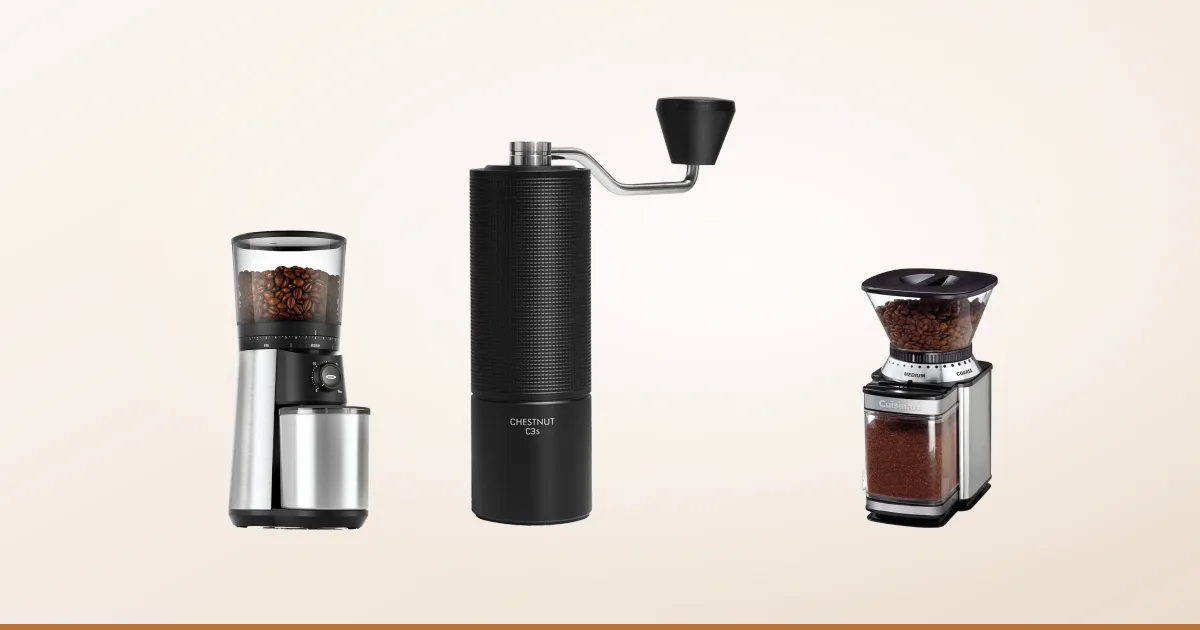
If you make espresso, yes: under $100 the electrics don’t have steps small enough to dial in a shot, and under $200 they do. For filter only, less so. A grinder under $100 like the OXO Brew grinds a good pot, and what the extra buys is a grinder that lasts, like the Baratza Encore, whose parts Baratza sells for years. Our grinders under $100 guide has the cheaper picks.

Bottom line

Buy the Baratza Encore ESP for espresso and filter from one grinder you can repair. Take the Breville Smart Grinder Pro instead if you want a timer and grounds straight into a Breville portafilter. For filter only, buy the Baratza Encore, or the OXO Brew for a pot at one press for less. By hand, the Kingrinder K6 does espresso and filter, and the 1Zpresso J-Ultra steps finest for espresso.

Related guides

Stay in the loop

New gear reviews, brew tips, and the occasional deal — straight to your inbox. No spam, ever.

Just your email, nothing else. Privacy