GuidesComparisons
Roundup

Best Manual Coffee Grinders

Four hand grinders that beat electric ones costing the same — and what you give up in exchange.

By Dana WhitfieldUpdated September 2026
4 products compared9 min read

A hand grinder is the one piece of coffee gear where spending less gets you more. The money in an electric grinder goes on a motor, a housing and a hopper; in a hand grinder almost all of it goes on the burrs and the shaft that holds them steady. That is why a hand grinder will out-grind an electric one costing the same, and why the gap is widest at the bottom of the range.

What you give up is obvious the first morning: your arm. A single filter dose is thirty to sixty seconds of turning, which most people find pleasant. A double espresso is harder, because the burrs sit closer together and the beans resist. A full pot for four is a genuine workout, and if that is your daily routine an electric grinder is the honest answer.

Picks are grouped by what you’re grinding for rather than by price. Espresso needs finer and more repeatable adjustment than filter does, and travel is a different purchase altogether — neither collapses neatly into a price tier.

Quick picks

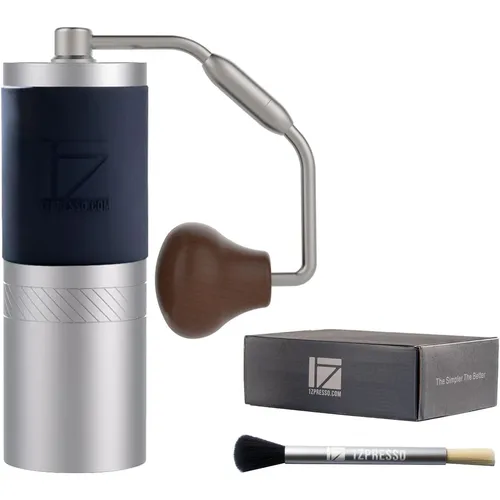
1Zpresso K-Ultra

1Zpresso K-Ultra

$259

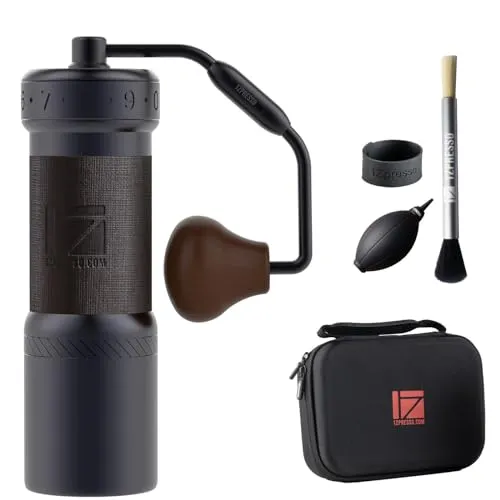
All-round hand grinder with the K burr, external adjustment at 20 microns per click, a magnetic catch cup holding 35 to 40 g, folding handle and travel case.

Jump to review
1Zpresso JX-ProBest Manual Grinder

1Zpresso JX-Pro

$140

Espresso-capable hand grinder with grind quality that rivals electric grinders twice the price. Quiet, portable, and surprisingly fast.

Jump to review
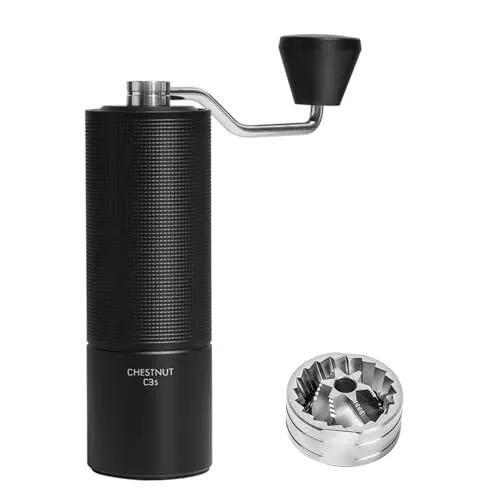
Timemore Chestnut C3S

Timemore Chestnut C3S

$79

Hand grinder with an all-aluminium body, Timemore's S2C hexagonal conical burr, roughly 36 adjustment steps and a folding handle.

Jump to review

Best overall

External adjustment, over a hundred clicks at twenty microns each, and a burr fast enough that a filter dose is under a minute. It grinds fine enough for espresso and coarse enough for a French press without becoming a compromise at either end.

1Zpresso K-Ultra

1Zpresso

1Zpresso K-Ultra

$259.00
9.2/ 10
Check price on Amazon

Why we love it

The hand grinder that stops being a compromise. External adjustment means you dial grind size without dismantling anything, and at 20 microns a click you can actually chase an espresso shot rather than approximate it. The K burr is fast — a filter dose takes well under a minute — and the magnetic catch cup means grounds go where you point them. It out-grinds most electric grinders costing the same.

Pros

  • External dial, over 100 clicks at 20 microns — espresso-capable precision
  • K burr grinds fast for a hand grinder
  • Magnetic catch cup holds 35 to 40 g, enough for a full brew
  • Folding handle plus a travel case
  • Tool-free dismantling for cleaning

Cons

  • Costs more than several capable electric grinders
  • It is still a hand grinder — espresso doses take arm work daily
  • More adjustment range than a filter-only brewer will ever use
  • Heavier than the travel grinders it shares a shelf with
Best for most people

Where the money stops buying obvious improvements. The JX-Pro will dial in espresso; the Timemore is the better buy if you brew filter and always will.

Best Manual Grinder
1Zpresso JX-Pro

1Zpresso

1Zpresso JX-Pro

$140.00
9/ 10
Check price on Amazon

Why we love it

If you're willing to grind by hand, the JX-Pro delivers grind quality that punches way above its $140 price tag — we're talking consistency that rivals $300+ electric grinders. The 48mm stainless steel burrs produce remarkably even particles, and the stepless adjustment lets you micro-tune for espresso in a way that stepped grinders can't. Grinding 18g for a double shot takes about 30-40 seconds, which is faster than you'd expect. It's dead silent (no motor), incredibly portable, and built like a tank — all metal construction, no plastic. The tradeoff is obvious: you're using your arm muscles every morning. Some people love the ritual. If that sounds tedious to you, grab one of the electrics instead.

Pros

  • Grind quality rivals electric grinders costing twice as much
  • Stepless adjustment — infinite precision for espresso dialing
  • Silent operation — perfect for early mornings or shared spaces
  • All-metal construction — extremely durable
  • Portable — great for travel or office use

Cons

  • Manual grinding requires physical effort every time
  • 30-40 seconds of hand grinding per double shot
  • Not practical if you're making multiple drinks
  • No dosing timer — you weigh beans separately
Timemore Chestnut C3S

Timemore

Timemore Chestnut C3S

$79.00
8.7/ 10
Check price on Amazon

Why we love it

The hand grinder most people should start with. The S2C burr produces noticeably less dust than the cheap stainless burrs it competes with, which is what you taste as muddiness in a pour over, and a built-in bearing means the handle keeps spinning after you let go rather than fighting you. The body is metal rather than plastic and the handle folds, so it survives a bag.

Pros

  • S2C conical burr generates far less fines than budget burrs
  • Bearing-assisted movement — noticeably easier to turn
  • All-aluminium body, no plastic shell to crack
  • Roughly 36 adjustment steps from fine to coarse
  • Folding handle, genuinely packable

Cons

  • Adjustment is by nut with no numbers, so settings are hard to return to
  • Fine enough for espresso is a stretch — this is a filter grinder
  • Grinding a full pot by hand takes real effort
  • Slim body is harder to hold steady than a fatter grinder

For travel

Small enough to be a genuine travel kit rather than a grinder you technically could pack. It nests inside an AeroPress plunger, which is the whole design brief.

1Zpresso Q Air

1Zpresso

1Zpresso Q Air

$69.00
8.4/ 10
Check price on Amazon

Why we love it

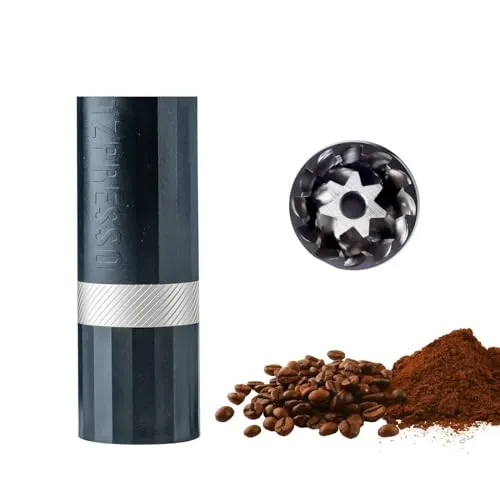
Built around one idea: it nests inside an AeroPress plunger. That makes it the grinder for a hotel room, a desk drawer or a rucksack, and it doesn't cut the thing that matters to get there — the burr is a real stainless conical and the adjustment is numbered clicks, so you can write down a setting and come back to it. Capacity is one brew, which is the honest trade for the size.

Pros

  • Nests inside an AeroPress plunger — a genuine travel kit
  • Numbered clicks, so a setting is repeatable
  • 30 clicks per rotation is fine enough control for filter
  • Cheapest 1Zpresso, and the burr is not where they saved
  • Factory-calibrated burr, one-year warranty

Cons

  • Holds one brew's worth of beans, 15 to 20 g
  • Not intended for espresso
  • Small body means less leverage than a full-size hand grinder
  • Slower per gram than the bigger 1Zpresso grinders

Hand grinding is work, and the dose decides how much

A single filter dose is thirty to sixty seconds of turning, which is pleasant. A double espresso is harder because the burrs are closer together, and a full pot for four people is a genuine arm workout you will resent by the second week. If you brew pots rather than cups, an electric grinder is the honest recommendation — hand grinders win on grind quality per pound spent, and lose on everything that scales with volume.

How we chose these

Grind consistency first, judged on burr design and how much fine dust a grinder produces, because that is what shows up in the cup as muddiness. Then adjustment: numbered or clicked settings that let you return to a grind beat a nut you turn by feel, and external adjustment beats internal. Capacity and handle ergonomics were weighted for how the grinder actually gets used — a grinder that holds one dose is fine for travel and wrong for a household. Every grinder here uses a conical burr; blade grinders are not grinders.

What to know before you buy

What’s the best manual coffee grinder?

The 1Zpresso K-Ultra at $259. Adjustment is external, so you change grind size by turning a dial on the outside rather than dismantling the grinder, and each click is twenty microns — fine enough to actually chase an espresso shot instead of approximating it. The K burr grinds a filter dose in well under a minute, and the magnetic catch cup holds enough for a full brew. It costs more than several capable electric grinders, which is the fair objection, and it out-grinds all of them.

What’s the best manual coffee grinder for espresso?

The K-Ultra at $259, or the 1Zpresso JX-Pro at $140 for less. Espresso is the hard case for any grinder: the useful range is narrow, small changes matter, and you need to return to a setting exactly. That rules out grinders adjusted by an unmarked nut, which covers most cheap hand grinders — including the Timemore on this page, which is an excellent filter grinder and not an espresso one. Be realistic about effort too: a double shot is noticeably harder work than a filter dose, every day.

What’s the best manual coffee grinder for pour over?

The Timemore Chestnut C3S at $79 is the sensible buy. Filter brewing wants a coarser, more forgiving grind than espresso, so the precision you pay for in the grinders above it goes mostly unused — what matters is a burr that doesn’t produce dust, and the S2C burr in the Timemore produces noticeably less than the stainless burrs it competes against. Dust is what makes a pour over taste muddy and bitter at the same time.

What’s the best manual coffee grinder under $100?

The Timemore Chestnut C3S at $79 for home, or the 1Zpresso Q Air at $69 if it needs to travel. Both have real conical burrs, which is the line worth holding — below this price the market fills up with blade grinders and with burr grinders whose shafts wobble enough to undo the point of a burr. The Q Air also has numbered clicks, so a setting is repeatable, which the Timemore’s nut is not.

Is a hand grinder better than an electric grinder?

Per pound spent, yes, and by a wide margin at the bottom of the range. An electric grinder spends most of its price on a motor and housing; a hand grinder spends almost all of it on burrs. The trade is volume and time. Hand grinding one or two cups is a pleasant thirty to sixty seconds; hand grinding for four people every morning is a chore you will stop doing. Buy a hand grinder for quality on a budget, for travel, or because you like the ritual — not to save time.

How long does it take to grind coffee by hand?

Thirty to sixty seconds for a single filter dose on any grinder here, and the K-Ultra is at the fast end. Espresso takes longer despite the smaller dose, because the burrs are set close together and the beans fight you. The variables that matter are burr size and sharpness rather than price — a larger, sharper burr pulls beans through faster, which is why the most expensive grinder on this page is also the quickest.

Do hand grinders wear out?

The burrs do, eventually. 1Zpresso rates its burrs for roughly a hundred to two hundred kilograms of coffee, which at a couple of doses a day is many years. What fails sooner on cheap grinders is the shaft and bearing: play in the shaft lets the burrs wobble, and a wobbling burr can’t hold a grind size no matter how good it is. That is most of what you are paying for as prices rise here, and it is why a well-made hand grinder is close to a one-time purchase.

Bottom line

Buy the 1Zpresso K-Ultra at $259 if you want one grinder that does everything, espresso included, and won’t need replacing. Buy the Timemore Chestnut C3S at $79 if you brew filter and always will — it is most of the grind quality for a third of the money, and the precision you skip is precision filter brewing never uses. The 1Zpresso Q Air at $69 is for a bag rather than a counter. And if you brew for a household every morning, buy an electric grinder instead; hand grinding four doses a day stops being a ritual quickly.

Related guides

Stay in the loop

New gear reviews, brew tips, and the occasional deal — straight to your inbox. No spam, ever.