GuidesBrowseComparisons
Roundup

Best Coffee Makers for Iced Coffee

Eight machines, split by the only decision that matters — brew it hot and strong over ice, or brew it cold overnight.

By Dana WhitfieldUpdated September 2026
8 products compared9 min read
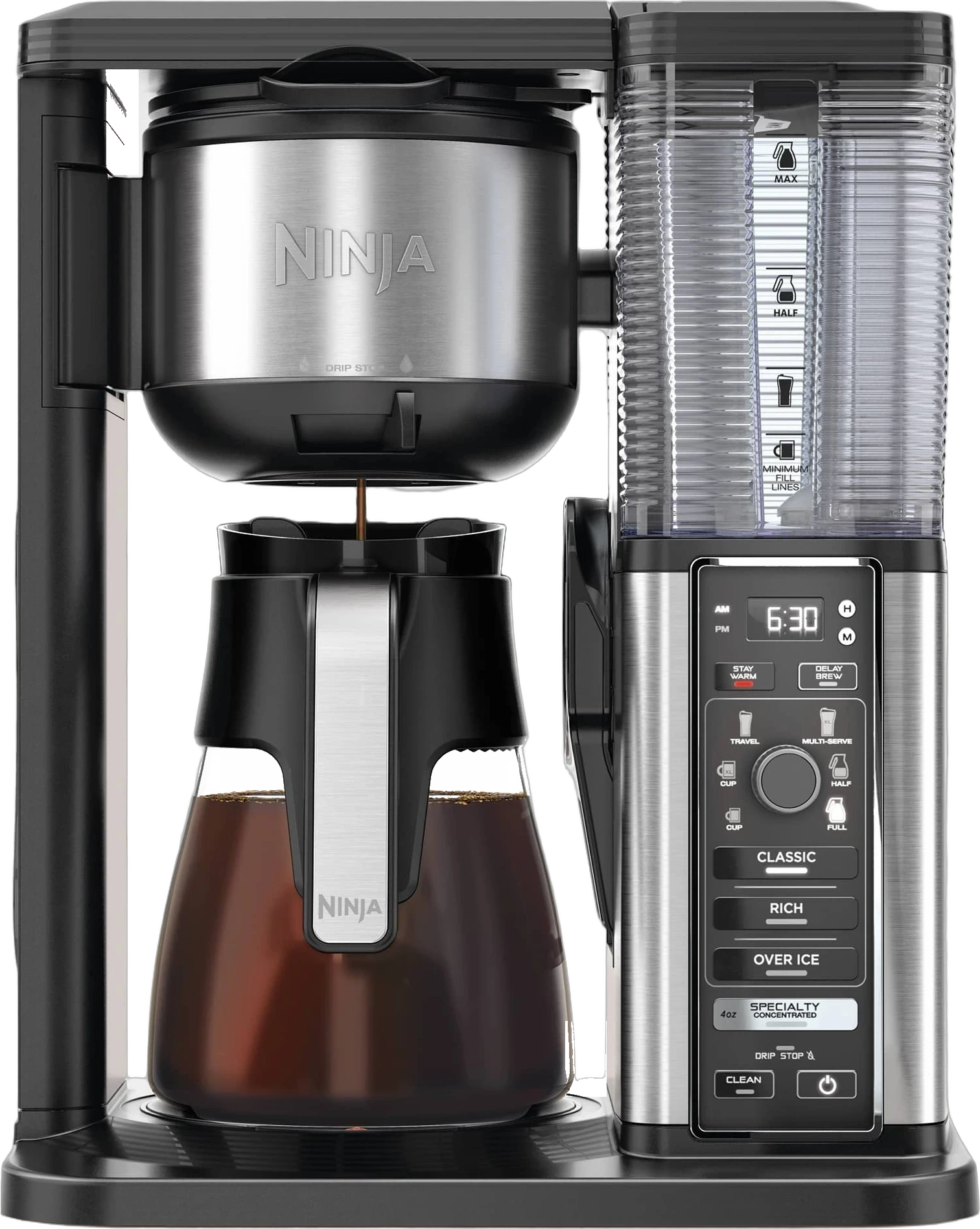
Ninja CM401 Specialty Coffee Maker

★ Our top pick

Ninja CM401 Specialty Coffee Maker

Most Versatile · Around $170

SCA-certified multi-serve brewer with 4 brew styles, 6 sizes, built-in fold-away frother, and a glass carafe. Makes everything from a single cup to a full pot — plus iced coffee and specialty concentrates.

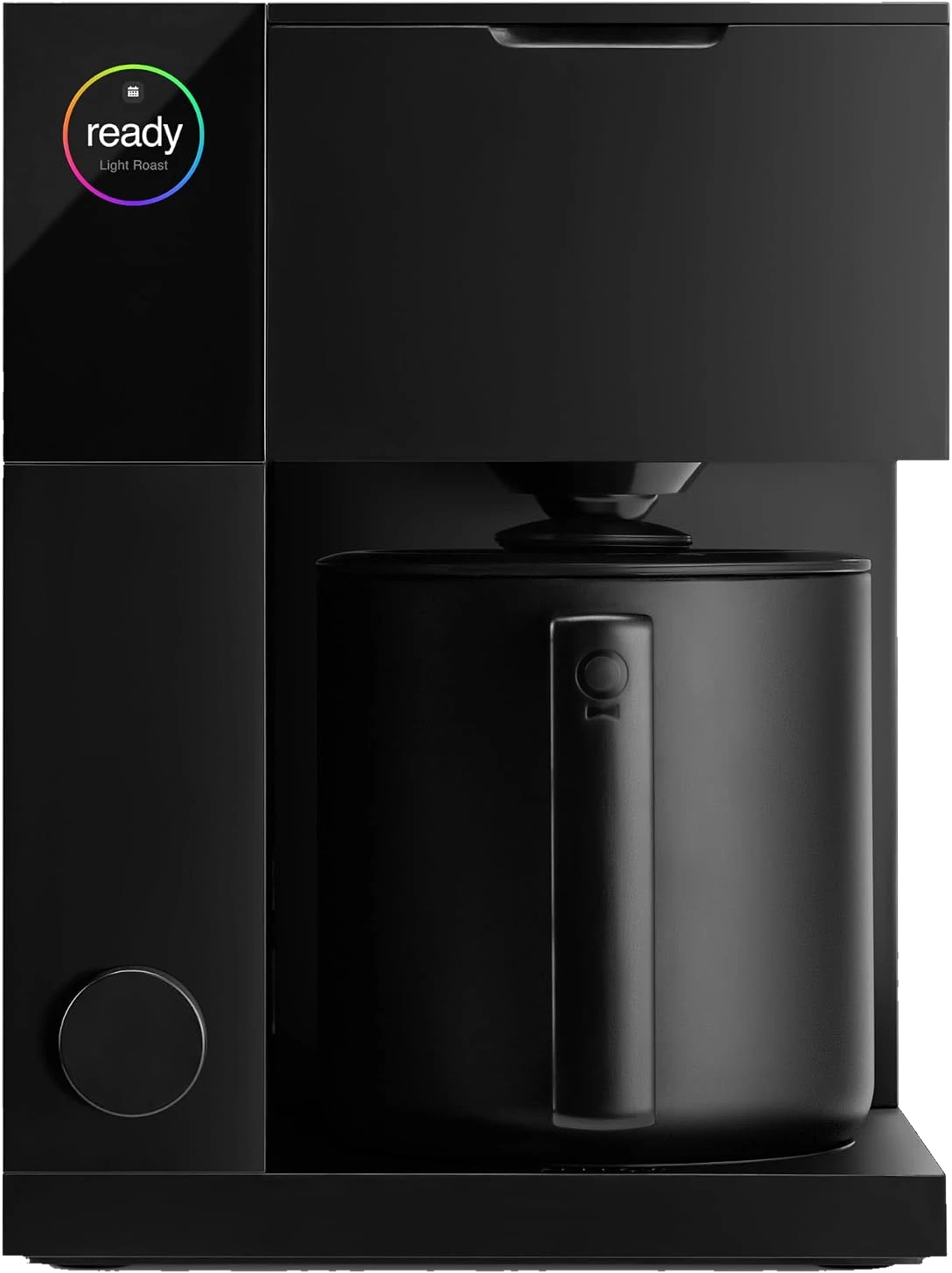
Fellow Aiden Precision Coffee Maker

Most Customizable

Fellow Aiden Precision Coffee Maker

Around $400

App-connected precision brewer with customizable bloom, pulse timing, and temperature control. SCA certified. Includes both single-serve and batch brew baskets.

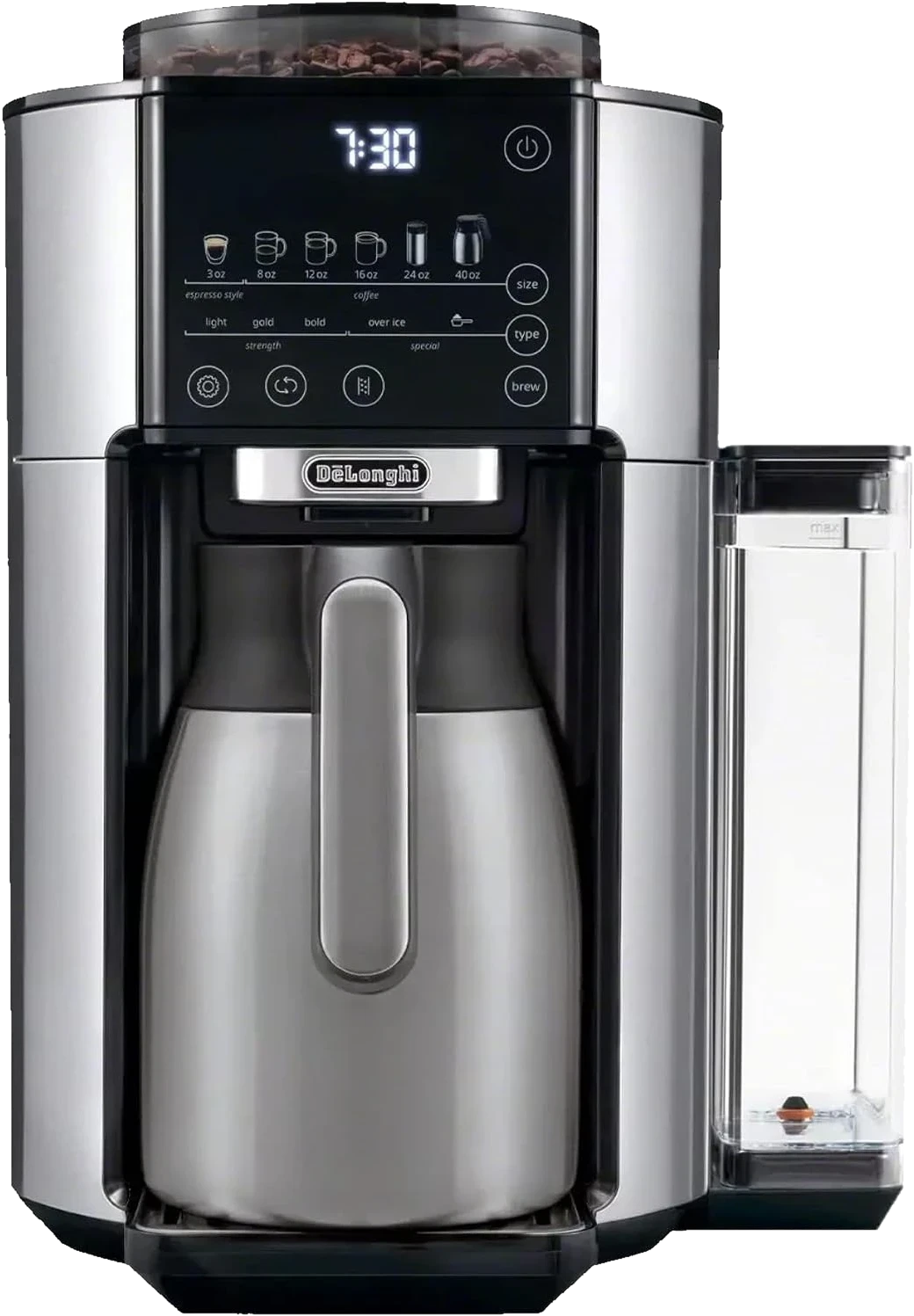
De'Longhi TrueBrew CAM51035M

De'Longhi TrueBrew CAM51035M

Around $450

Bean-to-cup drip machine with a conical burr grinder, six brew sizes from a single cup to a carafe, and five styles including an over-ice setting.

Iced coffee is two different drinks and the machines that make them have almost nothing in common. Brew it hot and pour it over ice and you keep the acidity and the aromatics — it tastes like the beans you bought, cold. Brew it cold for twelve to twenty-four hours and you get something smoother, heavier and noticeably lower in acid, which some people prefer and others find flat.

The mistake that ruins most homemade iced coffee is neither method. It is brewing coffee at normal strength and pouring it over ice, which dilutes it to about two thirds strength by the time you drink it. Every hot-brew pick here solves that the same way: brew smaller and stronger on purpose, and let the melt bring it back.

So the picks are split by method rather than by price. Decide which drink you want first; the machine follows from that, and one of the best picks here is a glass pitcher that sits in the fridge.

Best for most people

Carafe
Glass, hotplate
Makes
10 cups
Power draw
1,550 W
Certified
SCA

Why we love it

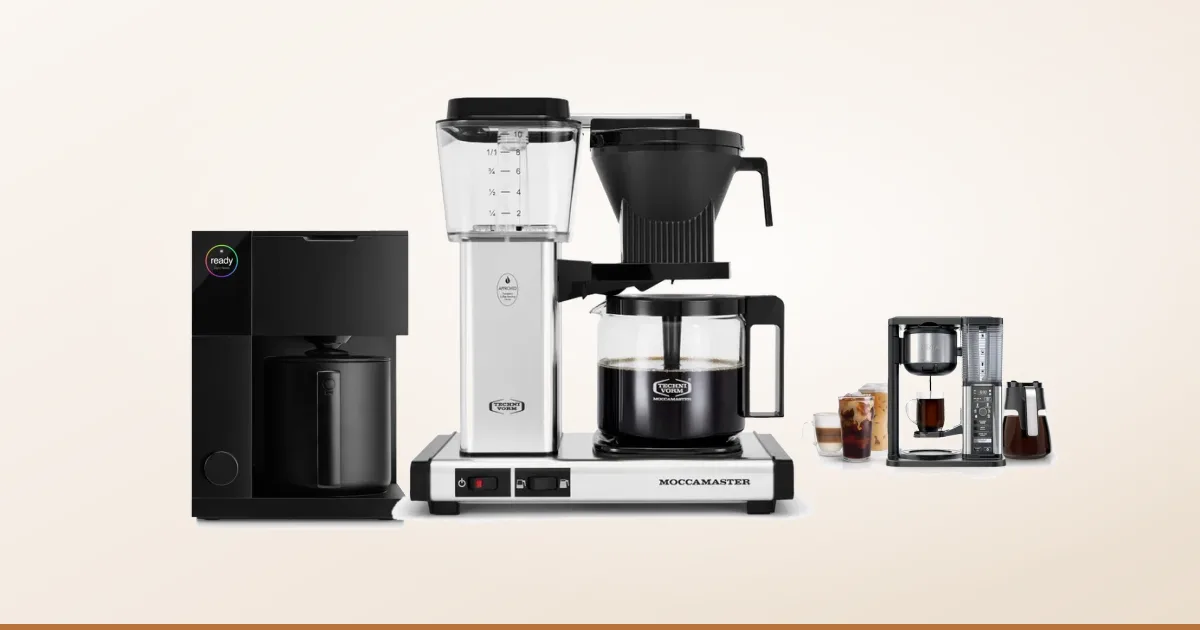
The CM401 is the Swiss Army knife of drip coffee makers. It's one of the few SCA-certified machines that can brew a single cup, a travel mug, a half carafe, or a full pot — all without changing the water level manually. The four brew styles (Classic, Rich, Over Ice, and Specialty) genuinely taste different, and the Specialty mode produces a concentrated brew that works surprisingly well as a base for lattes when paired with the fold-away frother. It's a lot of machine for the money.

Pros

  • SCA certified — real deal brew quality
  • 4 brew styles including Over Ice and Specialty concentrate
  • 6 brew sizes from single cup to full 10-cup carafe
  • Built-in fold-away milk frother
  • Removable water reservoir — easy to fill at the sink
  • Permanent filter included, also works with #4 cone paper filters

Cons

  • Large footprint — needs clearance for the swing-out brew basket
  • Glass carafe on a warming plate: fine for a pot you drink, but the last of it left for hours turns bitter
  • Specialty brew isn't real espresso (no pressure extraction)
  • Frother is basic — fine for milk foam, not microfoam
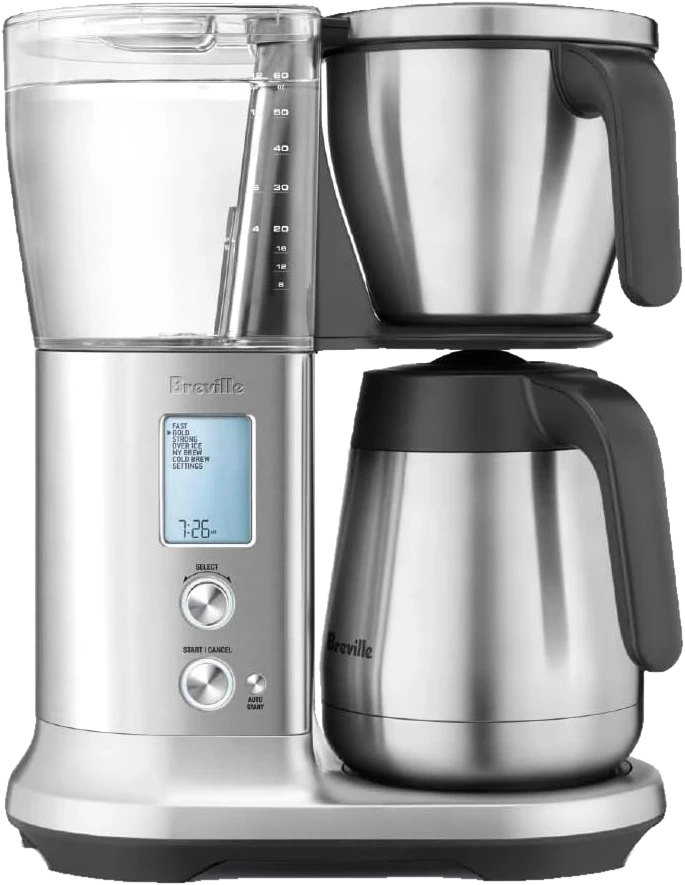
Hot over ice

Hot extraction keeps the acidity and aromatics that cold brewing strips out, so the iced coffee tastes like the beans you bought.

Most Customizable
Carafe
Thermal
Makes
10 cups
Certified
SCA
Stands out
8 brew settings + app

Why we love it

The Aiden is what happens when pour-over nerds design a drip machine. You can control bloom time, brew temperature, ratio, pulse count and the time between pulses — or just hit the one-button Instant Brew and let it handle everything. The thermal carafe keeps coffee hot without a hotplate, and the companion app lets you download brew profiles from specialty roasters so you're making coffee exactly as they intended. It's the most customizable drip machine on the market.

Pros

  • SCA certified with deep customization — 8 adjustable brew parameters
  • Dedicated single-serve and batch brew baskets included
  • Thermal carafe — no hotplate to scorch your coffee
  • App integration with downloadable roaster brew profiles
  • Cold brew preset ready in about 90 minutes

Cons

  • Click wheel navigation can feel clunky
  • Some plastic parts feel less premium than the price suggests
  • App features still maturing
  • No hot water dispense mode
Carafe
Thermal
Makes
8 cups
Stands out
Built-in burr grinder

Why we love it

This is the grind-and-brew that doesn't make you choose between a single cup and a pot. Six sizes run from a 3 oz espresso-style pour and an 8 oz cup up to a 40 oz carafe. De'Longhi states a conical burr rather than leaving the grinder type vague, which most machines in this class do. The over-ice style brews stronger to survive dilution instead of just brewing hot coffee onto cubes.

Pros

  • Conical burr grinder, stated as such by the manufacturer
  • Six brew sizes — single cup through a full carafe
  • Over-ice style brews for dilution rather than pouring hot coffee on ice
  • Grinds, doses and brews per cup rather than per pot

Cons

  • Large footprint — measure before you commit to it
  • Sold in several near-identical variants, so check the model code
  • More machine than someone who only ever brews a full pot needs
Carafe
Thermal
Makes
12 cups
Certified
SCA
Stands out
6 brew modes

Why we love it

The Precision Brewer gives you almost as much control as the Fellow Aiden, and its Gold Cup mode is SCA-certified out of the box. The steep-and-release valve is clever — it holds water in contact with grounds when you're brewing small volumes without the carafe, acting like an automatic clever dripper. The thermal carafe keeps coffee off a hotplate, so it doesn't cook while it waits.

Pros

  • SCA-certified Gold Cup mode for one-button great coffee
  • 6 brew modes including iced coffee and cold brew
  • My Brew mode lets you dial in bloom, temp, and flow rate
  • Excellent 60 oz thermal carafe with outstanding heat retention
  • Steep & Release valve for single-cup brewing
  • Dual filter baskets — cone and flat bottom included

Cons

  • Large footprint — needs counter space
  • Water reservoir is not removable (fixed to machine)
  • Cold brew mode is more gimmick than useful
  • Heavy at about 11 lbs

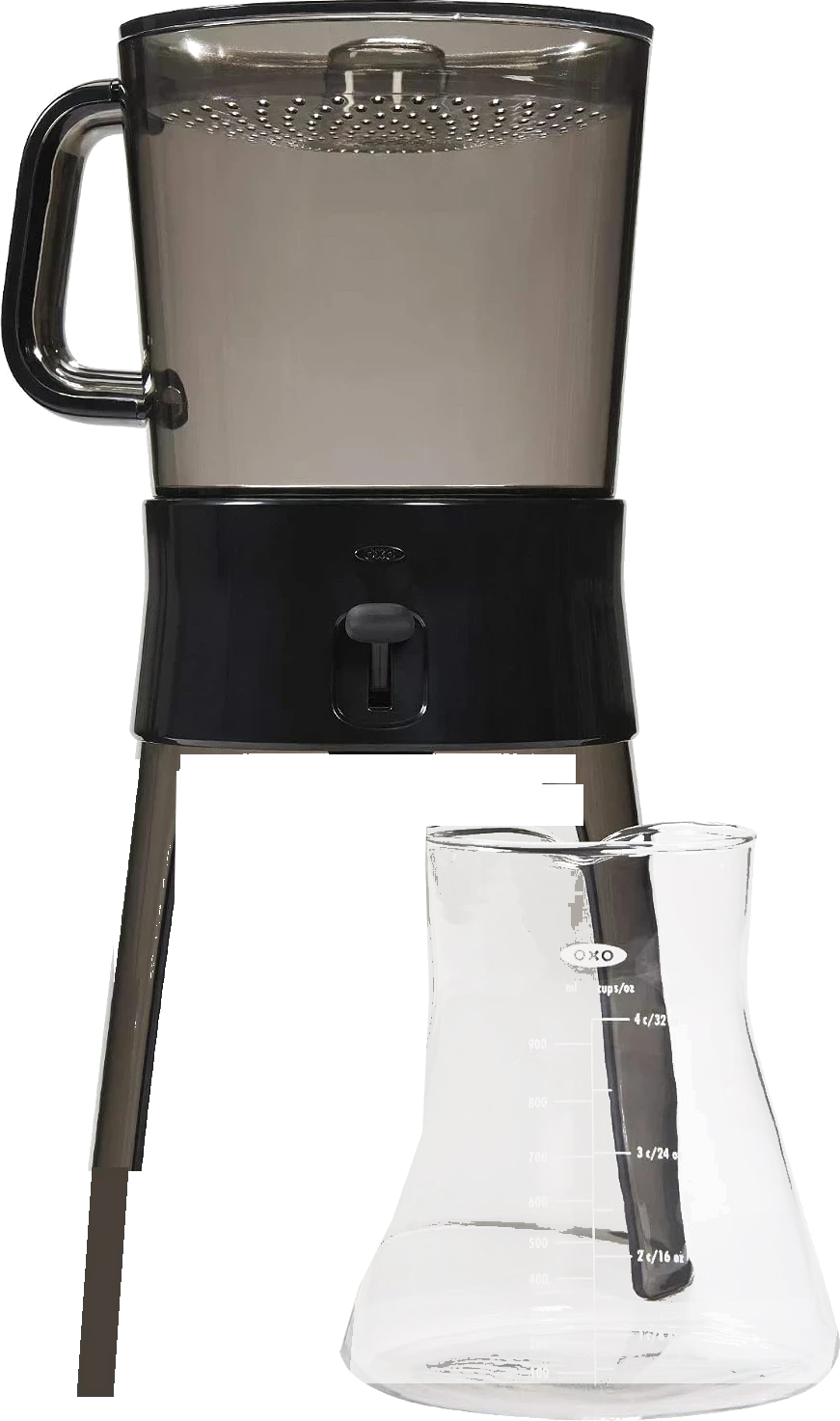
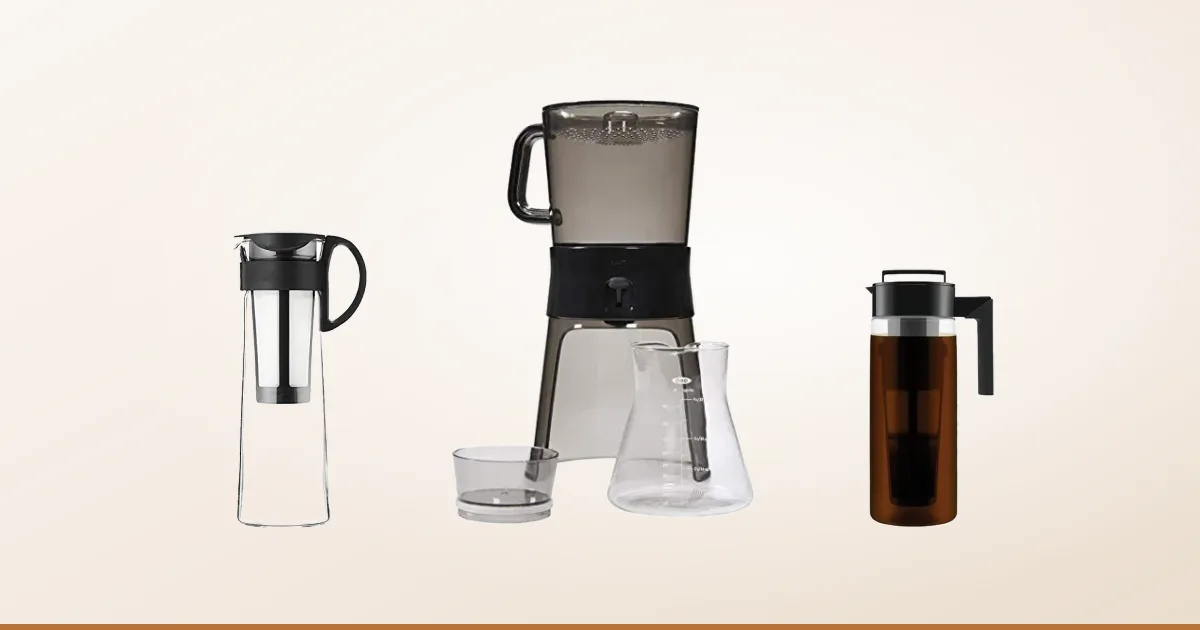
Cold brew

Twelve to twenty-four hours in the fridge, no heat, and a smoother, lower-acid result.

Makes
32 oz
Body
Plastic, glass carafe
Filter
Steel mesh

Why we love it

Most cold brew makers are a jar with a filter in it. This one solves the two things that actually go wrong: the rainmaker top wets the bed of grounds evenly instead of channeling straight down the middle, and a brew-release switch lets you drain on your schedule rather than the moment you remember. It cuts off automatically when you lift the carafe, so you don't over-extract by leaving it draining. The concentrate keeps in the glass carafe in the fridge.

Pros

  • Rainmaker lid saturates the bed evenly instead of channeling
  • Brew-release switch with automatic cut-off when the carafe is lifted
  • Borosilicate glass carafe with measurement markings
  • Reusable stainless mesh filter, no paper
  • Comes apart for cleaning and nests for storage

Cons

  • More parts than a jar-and-filter maker
  • The brewing vessel and lid are plastic, only the carafe is glass
  • Takes up more fridge and cupboard space than a single pitcher
  • Concentrate yield means you're diluting to serve, not pouring neat
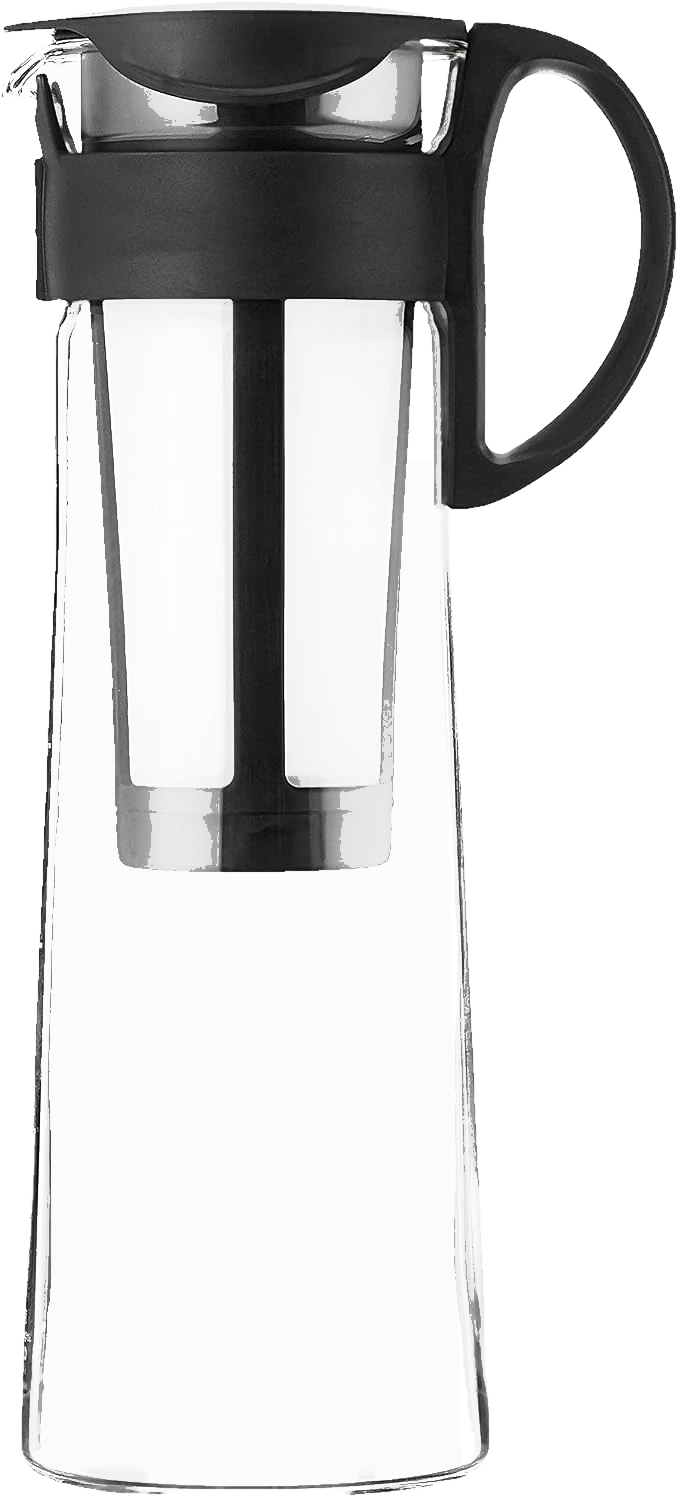
Makes
34 oz
Body
Glass
Filter
Fine mesh

Why we love it

The simplest honest answer to cold brew, and the one to buy if you'd rather your coffee didn't sit in plastic overnight. Grounds go in the mesh basket, water goes in, it lives in the fridge door until morning. The body is Hario heatproof glass and the basket lifts straight out, so cleaning is a rinse rather than a disassembly. Brew and serve from the same vessel — there's no carafe to decant into.

Pros

  • Glass body rather than a plastic pitcher
  • Removable mesh basket rinses clean in seconds
  • Brew and serve from the same server, no decanting
  • Slender spout pours slowly and controllably
  • Cheapest way into cold brew here

Cons

  • Glass, so it will break if you drop it
  • The lid and filter frame are plastic even though the body isn't
  • No brew-release valve — you lift the basket out to stop it
  • Makes ready-to-drink cold brew rather than concentrate

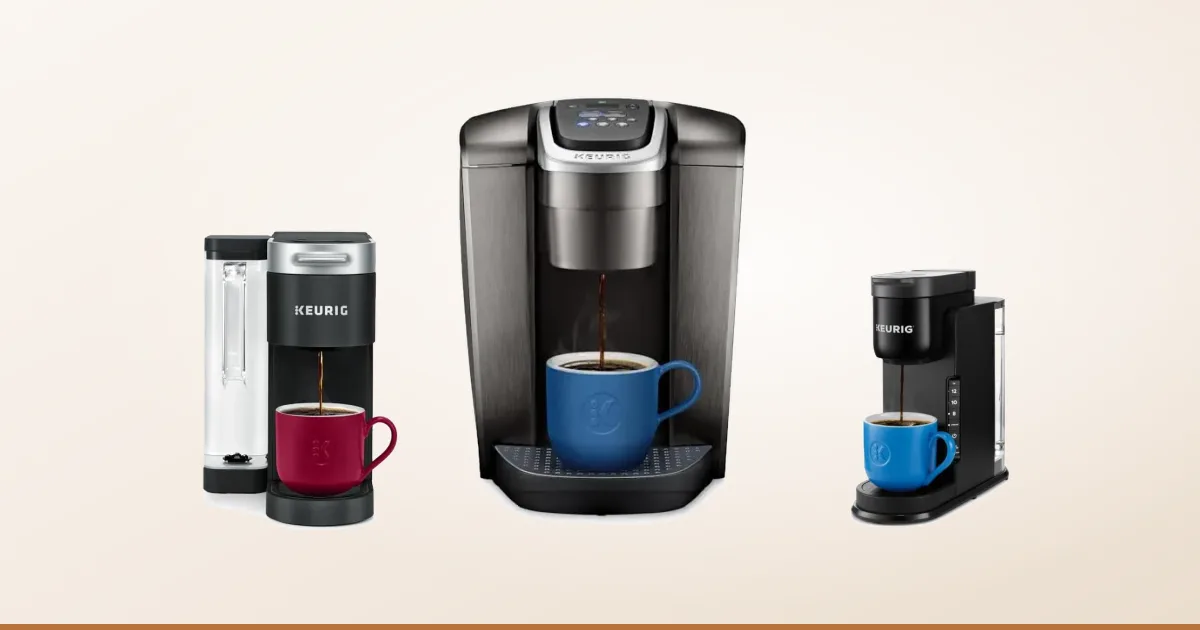
One glass at a time

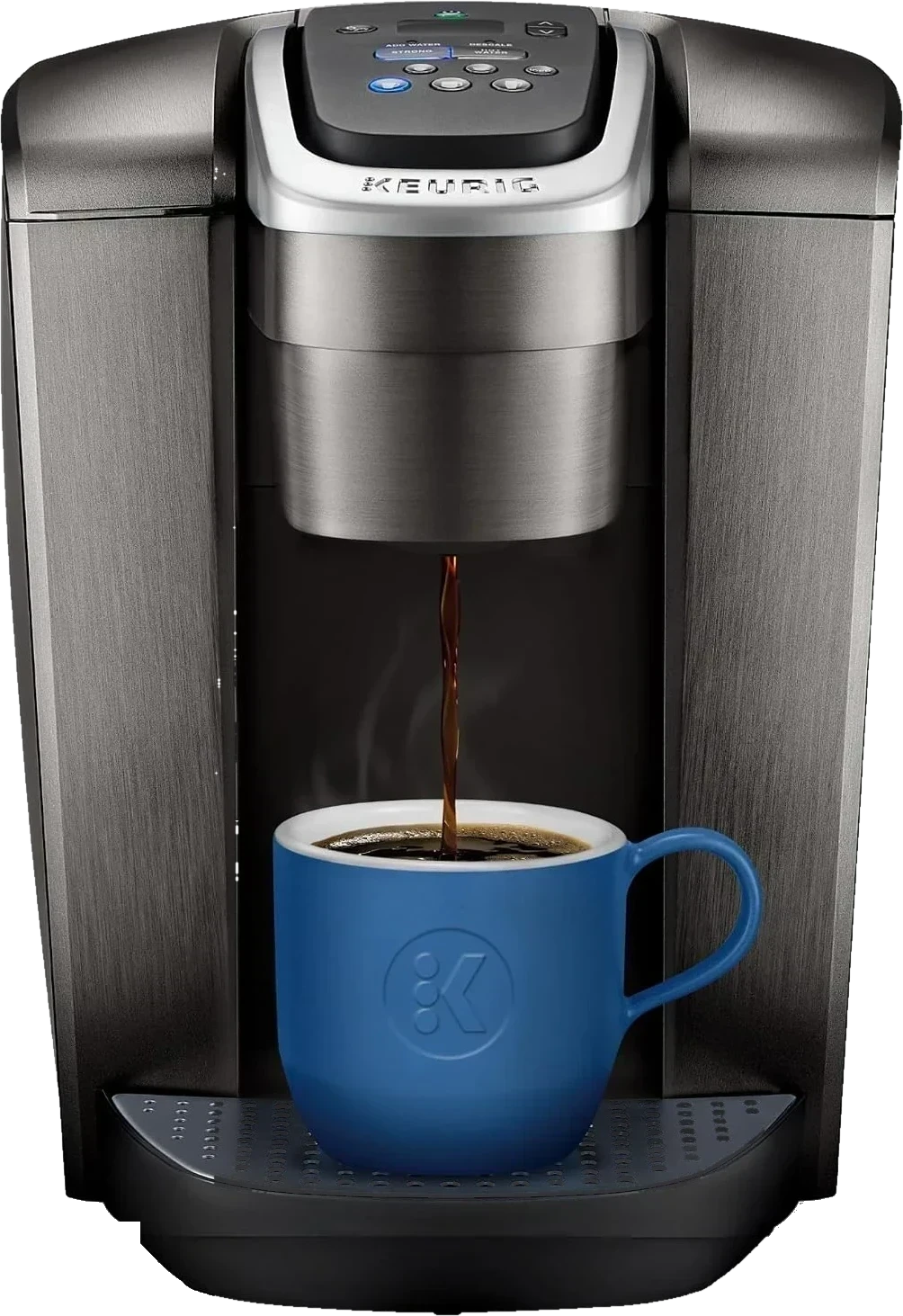
Keurig K-Elite

Keurig

Keurig K-Elite

8.2/ 10
Takes
K-Cup
Cup sizes
4–12 oz
Water tank
75 oz
Stands out
Iced setting

Why we love it

The one pod machine that gives you the controls the rest leave out. Brew temperature is adjustable rather than fixed, which is the single biggest reason cheap pod coffee tastes flat, and the iced setting brews hot and stronger over ice instead of just brewing weak coffee onto cubes. The 75 oz reservoir means a household isn't refilling it every other cup, and hot water on demand covers tea and oatmeal without a kettle.

Pros

  • Adjustable brew temperature, rare on a pod machine
  • Iced setting brews stronger to survive the melt
  • Five cup sizes from 4 to 12 oz
  • Large 75 oz removable reservoir
  • Hot water on demand for tea and instant food
  • Takes a reusable filter if you want to use your own grounds

Cons

  • Cost per cup is far higher than any ground-coffee machine here
  • Pods are a recurring purchase and mostly not recyclable kerbside
  • You can't control grind, dose or ratio — the pod decides
  • Takes far more counter than a K-Mini or K-Slim

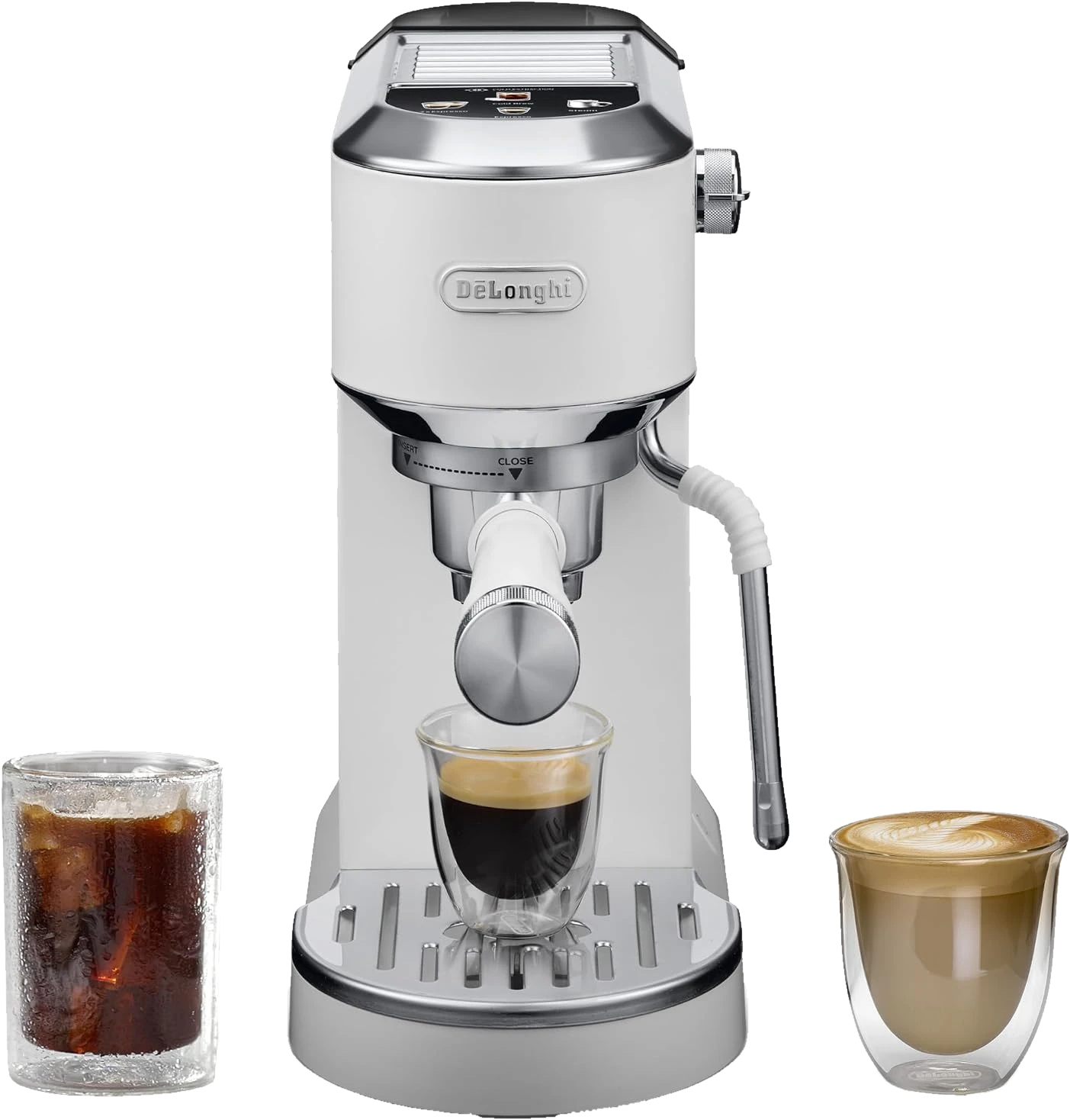
Iced lattes

An iced latte is a double shot over ice, topped with cold milk.

Steam wand
Manual
Heater
Thermoblock
Stands out
Cold brew preset

Why we love it

Most espresso machines treat an iced latte as your problem. The Dedica Duo puts it on the front panel: three preset recipes — espresso, double espresso and a cold brew setting — on a touch display, so the drink most people actually order at a café is a button rather than a workaround. Underneath it is a proper semi-automatic: you fill and tamp the portafilter, the pump runs low-pressure pre-infusion and then a steady 9 bars, and the shot stops itself. The My LatteArt wand is the commercial-style kind rather than a frothing sleeve, so it will texture milk for a cappuccino once you learn it. De'Longhi says the cold brew setting takes under five minutes, using what it calls Cold Extraction Technology, but doesn't say how that differs from a slow espresso, so judge it on taste, not on the name.

Pros

  • Cold brew preset alongside single and double espresso
  • Commercial-style My LatteArt wand makes microfoam, not just bubbles
  • Low-pressure pre-infusion, then a stable 9 bars
  • Shot stops on its own — no timing by hand
  • Dedica-slim footprint fits a crowded counter

Cons

  • De'Longhi names its cold brew tech but doesn't explain how it works
  • Touch display is one more thing to break than a dial
  • Manual wand takes a few weeks to learn

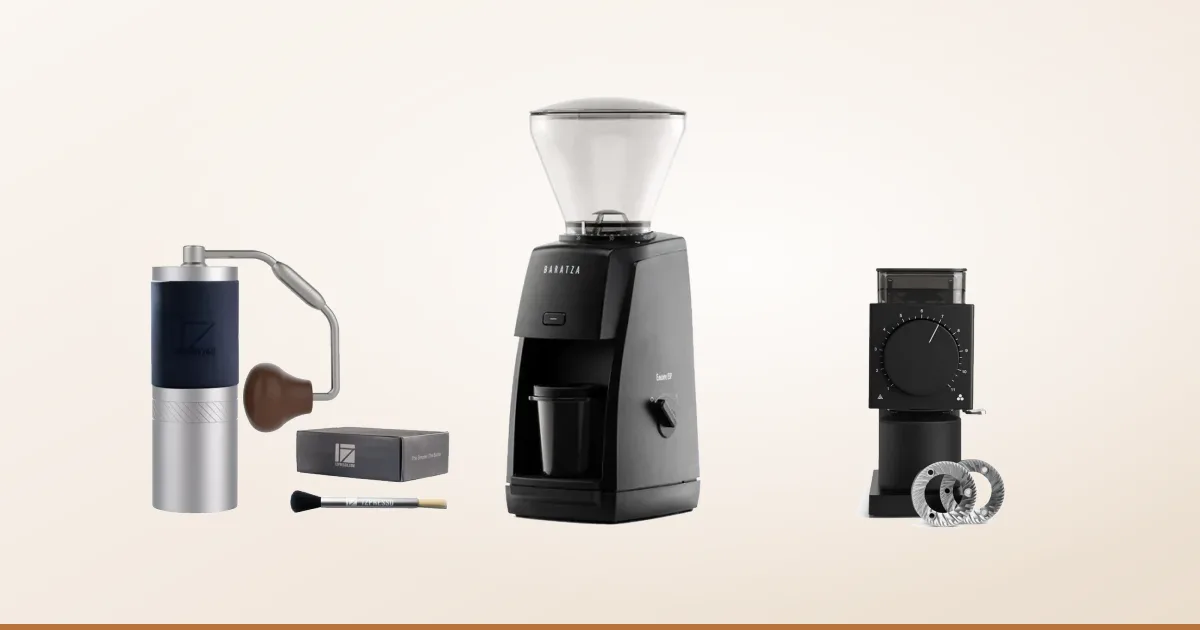
Grind coarser for cold brew, not for iced

The two methods want opposite things. Hot-over-ice uses your normal filter grind and a stronger ratio, because the ice is doing the diluting. Cold brew wants a coarse grind and a long steep, and fines are what make it silty and harsh over twelve hours. Either way an even grind matters more than the machine — the grinder guide covers that, and the cold brew guide goes deeper on the overnight method.

How we chose these

Hot-brew machines had to brew concentrated on purpose — a dedicated over-ice setting, or a small-batch mode strong enough to survive dilution. A machine that just brews normal coffee you pour over ice does not qualify, whatever the marketing says. Cold brew makers were judged on what the coffee steeps in and how easily the thing cleans, since neither brews better than the other. Machines that also handle milk were noted, because a large share of iced coffee drinking is actually iced lattes.

What to know before you buy

What’s the best coffee maker for iced coffee?

The Ninja CM401 at $170. It has a dedicated over-ice setting that brews smaller and stronger so the melting ice dilutes it back to normal strength — rather than handing you ordinary coffee to water down, which is what most machines do. It also has six brew sizes and a fold-away frother, so iced lattes come from the same machine. For a better cup and more control, the Breville Precision Brewer at $240 does the same trick with temperature and bloom control on top.

Is cold brew better than iced coffee?

Different, not better. Cold brew extracts without heat over twelve to twenty-four hours, which pulls less acid and produces a heavier, sweeter, smoother cup — and leaves behind a lot of the bright, fruity notes that a hot brew captures. If you drink light roasts for their character, hot-over-ice keeps it. If coffee acidity bothers your stomach or your palate, cold brew is the reason the method exists. The cold brew guide covers that side in full.

Why does my iced coffee taste watery?

Because you brewed it at normal strength. Ice is roughly a third of the finished glass once it melts, so a normal brew arrives at about two thirds strength by the time you are drinking it. The fix is to brew concentrated on purpose — either use a machine with an over-ice setting, or use about half the usual water for the same dose and pour that over a full glass of ice. Chilling hot coffee in the fridge instead also works and tastes flat by comparison.

What’s the best coffee maker for iced lattes?

The Ninja CM401 at $170, because it brews concentrated over ice and has a frother built in, so both halves of the drink come from one machine. If you already have a brewer you like, a separate milk frother that makes cold foam is the cheaper route — cold foam is the part that most frothers cannot do and the part an iced latte actually needs. If you want the latte built on espresso rather than strong brewed coffee, the De’Longhi Dedica Duo at $250 pulls the double shot and has a cold brew recipe beside it.

Can you use any coffee maker for iced coffee?

You can, and the result is the watery cup above unless you compensate. Any brewer works if you halve the water for the same dose and brew straight onto ice. What a dedicated machine buys you is not doing that arithmetic every morning, and a brew profile designed for it. If you already own a brewer, try the half-water method before spending anything — it costs nothing to test and it is most of the difference.

What grind should I use for iced coffee?

For hot-over-ice, your normal filter grind — nothing changes except the ratio. For cold brew, coarse, and even matters more than coarse: fines turn a long steep silty and harsh. Either way grind consistency does more for iced coffee than the machine does, because dilution exposes a thin or unbalanced extraction rather than hiding it.

How long does iced coffee keep?

Hot-brewed coffee chilled in the fridge is worth drinking for about a day and noticeably flat after that. Cold brew keeps about a week, and concentrate a little longer, which is the practical argument for it — you brew once and drink it all week. What degrades both is air rather than time, so a sealed container beats a jug with a plate on top by a clear margin.

Bottom line

Buy the Ninja CM401 at $170 if you want iced coffee this morning: it brews strong over ice on purpose and froths milk for iced lattes. Step up to the Fellow Aiden at $400 for control over temperature and bloom. And if what you actually want is the smoother, lower-acid drink, brew it cold — the OXO at $50 is the better buy for that, and the Hario at $20 steeps in glass.

Related guides

Stay in the loop

New gear reviews, brew tips, and the occasional deal — straight to your inbox. No spam, ever.