GuidesComparisons
Roundup

Best Cold Brew Coffee Makers

Four makers, sorted by what the coffee actually steeps in — because that is the only real difference between them.

By Dana WhitfieldUpdated September 2026
4 products compared8 min read

Cold brew is the one method where the equipment barely matters. There is no pump, no temperature to hold, no pour technique to learn — coarse coffee sits in cold water for the better part of a day and you strain it. Every maker on this page is, functionally, a jar with a filter in it.

So the honest way to choose is not which one brews best, because none of them brews better than another. It is what the coffee steeps in, how easily you can get a hand inside to clean it, and whether the lid seals. Cold brew spends twelve to twenty-four hours in contact with its container, which is far longer than coffee touches anything else you own — which is why the glass-or-plastic question comes up on this method and not on others.

Picks are grouped by material for that reason. There is one exception to the no-difference rule, and it sits at the top: even saturation of the grounds, and the ability to stop the steep on your schedule rather than when you happen to remember.

Quick picks

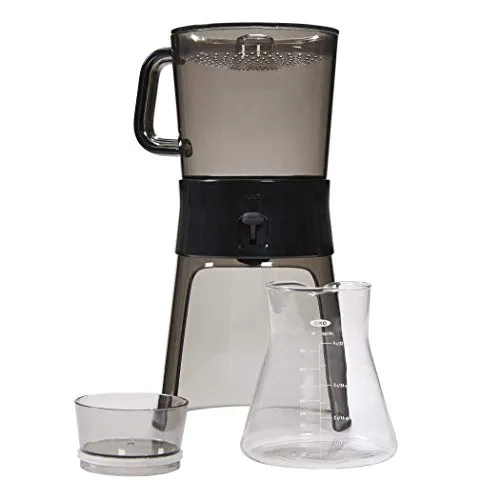
OXO Good Grips Cold Brew

OXO Good Grips Cold Brew

$50

Steep-and-release cold brew system with a rainmaker lid for even saturation, a reusable stainless mesh filter, and a borosilicate glass carafe.

Jump to review
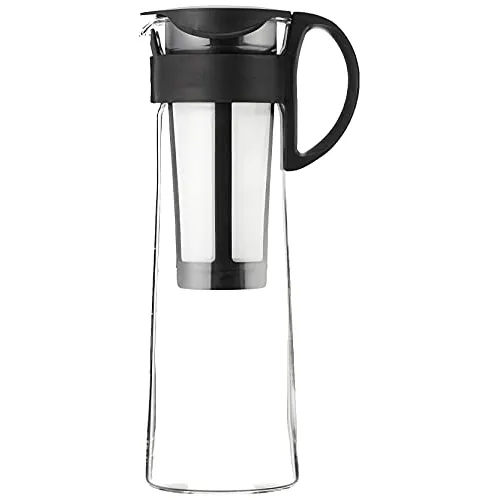
Hario Mizudashi 1000ml

Hario Mizudashi 1000ml

$21

Heatproof glass cold brew server with a removable fine mesh basket and a slender pouring spout. Made in Japan, 1000 ml.

Jump to review
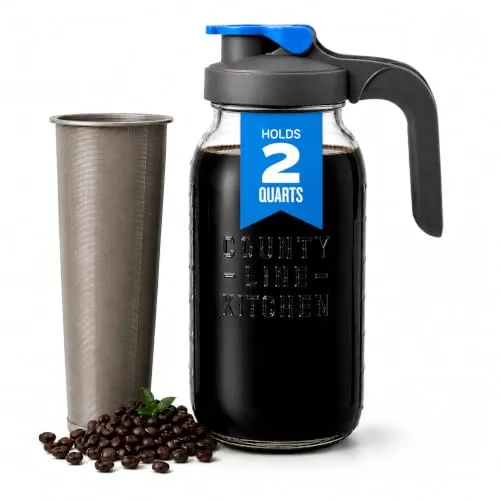
County Line Kitchen 64oz

County Line Kitchen 64oz

$35

Wide-mouth glass jar cold brew maker with a stainless mesh filter and a leak-proof lid. Holds 64 oz — double most pitchers here.

Jump to review

Best overall

The only one here that solves the two things that actually go wrong: a rainmaker lid that wets the whole bed instead of channelling down the middle, and a release valve so you drain when you choose rather than when you remember.

OXO Good Grips Cold Brew

OXO

OXO Good Grips Cold Brew

$49.99
8.8/ 10
Check price on Amazon

Why we love it

Most cold brew makers are a jar with a filter in it. This one solves the two things that actually go wrong: the rainmaker top wets the bed of grounds evenly instead of channelling straight down the middle, and a brew-release switch lets you drain on your schedule rather than the moment you remember. It cuts off automatically when you lift the carafe, so you don't over-extract by leaving it draining. The concentrate keeps in the glass carafe in the fridge.

Pros

  • Rainmaker lid saturates the bed evenly instead of channelling
  • Brew-release switch with automatic cut-off when the carafe is lifted
  • Borosilicate glass carafe with measurement markings
  • Reusable stainless mesh filter, no paper
  • Comes apart for cleaning and nests for storage

Cons

  • More parts than a jar-and-filter maker
  • The brewing vessel and lid are plastic, only the carafe is glass
  • Takes up more fridge and cupboard space than a single pitcher
  • Concentrate yield means you're diluting to serve, not pouring neat
If you'd rather it didn't steep in plastic

Cold brew sits for the better part of a day, which is longer than coffee is in contact with anything else you own. Both of these steep in glass. Neither is entirely plastic-free — lids and filter frames still are — but the vessel is the part that matters.

Hario Mizudashi 1000ml

Hario

Hario Mizudashi 1000ml

$20.75
8.5/ 10
Check price on Amazon

Why we love it

The simplest honest answer to cold brew, and the one to buy if you'd rather your coffee didn't sit in plastic overnight. Grounds go in the mesh basket, water goes in, it lives in the fridge door until morning. The body is Hario heatproof glass and the basket lifts straight out, so cleaning is a rinse rather than a disassembly. Brew and serve from the same vessel — there's no carafe to decant into.

Pros

  • Glass body — the coffee never touches plastic while it steeps
  • Removable mesh basket rinses clean in seconds
  • Brew and serve from the same server, no decanting
  • Slender spout pours slowly and controllably
  • Cheapest way into cold brew here

Cons

  • Glass, so it will break if you drop it
  • The lid and filter frame are plastic even though the body isn't
  • No brew-release valve — you lift the basket out to stop it
  • Makes ready-to-drink cold brew rather than concentrate
County Line Kitchen 64oz

County Line Kitchen

County Line Kitchen 64oz

$34.99
8/ 10
Check price on Amazon

Why we love it

For a household that drinks cold brew rather than tries it. Sixty-four ounces is twice what most makers hold, and the wide mouth means you can actually get a hand and a brush inside, which is the thing that quietly decides whether a cold brew maker stays in rotation. Glass body, stainless filter, leak-proof lid so it can go on its side.

Pros

  • Holds 64 oz — roughly double the other makers here
  • Glass body rather than plastic
  • Wide mouth is genuinely easy to clean by hand
  • Leak-proof lid lets it lie down in the fridge
  • Stainless mesh filter, no paper

Cons

  • Glass and full of liquid is heavy and breakable
  • Takes a full shelf rather than a fridge door
  • County Line publishes less detail than the established brands here
  • No brew-release valve — lift the filter out to stop the steep

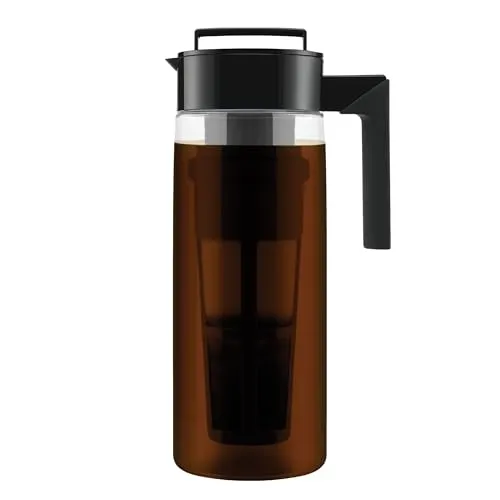
The one that survives a household

Shatterproof, seals properly, and fits a fridge door. The trade is that Tritan is plastic however BPA-free it is, and the coffee steeps in it overnight.

Takeya Deluxe Cold Brew

Takeya

Takeya Deluxe Cold Brew

$34.99
8.3/ 10
Check price on Amazon

Why we love it

The one that survives a household. It's shatterproof, the lid genuinely seals so it can lie on its side in a packed fridge, and it fits most fridge doors, which glass carafes usually don't. The airtight lid is the real feature: cold brew goes flat and cardboardy on contact with air, and this is the only maker here you can seal and forget for a few days.

Pros

  • Shatterproof — the one to pick if it's going near kids or a camping trip
  • Airtight leakproof lid keeps brewed coffee fresh for days
  • Fits most fridge doors
  • Fine mesh filter, no paper needed
  • Dishwasher safe and made in the USA

Cons

  • Tritan is plastic, BPA-free or not — the coffee steeps in it overnight
  • Plastic can hold onto odours over time in a way glass doesn't
  • No brew-release valve
  • Filter is the whole tall core, so it needs a proper rinse

The grinder matters more than the maker

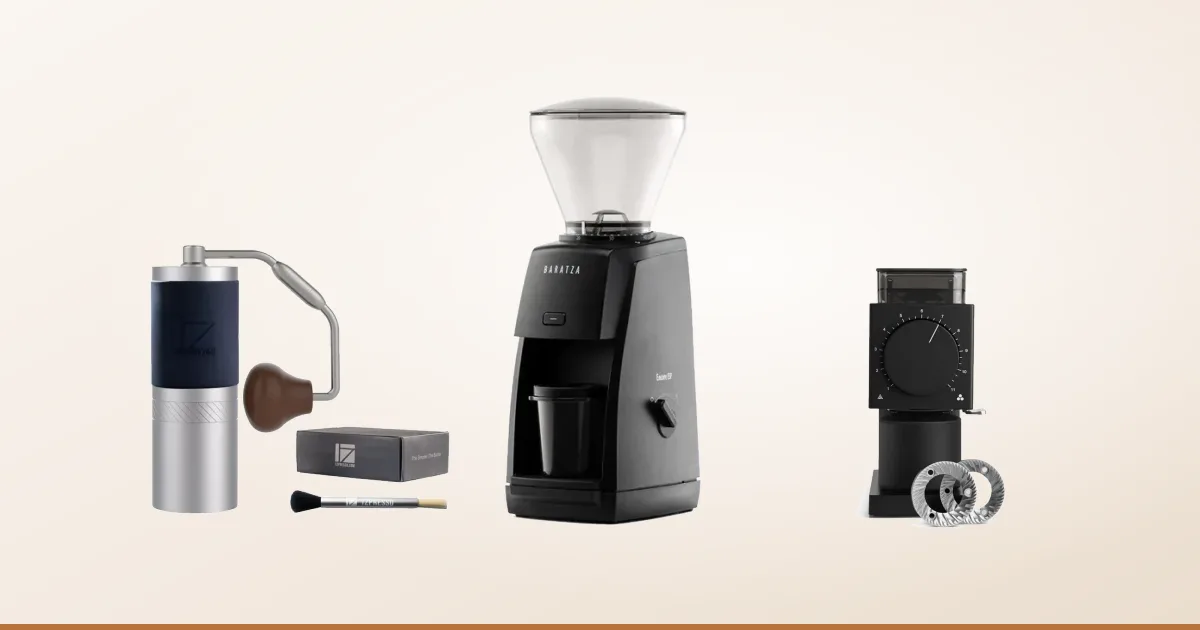
Cold brew wants a coarse, even grind. Fines are what make it silty and harsh, and a long steep gives them plenty of time to do it — which is why the same beans taste muddy from a blade grinder and clean from a burr. If you are choosing between spending on the maker or the grinder here, spend on the grinder — every maker on this page is a jar with a filter in it, and none of them can fix a bad grind.

How we chose these

Judged on what the coffee steeps in first, then on how easy the thing is to clean by hand, because a cold brew maker that is awkward to wash quietly leaves the rotation. Glass was preferred over plastic for the brewing vessel, and where a maker is part glass and part plastic the page says which is which rather than calling it glass. Filters had to be reusable metal mesh — nothing here needs paper. Capacity was treated as a fit question rather than a virtue: the largest maker is the right one only if you drink it.

What to know before you buy

What’s the best cold brew coffee maker?

The OXO Good Grips Cold Brew at $50. It is the only one here that addresses the two real failure points: a rainmaker lid distributes water across the whole bed of grounds rather than letting it channel down the middle, and a brew-release switch lets you drain on your schedule. It cuts off automatically when you lift the carafe, so you cannot over-extract by leaving it running. The concentrate lands in a borosilicate glass carafe. The catch, and it is a fair one, is that the brewing chamber itself is plastic.

What’s the best cold brew coffee maker without plastic?

The Hario Mizudashi at $21 for one or two people, or the County Line Kitchen at $35 for a household. Both steep in glass, which is the part that matters, since the coffee is in contact with the vessel for the better part of a day. Neither is fully plastic-free — lids and filter frames still are — and no cold brew maker we have found is. If the plastic question is what brought you here, our plastic-free guide covers how far you can actually take it across brewing methods.

How long does cold brew take?

Twelve to twenty-four hours in the fridge. Twelve gives a lighter, brighter cup; a full day gives more body and more of the chocolatey heaviness people associate with cold brew. Past a day you are mostly extracting bitterness, not strength. The practical answer is to put it on in the evening and strain it when you get up, which lands you in the right window without thinking about it.

Is cold brew concentrate or ready to drink?

It depends on the maker, and it changes how much you get. The OXO brews a concentrate, so what comes out is diluted with water or milk and a full carafe makes considerably more than it looks like. The Hario brews ready-to-drink at ordinary strength, so what you pour is what you get. Neither is better — but concentrate stores in less fridge space and keeps longer, which matters if you brew once a week rather than every other day.

What grind should I use for cold brew?

Coarse, and even matters more than coarse. Fines are what turn cold brew silty and harsh, and a long steep gives them all the time in the world to do it — which is why the same beans taste muddy from a blade grinder and clean from a burr. If you are deciding between spending on the maker or the grinder, spend it on the grinder. Every maker here is a jar with a filter; none of them can fix a bad grind.

How long does cold brew keep?

Brewed cold brew is good for about a week refrigerated, and concentrate a little longer. What kills it is air rather than time, which is the argument for the Takeya at $35: its lid genuinely seals, so it can lie on its side in a packed fridge and the coffee does not go flat and cardboardy by day three. An open jar covered with a plate will be noticeably worse by then.

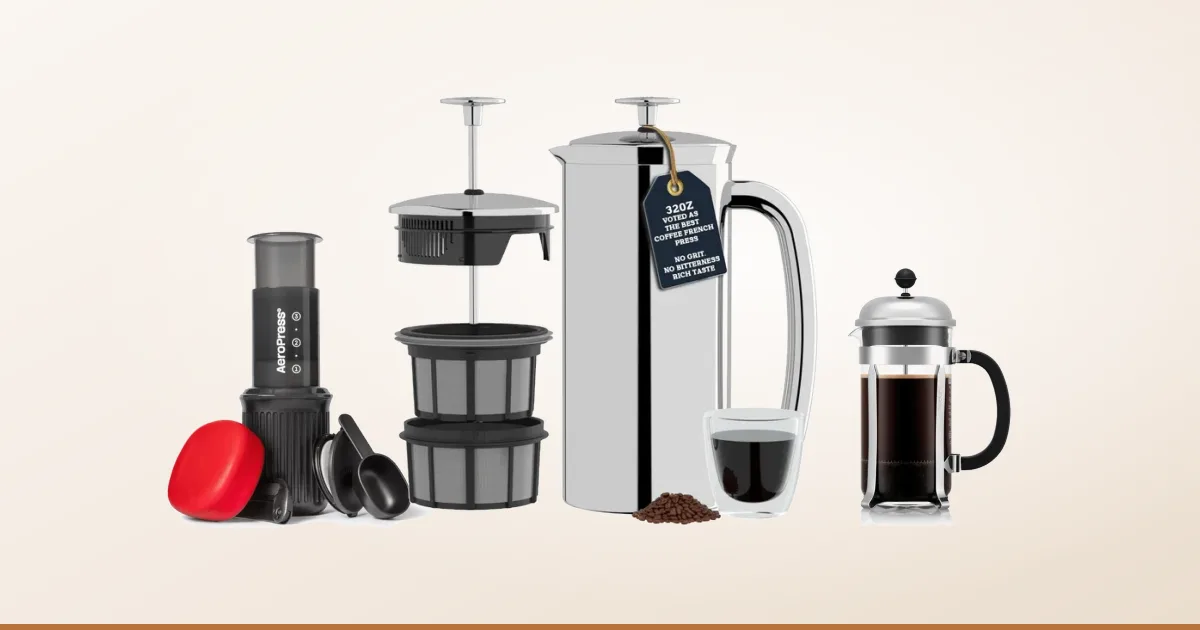
Can you make cold brew in a French press?

Yes, and it works fine — coarse grounds, cold water, steep in the fridge, press and pour. Two caveats. A press screen lets more fines through than a dedicated cold brew filter, so the result is siltier, and you lose the press for anything else while it steeps. If you already own a press, try it before buying anything. If you like cold brew enough to make it weekly, a dedicated maker with a sealing lid is a real improvement.

Bottom line

Buy the OXO Good Grips Cold Brew at $50: even saturation, a release valve so you control the steep, and a glass carafe for the concentrate. If you would rather the coffee never sat in plastic, the Hario Mizudashi at $21 is the cheapest thing on this page and steeps in glass. For a household that drinks cold brew rather than tries it, the County Line at $35 holds double. And whichever you buy, put the money you saved into a burr grinder — it will do more for the cup than any of these.

Related guides

Stay in the loop

New gear reviews, brew tips, and the occasional deal — straight to your inbox. No spam, ever.